In recent years, natural health supplements have gained massive popularity as people look for simple ways to support their overall wellness. One of the most fascinating natural foods that has captured attention worldwide is Bee Pollen. Collected by the hardworking Honey Bee, bee pollen contains an impressive range of nutrients that many people believe can support energy, immunity, and general health.
Despite its growing popularity, many beginners are unsure about the proper way to use it. Questions such as How much should you take? When is the best time to eat it? And what is the safest way to start? They are extremely common.
This comprehensive guide will explain everything you need to know about taking bee pollen, including the best methods of consumption, proper dosage, potential benefits, safety precautions, and practical tips for beginners.
By the end of this article, you will understand exactly how to incorporate bee pollen into your daily routine safely and effectively.
What Is Bee Pollen?
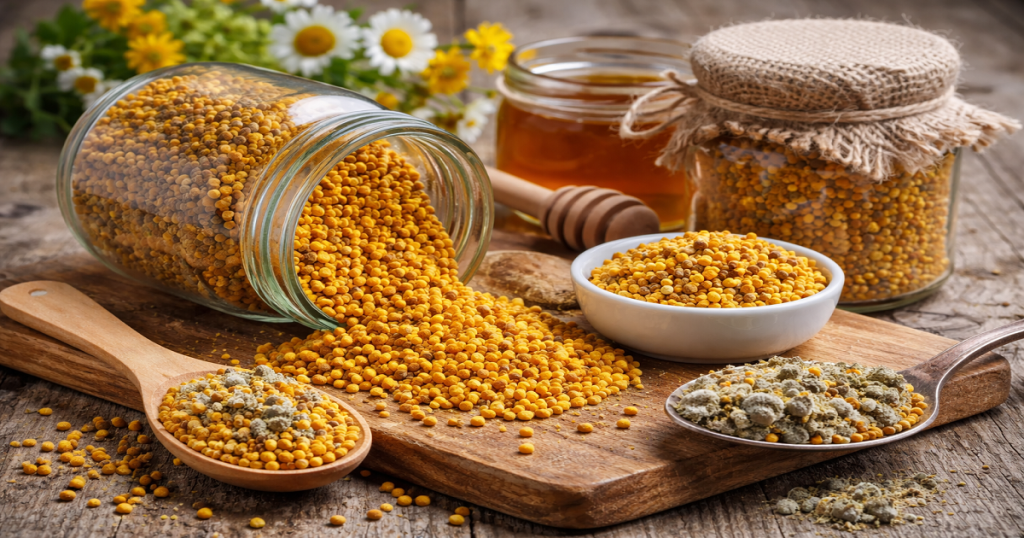
Bee pollen is a mixture of flower pollen, nectar, enzymes, honey, wax, and bee secretions that bees collect from flowering plants. Worker bees gather pollen grains and combine them with small amounts of nectar to create compact pellets that they carry back to the hive.
Inside the hive, these pollen pellets serve as a primary food source for the colony, especially for young bees. From a nutritional perspective, bee pollen is considered one of nature’s most complex foods. Researchers have found that it contains:
- Essential amino acids
- Natural carbohydrates
- Vitamins (particularly B-complex vitamins)
- Minerals like magnesium and potassium
- Enzymes
- Antioxidants
- Small amounts of healthy fats
Because of this nutrient diversity, many people include bee pollen in their diets as a natural supplement.
Why People Take Bee Pollen
Although bee pollen has been used in traditional wellness practices for centuries, modern interest in it has grown due to its rich nutritional profile. Many individuals use pollen for potential benefits, such as:
Supporting Natural Energy
Bee pollen contains carbohydrates and protein, which can provide a steady source of energy. Many people enjoy taking it in the morning as part of their breakfast routine.
Nutritional Support
Since bee pollen includes many micronutrients, it can act as a nutritional booster for people who want to diversify their diet.
Antioxidant Support
Antioxidants help protect the body from oxidative stress. Bee pollen contains plant compounds that may contribute to antioxidant intake.
Digestive Enzymes
Bee pollen contains natural enzymes that may help the body break down food more efficiently.
General Wellness
Some people simply use bee pollen as a natural whole-food supplement to support an active and balanced lifestyle.
It is important to remember that pollen is not a miracle cure. Instead, it should be viewed as a nutrient-rich addition to a healthy diet.
Different Forms of Bee Pollen
Before learning how to take bee pollen, it helps to understand the forms in which it is commonly sold.
Bee Pollen Granules
Granules are the most popular form. They look like tiny golden pellets and have a slightly sweet, floral taste.
Most beginners start with granules because they are easy to measure and mix with food.
Bee Pollen Powder
Some manufacturers grind the granules into powder. This form blends easily into drinks and smoothies.
Bee Pollen Capsules
Capsules are convenient for people who prefer supplements that require no preparation.
However, capsules may contain smaller amounts compared with raw granules.
Fresh or Frozen Bee Pollen
Some specialty stores sell fresh pollen that must be refrigerated or frozen. This form is less common but sometimes considered the most natural.
How to Take Bee Pollen for the First Time
If you have never taken bee pollen before, the most important rule is to start slowly.
Some people may be sensitive to pollen products, so it is best to test your tolerance with a very small amount.
Step-by-Step Beginner Approach
- Start with only a few granules
- Wait several hours to observe any reaction
- If no symptoms appear, gradually increase the amount over several days
This cautious approach helps your body adapt and reduces the risk of unwanted reactions.
Recommended Bee Pollen Dosage
Although there is no universal dosage for bee pollen, many nutrition experts suggest a gradual increase.
Typical beginner dosage
First few days:
- ¼ teaspoon per day
After one week:
- ½ teaspoon per day
Regular intake:
- 1–2 teaspoons per day
Some experienced users consume slightly more, but moderation is generally recommended. Because bee pollen is nutrient-dense, even small amounts can provide benefits.
Best Ways to Take Bee Pollen
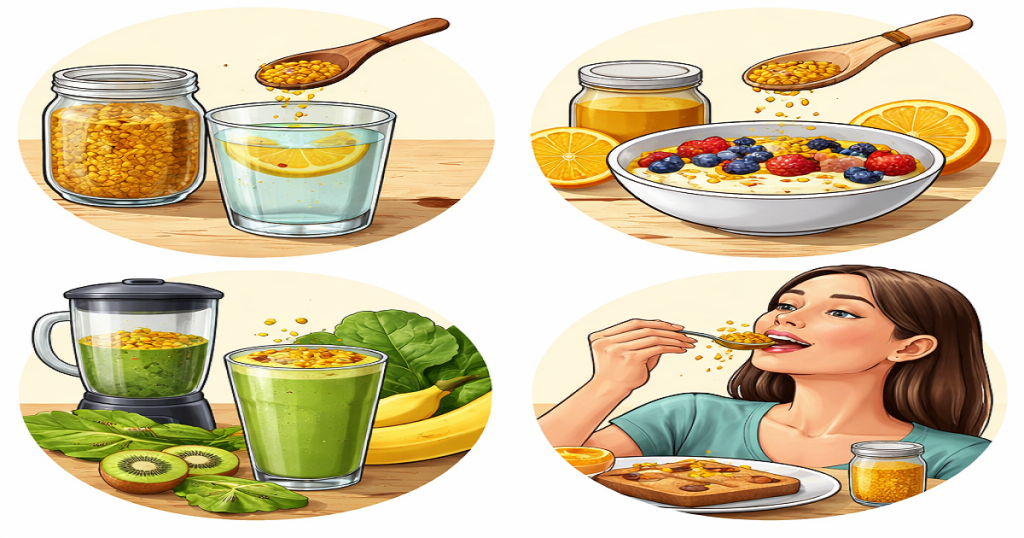
One of the great advantages of bee pollen is its versatility. It can easily be added to many foods and drinks. Here are some of the most popular methods.
Eating Bee Pollen Granules Directly
The simplest method is to eat the granules directly. You can chew them slowly and allow the natural sweetness to dissolve in your mouth. Some people enjoy this approach because it allows them to fully taste the floral flavor.
This method also requires no preparation, making it convenient for daily use.
Adding Bee Pollen to Smoothies
Smoothies are one of the easiest ways to consume bee pollen.
Example smoothie ingredients:
- Banana
- Frozen berries
- Yogurt or plant-based milk
- Honey
- 1 teaspoon bee pollen
Blend the ingredients and enjoy a nutrient-packed drink. This option is especially popular among athletes and fitness enthusiasts.
Mixing Bee Pollen with Yogurt or Oatmeal
Breakfast foods are perfect for adding bee pollen. You can sprinkle a small amount on:
- Greek yogurt
- Oatmeal
- Granola
- Chia pudding
This method adds texture and nutritional variety to your meal.
Adding Bee Pollen to Salads
Bee pollen may also be sprinkled on salads. It pairs well with leafy greens, nuts, seeds, and light dressings. The granules add a subtle sweetness that balances savory flavors.
Combining Bee Pollen with Honey
Another traditional way to consume bee pollen is to mix it with honey. Simply stir a teaspoon of bee pollen into a spoonful of honey and eat it directly or spread it on toast. This combination enhances both flavor and nutritional value.
Best Time of Day to Take Bee Pollen
Bee pollen can be taken at any time of day, but many people prefer specific times depending on their routine.
Morning
Morning consumption is the most common choice. Many people believe it helps support energy levels throughout the day.
Before Exercise
Some individuals take bee pollen before workouts because it contains natural carbohydrates.
With Meals
Taking bee pollen alongside meals may support digestion and nutrient absorption.
Evening
Although possible, taking large amounts late in the evening may not be ideal for people sensitive to natural energy boosts.
Possible Health Benefits of Bee Pollen
Scientists continue studying bee pollen, and while more research is needed, some potential benefits are often discussed.
Nutrient Density
Bee pollen contains a wide range of vitamins and minerals, which can complement a balanced diet.
Antioxidant Content
Plant compounds found in pollen may help neutralize free radicals in the body.
Support for Active Lifestyles
Because bee pollen contains protein and carbohydrates, it may support people with physically demanding routines.
Natural Wellness Support
Many people appreciate bee pollen simply because it comes from a natural source and contains diverse nutrients.
Who Should Be Careful with Bee Pollen
Although bee pollen is natural, it may not be suitable for everyone.
People with Pollen Allergies
Individuals who are allergic to pollen may experience reactions.
Pregnant or Breastfeeding Women
There is limited research on bee pollen safety during pregnancy, so medical advice is recommended.
Individuals Taking Certain Medications
Some supplements may interact with medications, so consulting a healthcare professional is wise.
Possible Side Effects
Most people tolerate bee pollen well when taken in moderate amounts. However, some side effects may occur.
Possible reactions include:
- Itching
- Swelling
- Shortness of breath
- Skin rash
- Digestive discomfort
Severe allergic reactions are rare but possible. If any symptoms occur, stop using the product immediately and seek medical advice.
How to Choose High-Quality Bee Pollen
Quality matters when purchasing bee pollen.
Here are some tips for choosing a good product.
Look for Raw or Unprocessed Pollen
Less processed products typically retain more nutrients.
Check the Color and Texture
High-quality pollen granules usually have a mix of golden, yellow, and orange tones.
Buy from Trusted Sources
Local beekeepers and reputable brands are often the best choices.
Avoid Excessive Heat Processing
Heat can destroy some enzymes and nutrients.
How to Store Bee Pollen
Proper storage helps preserve freshness and nutritional value.
Storage tips
- Keep pollen in an airtight container
- Store in a cool, dry place
- Refrigeration may extend shelf life
- Avoid direct sunlight
Some people even freeze bee pollen to maintain its quality for longer periods.
Practical Tips for Beginners
If you are new to bee pollen, these tips can make the experience easier.
Start with very small amounts and increase slowly.
Experiment with different foods to discover what you enjoy most.
Choose high-quality products from reliable suppliers.
Always pay attention to how your body responds.
Consistency is more important than large quantities.
Frequently Asked Questions
Can you eat bee pollen every day?
Many people consume small amounts of bee pollen daily as part of a balanced diet. Starting with a small amount and gradually increasing it can help your body adjust.
Does bee pollen taste good?
Bee pollen has a slightly sweet and floral taste. Some people enjoy the flavor, while others prefer mixing it with foods like yogurt or smoothies.
Is bee pollen better than honey?
Bee pollen and honey are different bee products with different nutritional profiles. Honey is primarily a natural sweetener, while bee pollen contains more protein and micronutrients.
How long does bee pollen last?
When stored properly in a cool, dry place, bee pollen can last for many months. Refrigeration or freezing may help preserve it even longer.
Can bee pollen help with energy?
Some people use bee pollen as a natural energy supplement because it contains carbohydrates, vitamins, and minerals. However, results can vary depending on diet and lifestyle.
Final Thoughts
Bee pollen is one of the most fascinating natural foods available today. Harvested from flowering plants by the dedicated Honey Bee, it offers a diverse range of nutrients in a small and convenient form.
Learning how to take bee pollen properly can help you enjoy its nutritional potential safely and effectively. Whether you choose to eat the granules directly, blend them into smoothies, or sprinkle them on breakfast foods, bee pollen can easily fit into a balanced diet.
The key is to start slowly, choose high-quality products, and pay attention to your body’s response. When used responsibly, Bee Pollen can be a simple and natural addition to a healthy lifestyle.