Have you ever wondered how bees turn flower nectar into the golden honey sitting in your kitchen cupboard? Honey is one of nature’s most fascinating foods. While it may seem simple for you. But the process of honey production involves thousands of worker bees, millions of flower visits, and an incredible level of teamwork inside a honey bee colony.
In this guide, you’ll learn exactly how bees make honey, why they produce it, how long the process takes, and what makes honey such an important food source for bees and humans alike.
What Is Honey?
Honey is a natural sweet substance produced by honey bees from the nectar they collect from flowering plants. Through a combination of enzyme activity, evaporation, and storage inside honeycomb cells, bees transform watery nectar into thick, nutrient-rich honey.
Unlike refined sugar, honey contains natural sugars, antioxidants, trace minerals, amino acids, and beneficial plant compounds that vary depending on the flowers visited by the bees.
Why Do Bees Make Honey?
For bees, honey is much more than a sweet treat. Honey serves as the colony’s primary food reserve. During winter and periods when flowers are scarce, bees rely on stored honey for energy and survival.
Think of honey as a hive’s emergency pantry. Bees spend spring and summer collecting nectar so they have enough food to sustain the colony throughout the year.
Why Honey Is Essential for Bees
Many people assume bees make honey for humans to harvest, but that is far from the truth. Honey is the colony’s primary food reserve. Worker bees spend the warmer months gathering nectar and converting it into honey because they know food sources will not always be available. During winter, rainy periods, droughts, or times when flowers stop blooming, the colony survives by consuming stored honey.
A strong colony can consume dozens of pounds of honey over the course of a winter season. Without sufficient honey reserves, the colony may struggle to survive until spring.
In simple terms, honey functions as a highly efficient energy storage system that helps honey bees endure challenging environmental conditions.
Honey Bee Colony Structure
To understand how honey is made, it’s important to first understand how a honey bee colony operates. A beehive functions almost like a highly organized city, with different bees performing specialized jobs that contribute to the colony’s survival.
The Queen Bee
The queen bee is the only fertile female in most honey bee colonies. Her primary responsibility is reproduction. During peak season, a healthy queen can lay thousands of eggs per day, ensuring the colony maintains a strong workforce.
Although the queen is the most important bee in terms of reproduction, she does not participate in honey production directly.
Worker Bees
Worker bees are female bees that perform nearly every task required to maintain the colony. They clean cells, care for developing larvae, build honeycomb, defend the hive, collect nectar, gather pollen, and produce honey.
Interestingly, worker bees perform different jobs as they age. Younger workers usually stay inside the hive and perform housekeeping duties, while older workers become foragers responsible for collecting nectar from flowers.
When people ask, “How do bees make honey?” the answer is almost entirely centered around the work performed by these worker bees.
Drones
Drones are male bees whose primary purpose is to mate with a queen. Unlike worker bees, drones do not collect nectar, produce wax, or participate in honey production. Although they play an important role in reproduction, they contribute little to the day-to-day operations of the hive.
How Do Bees Make Honey Step by Step?
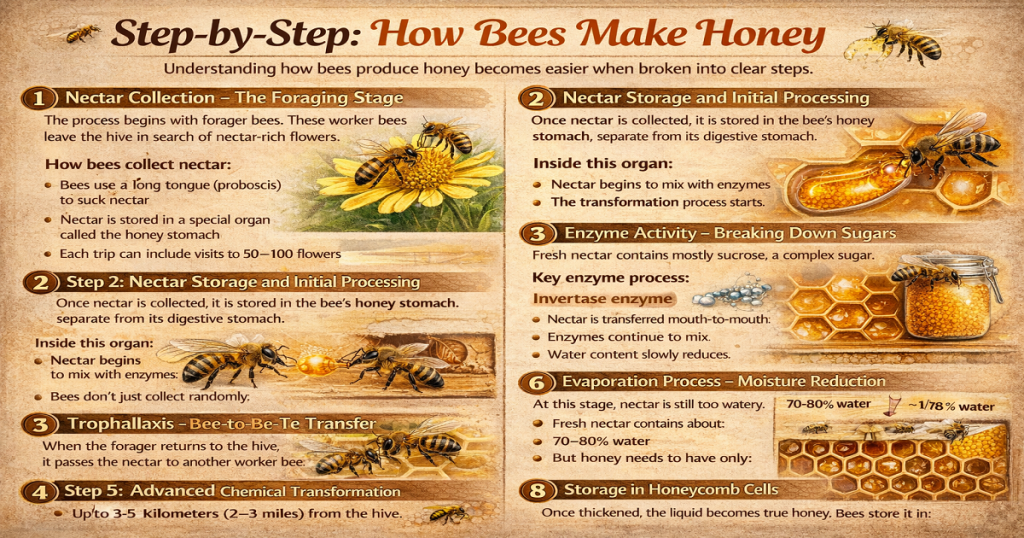
The transformation of nectar into honey is a complex process that combines biology, chemistry, and teamwork. Let’s look at each stage in detail.
Step 1: Worker Bees Collect Nectar from Flowers
Honey production begins when forager bees leave the hive in search of flowering plants. Using their excellent vision and sense of smell, bees can locate flowers rich in nectar. Nectar is a sugary liquid produced by plants to attract pollinators such as bees, butterflies, and birds.
When a bee lands on a flower, it extends a specialized tongue called a proboscis and sucks nectar into a separate storage organ known as the honey stomach.
This honey stomach is different from the bee’s digestive tract. Instead of digesting food, it temporarily stores nectar for transport back to the hive.
During a single foraging trip, a worker bee may visit dozens or even hundreds of flowers. This activity not only helps the bee collect nectar but also assists with pollination as pollen grains are transferred between plants.
Step 2: Nectar Is Transported Back to the Hive
After filling its honey stomach, the forager bee returns to the hive. Once inside, the bee passes the nectar to house bees through a process called trophallaxis. During this transfer, the nectar moves from one bee to another, allowing it to be processed further before storage.
This sharing process is more important than it may seem. Every transfer exposes the nectar to additional enzymes that help prepare it for conversion into honey.
Step 3: Enzymes Begin Transforming Nectar
One of the most remarkable stages of honey production occurs at the microscopic level. As nectar passes between worker bees, specialized enzymes are added. These enzymes help break down complex sugars into simpler forms, primarily glucose and fructose.
This enzymatic activity is essential because it changes the chemical composition of the nectar and helps create the conditions necessary for long-term storage. Without these enzymes, nectar would remain unstable and would likely ferment before it could be used as a food reserve.
Step 4: Processed Nectar Is Stored in Honeycomb Cells
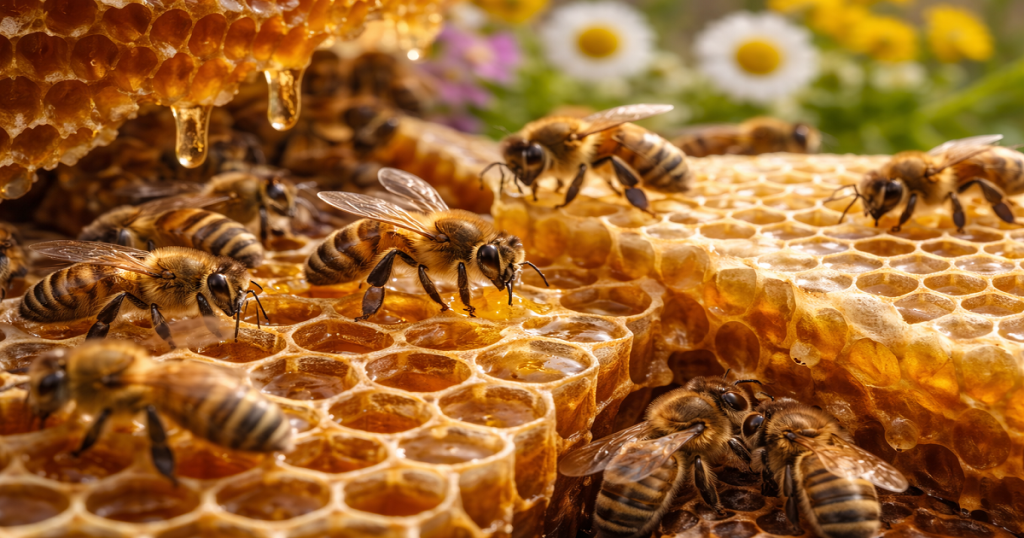
Once the nectar has been partially processed, worker bees place it into wax honeycomb cells. Honeycomb is one of nature’s most efficient storage structures. Built entirely from beeswax produced by worker bees, the honeycomb consists of thousands of interconnected hexagonal cells.
The hexagonal design allows bees to maximize storage space while minimizing the amount of wax required. This efficient architecture enables colonies to store large quantities of honey using relatively few resources. At this stage, the substance inside the honeycomb is still nectar rather than finished honey because it contains too much water.
Step 5: Bees Remove Excess Moisture
Fresh nectar can contain as much as 80% water, making it too thin for long-term storage. To solve this problem, worker bees actively reduce the moisture content through evaporation. They accomplish this by rapidly fanning their wings, creating airflow throughout the hive. The continuous circulation of air helps water evaporate from the nectar stored in the honeycomb cells.
Over time, the moisture level decreases significantly. Once the water content reaches approximately 17% to 20%, the substance has transformed into the thick, concentrated honey we recognize. This low moisture level is one reason honey resists spoilage and can remain stable for long periods.
Step 6: Honey Is Sealed with Beeswax
The final step occurs when the honey reaches the ideal consistency. Worker bees seal each filled honeycomb cell with a thin wax cap. This process is known as capping.
The wax seal protects the honey from moisture, contamination, and environmental changes. It effectively locks the honey away until the colony needs to consume it.
When beekeepers harvest honey, they typically wait until most cells have been capped because this indicates the honey has fully matured.
How long does it take to make honey?
Honey production is not an instant process. From the time bees collect nectar from flowers to the moment honey is stored and sealed in the hive, the process can take anywhere from several days to a few weeks.
After gathering nectar, worker bees pass it between one another and add natural enzymes that help break down complex sugars. The nectar is then placed into honeycomb cells, where bees fan their wings to remove excess moisture. Once the honey reaches the right consistency, the bees seal the cell with a wax cap to preserve it.
The exact time needed depends on several factors, including:
- Weather conditions – Rain, cold temperatures, or strong winds can limit foraging activity.
- Flower availability – More blooming flowers provide more nectar, allowing bees to produce honey faster.
- Colony strength – Larger, healthier colonies can collect and process nectar more efficiently.
- Season – Honey production is usually highest during peak flowering seasons.
It’s important to remember that honey making is a continuous activity within a healthy hive. Bees constantly collect nectar, convert it into honey, and store it for future use, helping ensure the colony has a reliable food supply throughout the year
Frequently Asked Questions
Do all bees make honey?
No. While many bee species collect nectar, only certain species produce and store large quantities of honey.
How many flowers does a bee visit to make honey?
Bees may collectively visit millions of flowers to produce a substantial amount of honey.
Why is honey stored in honeycomb?
Honeycomb provides a durable, space-efficient structure for storing food reserves.
Can humans eat the same honey stored by bees?
Yes. Commercial honey harvested by beekeepers comes from the surplus honey produced by bee colonies.
What happens if bees run out of honey?
Without adequate food reserves, colonies may struggle to survive periods when nectar sources are unavailable.
conclusion
The process of how bees make honey is a remarkable example of teamwork, biology, and natural engineering. From collecting flower nectar and transforming it with enzymes to reducing moisture and storing it in honeycomb cells, every step is carefully designed to help the colony survive.
Understanding how honey is made not only gives us a greater appreciation for this natural sweetener but also highlights the critical role honey bees play in pollination, biodiversity, agriculture, and ecosystem health.
The next time you enjoy a spoonful of honey, you’ll know that it represents the combined effort of thousands of worker bees and one of nature’s most extraordinary food-production systems.