If you’ve noticed dark stains, streaks, or sawdust-like residue on your wooden fence, house siding, or deck, you might be dealing with Carpenter Bee Excrement. Many homeowners initially mistake these marks for dirt or mold, but they are often a clear sign of carpenter bee activity.
Understanding carpenter bee droppings is important—not just for cleaning, but for identifying a deeper issue. These stains are usually connected to bee nesting byproducts, including waste, pollen residue, and debris from drilling holes into wood. Left untreated, this can lead to long-term wood discoloration, surface damage, and even structural issues.
In this guide, you’ll learn:
- What is carpenter bee frass? and how it differs from other insect waste
- What carpenter bee poop on wood actually looks like
- How to safely and effectively remove carpenter bee excrement from house surfaces
- Proven methods to prevent stains and future infestations
This is not just surface-level advice—it reflects real-world pest control, cleaning, and structural maintenance practices used by professionals.
What Is Carpenter Bee Excrement?
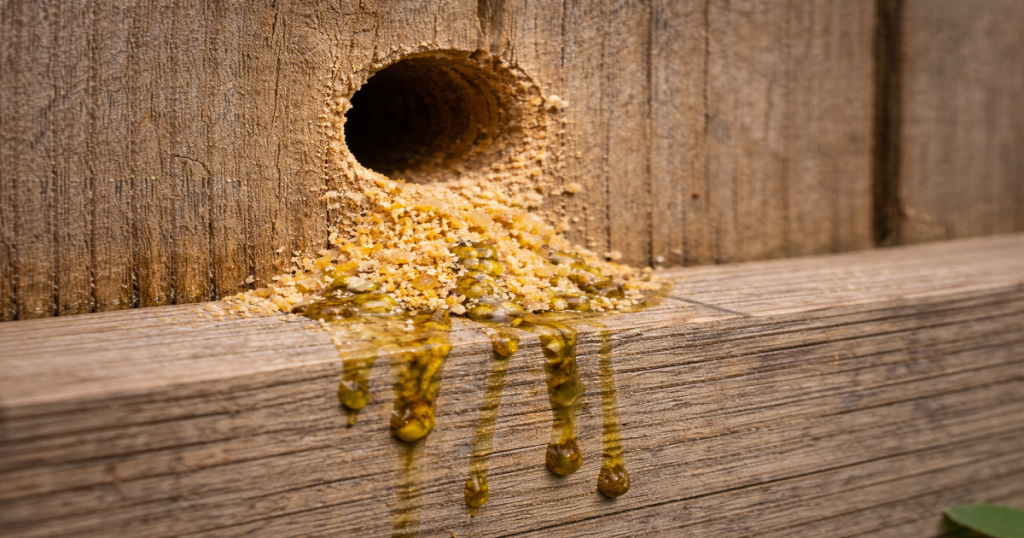
Carpenter Bee Excrement refers to the mixture of waste, pollen residue, and partially digested wood particles (often called frass) that carpenter bees leave behind near their nesting tunnels. It typically appears as yellowish-brown or dark stains on wood surfaces.
What Is Carpenter Bee Frass?
The term “What is carpenter bee frass?” is commonly searched—and here’s the expert explanation:
- Frass is a combination of:
- Chewed wood particles
- Bee feces
- Pollen residue
- Chewed wood particles
It often looks like:
- Fine sawdust (light-colored)
- Sticky or smeared stains (dark brown or yellow)
This combination is why you may see both powdery debris and staining together.
What Does Carpenter Bee Excrement Look Like on Wood?
Recognizing it early helps prevent bigger problems.
Common Appearance:
- Yellow, brown, or black streaks
- Sticky spots beneath holes
- Powdery sawdust piles (frass)
- Drip-like stains running down the wood
Where You’ll See It:
- Under drilling holes
- Along the house siding
- On deck and patio beams
- Around wooden fence posts
These are classic signs of carpenter bee infestation and should not be ignored.
Why Carpenter Bee Droppings Appear
Understanding the cause is key to long-term prevention.
1. Nesting Activity
Carpenter bees create nesting tunnels inside wood. During this process:
- Wood is excavated → creates sawdust
- Bees deposit waste → creates stains
2. Waste Disposal Behavior
Bees push waste out of tunnels, leading to:
- Surface contamination from bees
- Visible carpenter bee feces on exterior surfaces
3. Moisture and Wood Type
From real-world observation:
- Untreated wood absorbs waste easily
- Moist environments worsen wood staining from bees
- Rough surfaces trap residue
4. Repeated Infestation
Old tunnels attract new bees, increasing:
- Waste buildup
- Staining severity
- Long-term carpenter bee damage signs
Are Carpenter Bee Droppings Harmful?
Short Answer:
They are not directly dangerous to humans, but harmful to wood over time.
Potential Risks:
- Wood discoloration (permanent staining)
- Moisture retention → rot risk
- Attraction of other pests
- Degradation of exterior surfaces
So while not toxic, they are a clear infestation indicator requiring action.
How to Clean Carpenter Bee Droppings from Fence and House
This is one of the most searched concerns:
How to clean carpenter bee droppings from the fence and the house
Step-by-Step Cleaning Method
Step 1: Safety Preparation
- Wear gloves
- Use eye protection
Step 2: Dry Cleaning First
- Brush off loose sawdust (frass)
- Use a soft brush to avoid scratching wood
Step 3: Apply Cleaning Solution
Use safe cleaning agents (vinegar, soap solution, baking soda):
- Mix warm water + mild soap
- Or vinegar solution (1:1 ratio)
Step 4: Scrub Gently
- Use a soft cloth or sponge
- Focus on stained areas
Step 5: Rinse and Dry
- Rinse with clean water
- Let the surface dry completely
Step 6: Repeat if Needed
Stubborn carpenter bee stains on wood may require multiple treatments.
Best Way to Clean Bee Droppings from Siding
For delicate house siding, follow this method:
- Avoid pressure washing (can damage wood)
- Use a diluted soap solution
- Gently wipe instead of scrubbing aggressively
This preserves wood restoration quality.
How to Remove Black Stains Caused by Carpenter Bees
Dark stains are harder to remove.
Effective Methods:
- Baking soda paste (mild abrasive)
- Oxygen-based cleaners
- Light sanding (for severe cases)
Always reseal the wood afterward to prevent recurrence.
Comparison Table: Cleaning Methods
| Method | Effectiveness | Best For | Pros | Cons |
| Soap & Water | Medium | Light stains | Safe, simple | May need repeats |
| Vinegar Solution | High | Organic residue | Eco-friendly | Strong smell |
| Baking Soda Paste | High | Stubborn stains | Gentle abrasive | Requires effort |
| Oxygen Cleaner | Very High | Deep stains | Powerful | Costlier |
| Sanding | Extreme | Severe damage | Restores surface | Labor-intensive |
Practical Insights & Real-World Experience
From real pest control and surface cleaning techniques:
What Most Homeowners Miss:
- Cleaning stains without treating the infestation
- Ignoring early signs
- Using harsh chemicals that damage wood
What Professionals Do Differently:
- Identify insect infestation signs first
- Combine cleaning with preventive pest control
- Focus on long-term structural maintenance
Real Example:
A homeowner cleaned stains from a wooden fence, but they returned within weeks.
Problem:
- Active infestation is still present
Solution:
- Removed bees using eco-friendly methods
- Cleaned surface
- Sealed wood
Result: No recurring stains.
How to Prevent Carpenter Bee Stains on Wooden Surfaces
Prevention is always easier than cleaning.
Proven Strategies:
- Apply wood sealants and paints
- Inspect for drilling holes regularly
- Use natural repellents
- Replace heavily damaged wood
Natural Prevention Methods:
- Citrus oil spray
- Almond oil near entry points
- Keeping wood smooth and sealed
These are effective, eco-friendly cleaning methods and deterrents.
Long-Term Prevention (IPM Approach)
Using Integrated Pest Management (IPM):
- Inspect regularly
- Repair damage early
- Apply deterrents
- Maintain sealed surfaces
This is the most effective preventive pest control strategy.
Frequently Asked Questions (FAQs)
1. What does carpenter bee excrement look like on wood?
Yellow, brown, or black stains combined with sawdust-like residue.
2. Is carpenter bee excrement harmful to wood?
Yes, it can cause staining, moisture retention, and long-term damage.
3. How do I remove carpenter bee excrement from house surfaces?
Use soap solution, vinegar, or baking soda, then rinse and dry.
4. Can I clean stains without removing bees?
No, stains will return if infestation continues.
5. What is the best way to clean bee droppings from siding?
Use mild soap and gentle cleaning to avoid damage.
6. Do carpenter bees always leave stains?
Most infestations produce visible waste and staining.
7. How do I prevent carpenter bee stains?
Seal wood, apply repellents, and inspect regularly.
8. Are these droppings dangerous to humans?
No, but they indicate a pest problem.
9. Why do stains keep coming back?
Because bees are still active in the woods.
10. Should I call pest control professionals?
For severe infestations, pest control professionals are recommended.
Conclusion
Carpenter Bee Excrement is more than just a cosmetic issue—it’s a clear warning sign of deeper activity inside your wood structures. Understanding what causes these stains and how to remove them properly is essential for protecting your home.
Key takeaways:
- Identify early signs of carpenter bee infestation
- Clean stains using safe, effective methods
- Repair and seal wood to prevent recurrence
- Follow long-term structural maintenance and IPM strategies
By combining proper cleaning with prevention, you can eliminate stains, protect your wood, and stop the problem at its source.