A bee sting can happen to anyone while gardening, hiking, playing outdoors, or simply spending time in nature. In most cases, bee stings cause temporary pain, redness, and swelling that improve within a few hours or days. However, some people may experience more severe reactions that require immediate medical attention.
Knowing what to do after a bee sting is important because the right response can help reduce pain, limit swelling, and lower the risk of complications. Even a simple step—such as removing the stinger quickly and correctly—can make a noticeable difference in how your skin reacts and how fast you recover.
The good news is that most bee stings can be managed safely at home with basic first aid, common household remedies, and over-the-counter treatments. Understanding which methods work, what to avoid, and when to seek medical care can help you handle the situation with confidence.
In this guide, you’ll learn how to treat a bee sting at home step by step, including safe stinger removal, effective ways to relieve pain and itching, methods to reduce swelling, and warning signs of serious allergic reactions such as anaphylaxis. Whether you’re dealing with a recent sting or want to be prepared for future emergencies, this article provides practical, evidence-based advice to help you respond quickly and safely.
What are bee stings?
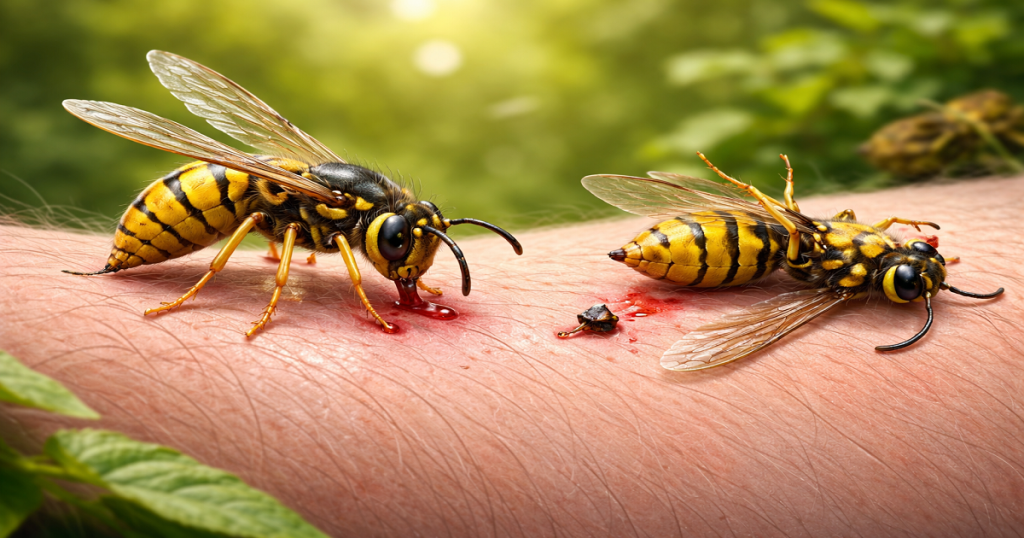
A bee sting happens when a bee defends itself by injecting venom into the skin through its stinger. This stinger is connected to a small venom sac, which releases proteins that interact with the body’s tissues and immune system. As soon as the venom enters the skin, the body responds by releasing chemicals such as histamine. This natural response is what leads to common symptoms like redness, swelling, warmth, and itching around the sting area.
In the case of a honey bee, the stinger is barbed, meaning it often stays lodged in the skin after the sting. Because the venom sac can continue to release toxins for a short time, removing the stinger quickly can help reduce the amount of venom that enters the body. In contrast, wasps and yellow jackets do not leave their stingers behind and are capable of stinging more than once, which can sometimes lead to a stronger overall reaction.
The way your body responds to a bee sting can vary. It often depends on your personal sensitivity to bee venom, where on the body you were stung, and whether you have been exposed before. Most people experience only a mild, localized reaction. However, in some cases, the immune system may overreact and cause a more serious allergic response that can affect the whole body and require urgent medical care.
Symptoms of a Bee Sting
The symptoms of a bee sting can vary from person to person. Most reactions are mild and improve quickly, but in some cases, they can become more uncomfortable or even dangerous. Understanding the different levels of reaction helps you respond appropriately and know when home care is enough—or when medical help is needed.
Mild Sting Symptoms (Localized Reaction)
Most bee stings cause a mild, localized reaction. Right after the sting, it’s common to feel a sharp, burning pain at the affected spot. This pain usually eases within a few minutes.
Soon after, the area may become red, slightly swollen, and itchy. These symptoms are the result of the body’s natural immune response to the venom, especially the release of histamine. The swelling is usually limited to the sting site and may increase slightly over the next few hours before gradually improving. With proper home care, these symptoms typically settle within 24 to 48 hours.
Moderate Reaction
Some people experience a stronger local reaction that spreads beyond the exact sting site. For example, a sting on a finger may lead to swelling that affects the entire hand or even part of the arm.
In this case, the skin may feel tight, warm, and more uncomfortable than usual. Although this reaction can look concerning, it is not usually dangerous.
Symptoms like these may last for several days. Relief often comes from consistent home treatment, such as cold compresses and over-the-counter antihistamines, which help reduce swelling and discomfort.
Severe Reaction (Systemic Allergic Reaction)
A severe reaction, known as anaphylaxis, is rare but serious and requires immediate emergency care. It happens when the immune system reacts strongly to bee venom and affects the whole body rather than just the sting area.
Warning signs may include difficulty breathing, swelling of the face, lips, tongue, or throat, a rapid or weak pulse, dizziness, and widespread skin reactions like hives.
If these symptoms occur, it is a medical emergency. Immediate treatment with an epinephrine auto-injector (if available) is essential, followed by urgent care at an emergency facility. Quick action can be life-saving in these situations.
Bee Sting First Aid at Home: How to Treat a Bee Sting Properly
Acting quickly after a bee sting can make a big difference in how severe your symptoms become. Most mild stings can be safely managed at home if you follow the right first aid steps in the correct order.
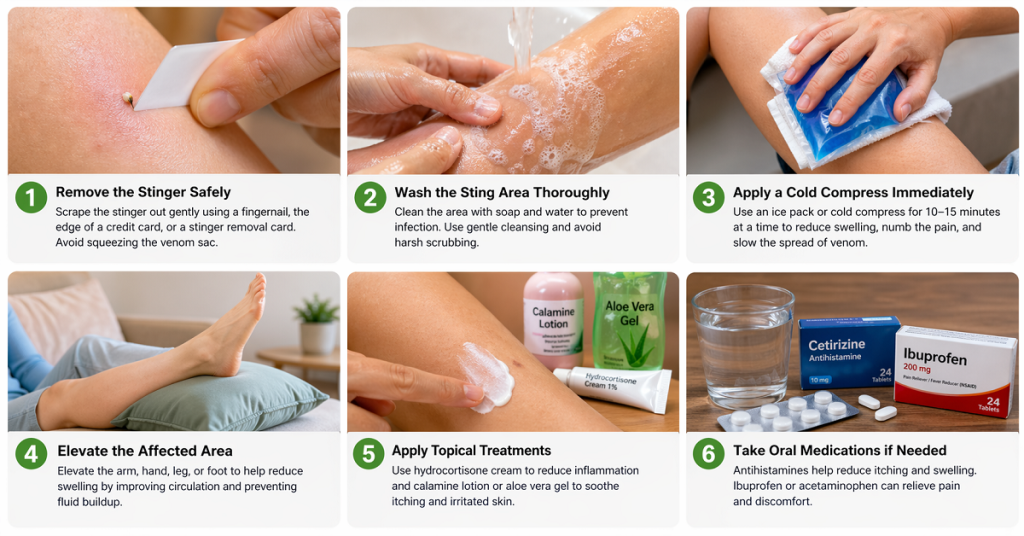
Remove the Stinger Safely
Start by checking if the stinger is still in your skin. Honeybees often leave their stinger behind, and it can continue releasing venom for a short time.
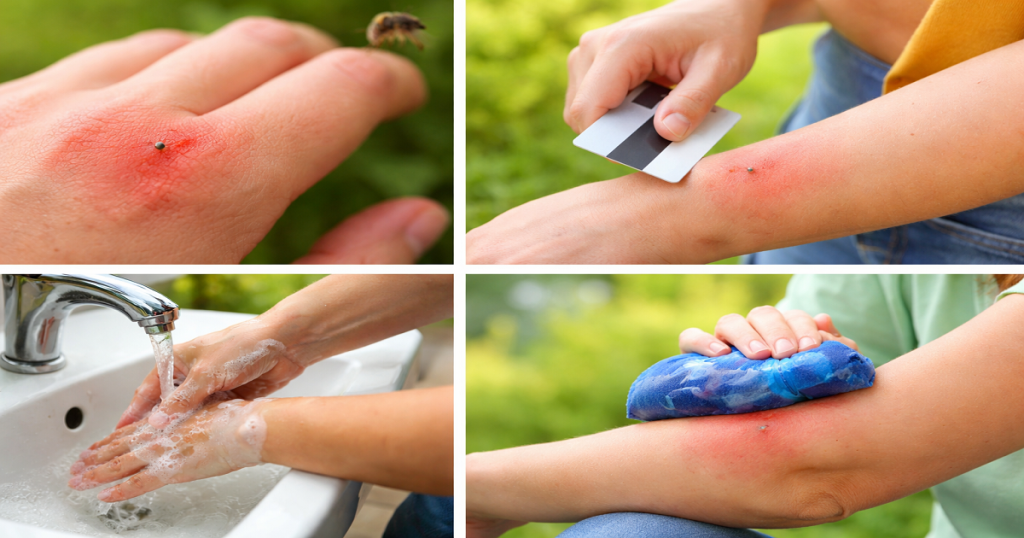
Remove it as soon as possible using a gentle scraping motion. A fingernail, a credit card edge, or a similar flat object works best. The goal is to avoid squeezing the attached venom sac, which can push more venom into the skin. If you use tweezers, handle the stinger carefully from the base without pressing it.
Clean the Area
Once the stinger is removed, wash the area thoroughly with soap and clean water. This simple step helps reduce the risk of infection and removes any remaining venom or debris from the skin. Avoid scrubbing too hard, as this can irritate the affected area and make swelling worse.
Apply a Cold Compress
A cold compress is one of the most effective ways to ease pain and swelling. It works by narrowing blood vessels, which helps slow the spread of venom and reduces inflammation.
Wrap ice in a clean cloth and apply it to the sting for about 10–15 minutes at a time. You can repeat this several times throughout the day. Never place ice directly on the skin, as it may cause irritation or cold damage.
Keep the Area Elevated
If the sting is on your arm, hand, leg, or foot, try to keep it raised above heart level when possible. Elevation helps reduce swelling by improving fluid drainage and circulation in the area.
Use Soothing Treatments
Topical treatments can help calm itching and discomfort. Hydrocortisone cream can reduce inflammation, while calamine lotion provides a cooling effect on irritated skin. Aloe vera gel is another gentle option that may help soothe and hydrate the skin naturally.
Take Medication if Necessary
If symptoms are more noticeable, over-the-counter medications can provide relief. Antihistamines help control itching and swelling by reducing the body’s histamine response. Pain relievers like ibuprofen or acetaminophen can also help manage discomfort. For best results, always follow dosage instructions on the packaging or consult a healthcare professional if you are unsure.
Bee Sting Remedy at Home
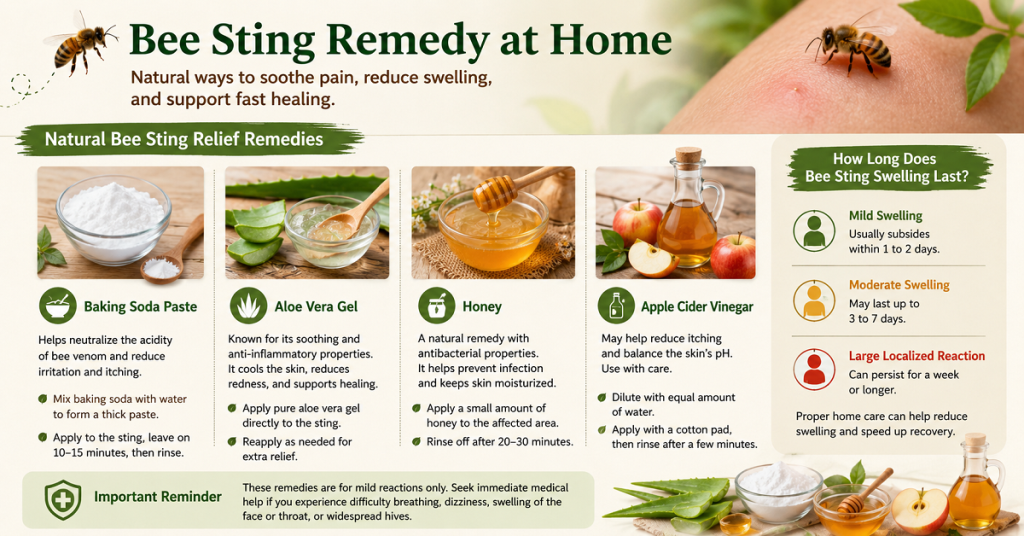
Natural Bee Sting Relief Remedies
Many people prefer to try natural remedies for mild bee sting discomfort at home. While scientific evidence for some remedies is limited, these options have been commonly used for generations to help soothe the skin and reduce irritation. Natural remedies should never replace medical care if you experience signs of an allergic reaction, severe swelling, or difficulty breathing.
Baking Soda Paste
Baking soda paste is a popular home remedy for bee stings. Many people use it to help calm itching and skin irritation around the sting site. To make a paste, mix a small amount of baking soda with water until it forms a thick consistency. Apply it gently to the affected area and leave it on for about 10–15 minutes before rinsing with cool water.
Aloe Vera Gel
Aloe vera is well known for its cooling and soothing effects on the skin. Applying pure aloe vera gel may help ease redness, discomfort, and minor inflammation caused by a bee sting. It is often a good option for people with sensitive skin and can be reapplied as needed.
Honey
Honey has natural moisturizing properties and may help keep the skin hydrated while the sting heals. Some people also use it to soothe irritated skin. Apply a small amount to the affected area and wash it off after a short period to avoid attracting dirt or insects.
Apple Cider Vinegar
Diluted apple cider vinegar is another remedy some people use to relieve itching and mild discomfort. Because vinegar can irritate sensitive or broken skin, it should always be diluted with water and used cautiously. Stop using it if it causes burning or increased irritation.
How Long Does Bee Sting Swelling Last?
The length of time swelling lasts can vary from person to person. For most people, mild swelling improves within 24 to 48 hours. Moderate swelling may take several days to resolve, while larger local reactions can last up to a week or longer. Keeping the area clean, applying a cold compress, and avoiding scratching can help support the healing process.
If swelling continues to worsen after several days, spreads significantly beyond the sting area, or is accompanied by symptoms such as difficulty breathing, dizziness, or widespread hives, seek medical attention immediately.
Frequently Asked Questions (FAQ)
What is the fastest bee sting remedy at home?
Immediate stinger removal, ice application, and antihistamines provide the fastest relief.
How do I ease itching after a bee sting?
Use calamine lotion, aloe vera, or antihistamines to reduce itching.
Can a bee sting become infected?
Yes, especially if scratched or not cleaned properly.
How do I know if I’m allergic to bee stings?
Severe symptoms like breathing difficulty or swelling beyond the sting area indicate an allergy.
What should I put on a bee sting for quick relief?
Ice, hydrocortisone cream, and antihistamines are most effective.
Is swelling overnight normal?
Yes, swelling often peaks within 24 hours.
Can I treat a bee sting without medicine?
Yes, natural remedies like aloe vera and baking soda can help.
Conclusion
Managing a bee sting effectively doesn’t require panic—it requires knowledge. With the right bee sting treatment at home, you can quickly reduce pain, control swelling, and prevent complications. From proper stinger removal to using natural and medical remedies, each step plays an important role in recovery.
Most importantly, understanding the difference between a mild reaction and a serious allergic response can save lives. With preparation, awareness, and the right approach, you can handle bee stings safely and confidently.