Getting stung by a bee can be sudden, painful, and alarming. Most stings from the Honey bee (Apis mellifera) cause localized redness and swelling, itching and burning, and discomfort at the site of the sting. While most stings are not life-threatening, some individuals may experience a severe allergic reaction, making timely, appropriate bee sting treatment at home essential.
This guide will teach you how to treat a bee sting at home, including immediate first aid, home remedies for bee stings, medical options, and expert advice. You’ll also learn about reaction timelines, symptom severity, special cases, and preventive measures. With this knowledge, you can manage most bee stings safely and effectively, minimizing pain and reducing the risk of complications.
What Happens When a Bee Stings You?
A bee sting occurs when a bee injects its venom into the skin. This venom contains proteins that trigger the human immune system, leading to a histamine response and localized inflammation. Understanding this reaction is important for effective treatment.
Common Symptoms:
- Immediate sharp pain
- Redness and swelling around the sting
- Itching and burning sensations
- Mild tenderness
Timeline of Symptoms:
| Time After Sting | Typical Reaction |
| 0–10 minutes | Immediate pain, stinger embedded |
| 10–30 minutes | Redness, swelling, burning |
| 1–3 hours | Swelling peaks, itching intensifies |
| 24 hours | Pain usually subsides; mild swelling may remain |
| 48–72 hours | Residual itching may linger |
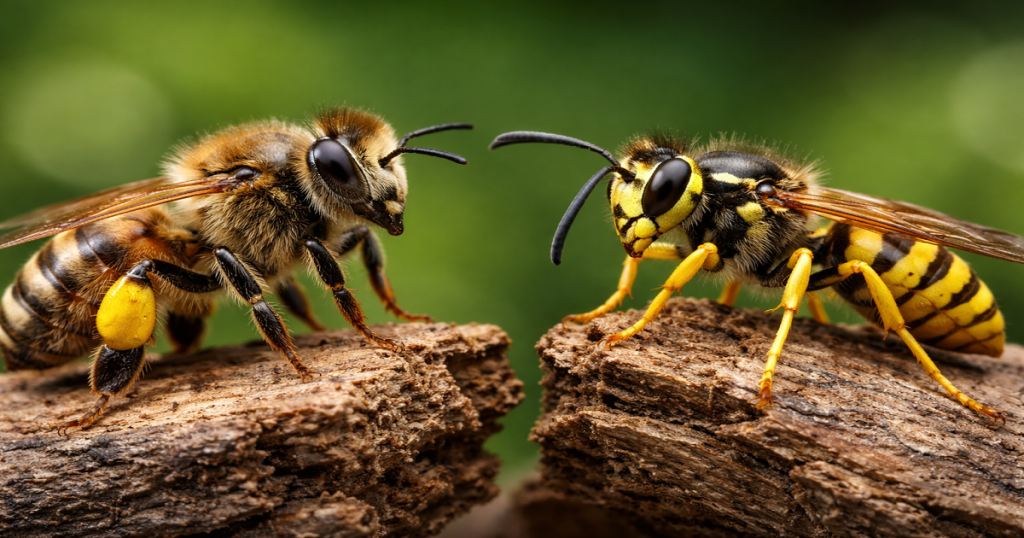
Bee vs Wasp Sting: Key Differences
Many people confuse bee and wasp stings. Knowing the difference helps in applying the correct first aid and home remedies.
| Feature | Bee Sting | Wasp Sting |
| Stinger Retention | Stinger remains in the skin | Stinger does not remain |
| Pain | Sharp then mild | Often more intense |
| Allergic Reaction | Possible | Often stronger |
| Recommended Removal | Scrape quickly | Usually, no removal is needed |
| Best Home Remedies | Cold compress, baking soda paste | Ice, antihistamines |
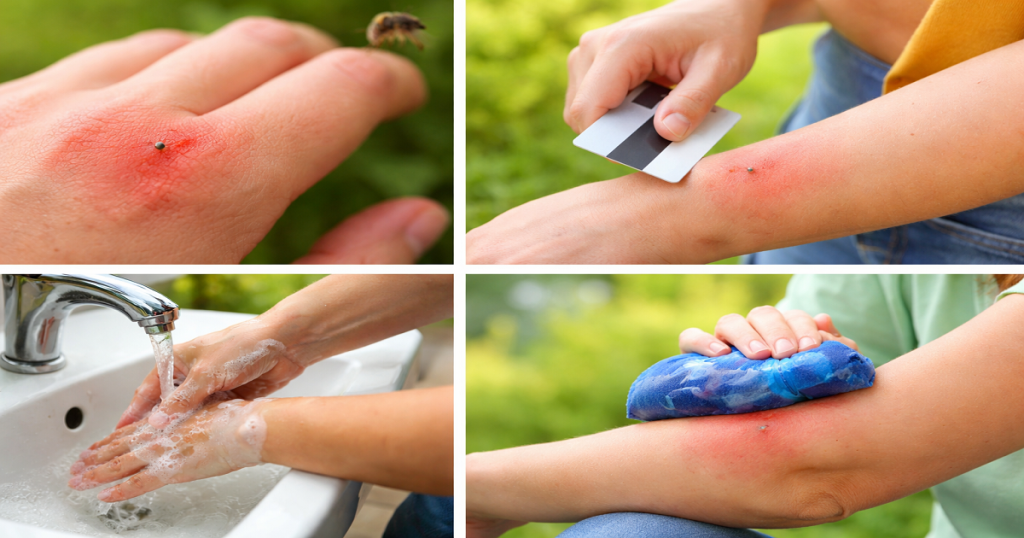
Step-by-Step Bee Sting First Aid at Home
Proper first aid can reduce pain, inflammation, and risk of infection.
Remove the Stinger
- Use a fingernail, credit card, or flat object
- Avoid squeezing the stinger, as this releases more venom
Clean the Area
- Wash with soap and water
- Prevents infection and reduces irritation
Apply a Cold Compress
- Wrap ice in a cloth and place it on the sting
- Reduces swelling and pain
- Apply 10–15 minutes at a time
Elevate the Affected Area
- Helps reduce inflammation
Monitor for Allergic Reactions
- Watch for hives, facial swelling, breathing difficulty, or dizziness
Home Remedies for Bee Sting Relief
Natural remedies are effective for mild reactions and can provide quick relief from bee-sting pain.
Baking Soda Paste
- Neutralizes venom acidity
- Apply for 15–20 minutes
Aloe Vera Gel
- Soothes skin irritation and reduces swelling
- Natural anti-inflammatory
Honey
- Antibacterial and healing properties
- Apply lightly to the sting area
Cold Milk Compress
- Neutralizes venom
- Soothes pain
Apple Cider Vinegar or Lemon Juice
- Helps balance pH and reduce irritation
Medical Treatments at Home
For moderate reactions, over-the-counter medications can help:
- Antihistamines – reduce itching and swelling
- Topical corticosteroids – reduce inflammation
- Pain relievers such as acetaminophen or ibuprofen
⚠ Note: Home remedies are effective for mild stings, but medical treatment is essential if symptoms worsen.
Allergic Reactions & Anaphylaxis
Understanding the severity of reactions is crucial.
Mild Reaction
- Local swelling, redness, and mild pain
Moderate Reaction
- Larger swelling, hives, mild dizziness
Severe Reaction (Anaphylaxis)
- Difficulty breathing
- Swelling of lips, tongue, or throat
- Rapid heartbeat
- Dizziness or fainting
Emergency Response
- Use Epinephrine if available
- Seek Emergency medical care immediately
Bee Sting Treatment at Home for Kids & Special Cases
Children
- Mild cold compress or aloe vera
- Avoid strong medications
- Monitor for allergic reactions
Elderly
- May experience stronger reactions
- Ensure hydration and medical monitoring
Multiple Stings
- Higher risk of systemic reactions
- Immediate observation is required
Sensitive Areas (Face, Neck)
- Use a cold compress only
- Avoid tight bandaging
- Seek medical care if swelling is extensive
How to Manage Swelling and Pain
Swelling is the most common reaction to bee stings. Here are some steps you can apply. Such as
Effective Methods:
- Cold compresses, repeated for 10–15 minutes
- Elevate the affected area
- Apply antihistamines or topical corticosteroids
- Avoid scratching to prevent infection
How Long Does Pain Last?
- Mild: a few hours
- Moderate: 24–48 hours
- Severe swelling: up to 2–3 days
Natural Anti-Inflammatory and Itch Relief Solutions
Some additional remedies include:
- Oatmeal paste – soothes itching and irritation
- Basil leaves – anti-inflammatory properties
- Tea tree oil (diluted) – antibacterial and soothing
These remedies complement home first aid treatment and are safe for most people.
Timeline of Treatment: From Sting to Recovery
| Stage | Treatment | Outcome |
| 0–10 min | Remove stinger, wash area | Reduces venom spread |
| 10–30 min | Apply cold compress, monitor | Pain relief and swelling control |
| 1–3 hours | Apply home remedies | Reduce itching, start inflammation control |
| 24 hours | Optional antihistamines | Manage lingering itch/swelling |
| 48–72 hours | Continue natural remedies | Full recovery in mild cases |
Prevention Tips
- Wear protective clothing outdoors
- Avoid floral perfumes and bright colors
- Maintain calm around bee activity
- Keep first aid kits ready for outdoor activities
Comparison Table: Home Remedies vs Medical Treatments
| Treatment | Best For | Speed of Relief | Risk |
| Baking Soda Paste | Mild stings | Moderate | Very Low |
| Ice Pack | Pain & swelling | Fast | Very Low |
| Aloe Vera | Soothing | Moderate | Very Low |
| Antihistamines | Moderate reactions | Fast | Low |
| Topical Corticosteroid | Severe inflammation | Fast | Low |
Frequently Asked Questions
What is the fastest bee sting relief at home?
Cold compress plus antihistamines usually work best.
How do I remove a bee stinger safely?
Scrape gently with a flat object; avoid squeezing.
Can home remedies fully treat a bee sting?
Yes, for mild stings. Severe reactions need medical attention.
How long does itching last after a bee sting?
Typically 1–3 days.
Are natural remedies safe for children?
Yes, mild remedies like baking soda paste and aloe vera are safe.
When should I see a doctor?
If severe swelling, hives, or difficulty breathing occur.
Can bee stings get infected?
Rarely, clean the area and avoid scratching.
Is ice or aloe better?
Ice relieves pain faster; aloe soothes skin and reduces inflammation.
How do I treat multiple stings at home?
Mild reactions may be treated with compresses and antihistamines; seek medical help if there are more than 10 stings.
Can bee sting pain be prevented?
Avoid provoking bees, wear protective clothing, and stay calm around hives.
Conclusion
Managing a bee sting at home involves prompt first aid, natural remedies, and awareness of allergic reactions. For most stings, removing the stinger, cleaning the area, applying a cold compress, and using safe remedies can provide quick relief and reduce swelling.
Recognizing reaction severity, special cases such as children or the elderly, and symptom timelines helps ensure a safe recovery. With practical knowledge and preventive measures, you can confidently handle bee stings, reduce pain, and prevent complications.