
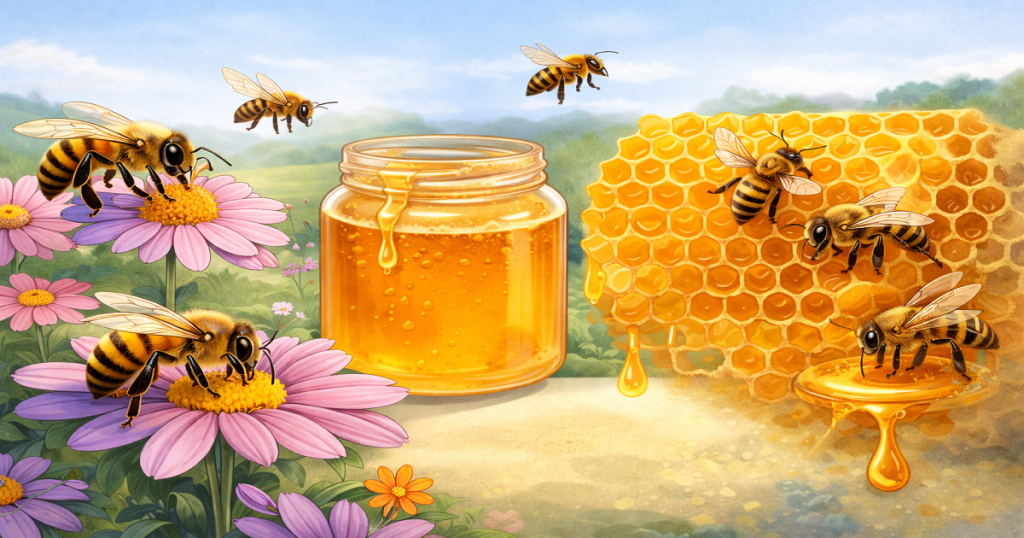
Have you ever wondered how long it takes bees to make honey? It’s a common question, and the answer is more fascinating than most people realize. A single jar of honey represents the combined effort of thousands of honey bees working together with remarkable efficiency.
Honey production is not an instant process. Honey bees collect nectar from flowers and transform it into honey through a series of natural steps that take place both inside their bodies and within the hive. During this process, the nectar is enriched with enzymes, excess moisture is removed, and the hive environment is carefully maintained to create the thick, sweet honey we know.
What makes honey production especially impressive is the teamwork involved. Worker bees perform different tasks, from gathering nectar and processing it to storing and protecting the finished honey. Each bee plays a role in ensuring the colony has a reliable food supply.
So, how long does it actually take bees to make honey? The timeline can vary depending on factors such as flower availability, weather conditions, colony strength, and the amount of honey being produced. In some situations, bees can process nectar into honey within a few days, while building significant honey stores may take several weeks or even months.
In this guide, you’ll learn:
- How long it takes bees to make honey
- How nectar is transformed into honey
- The roles worker bees play throughout the process
- The factors that affect honey production speed
- Why honey production varies from one colony to another
By understanding how bees make honey, you’ll gain a deeper appreciation for the incredible work happening inside every hive.
How Long Do Bees Take to Make Honey?
The short answer is that bees can begin turning nectar into honey within a few days, but producing large amounts of fully ripened honey takes much longer. Under favorable conditions, the nectar-to-honey conversion process typically takes between 3 and 7 days. However, building up enough honey to fill and seal an entire honeycomb frame often requires several weeks or even months. The exact timeline depends on a combination of factors inside and outside the hive.
Nectar Availability
Honey production starts with nectar collection. When flowers are abundant and producing plenty of nectar—a period known as a nectar flow—foraging bees can gather large quantities each day. The more nectar available, the faster the colony can produce honey.
Weather Conditions
Warm, dry weather generally supports honey production because bees can fly more often and collect nectar efficiently. Rain, strong winds, extreme heat, or cold temperatures can reduce foraging activity and slow the entire process.
Colony Strength
A healthy colony with thousands of active worker bees can collect and process nectar much faster than a smaller or weaker hive. More workers means more bees available to forage, process nectar, and maintain the hive.
Hive Conditions
Bees carefully regulate the temperature and humidity inside the hive. These conditions help remove excess water from nectar, allowing it to thicken into honey. If humidity levels are high or the hive is under stress, the ripening process may take longer.
A Realistic Timeline
During a strong nectar flow, bees can transform freshly collected nectar into mature honey in less than a week. However, producing the large honey reserves that beekeepers harvest is a gradual process. Filling, ripening, and capping multiple honeycomb cells requires consistent nectar sources, favorable weather, and a thriving colony working together over an extended period.
This is why a jar of honey represents far more than a few days of work—it is the result of thousands of bees contributing their efforts over weeks or even months.
Honey Making Process
To understand how long it takes bees to make honey, it helps to look at what happens inside the hive. Honey production is not a single event but a series of carefully coordinated steps. From collecting nectar to sealing mature honey in wax-capped cells, each stage plays an important role in creating a stable food source for the colony.
Nectar Collection
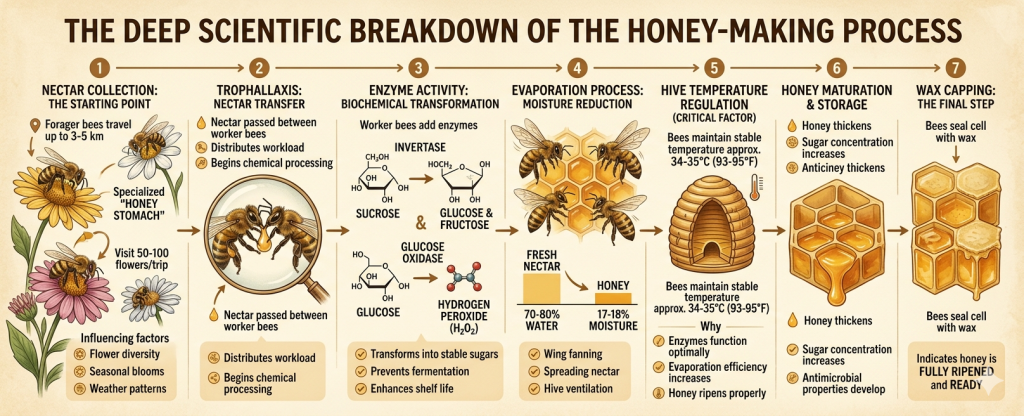
The honey-making process begins when worker bees collect nectar from flowering plants. These foraging bees leave the hive and search for blooms that provide a reliable nectar supply. In many cases, they may travel up to 3–5 kilometers (2–3 miles) from the hive to find suitable flowers.
Nectar is stored in a special organ called the honey stomach, which is separate from the bee’s digestive stomach. During a single trip, a forager may visit dozens of flowers, gathering small amounts of nectar from each one.
The speed of honey production starts here. When flowers are abundant and producing large amounts of nectar—a period known as a nectar flow—bees can collect resources much more efficiently, allowing the colony to produce honey faster.
Trophallaxis
When a forager returns to the hive, it does not simply deposit the nectar into a honeycomb cell. Instead, the nectar is passed to other worker bees through a process called trophallaxis, or mouth-to-mouth food exchange.
This transfer allows multiple bees to participate in processing the nectar. It also helps distribute incoming resources throughout the colony, making honey production more efficient during periods of heavy nectar collection.
Although this step may seem simple, it is a key part of the hive’s cooperative system and helps thousands of bees work together as a single unit.
Enzyme Activity
As nectar moves between worker bees, natural enzymes are added that begin converting it into honey.
Two important enzymes are involved:
- Invertase breaks down complex sucrose into simpler sugars such as glucose and fructose.
- Glucose oxidase helps produce compounds that contribute to honey’s natural antibacterial properties.
These enzymatic changes are essential because they transform nectar into a more stable substance that can be stored for long periods without spoiling.
Evaporation
Fresh nectar contains a large amount of water, typically between 70% and 80%. At this stage, it is too thin to be stored safely. To reduce moisture, worker bees spread the nectar across honeycomb cells and create airflow by rapidly fanning their wings. This ventilation helps water evaporate from the nectar over time.
As moisture levels drop, the nectar becomes thicker and more concentrated. Mature honey usually contains only about 17% to 18% water, which helps prevent fermentation and allows it to remain stable for long-term storage.
Hive Temperature Regulation
A honey bee colony carefully controls conditions inside the hive to support honey production. Worker bees maintain a temperature of approximately 34–35°C (93–95°F) throughout much of the hive.
This stable environment helps enzymes function efficiently and accelerates moisture evaporation. If temperatures become too low or fluctuate significantly, nectar processing can slow down, delaying honey production. The ability of bees to regulate hive conditions is one of the reasons they can consistently produce and preserve honey.
Honey Maturation and Storage
As water content decreases and the nectar becomes richer in sugars, it gradually transforms into fully ripened honey. At this stage, the honey develops its characteristic thickness, sweetness, and natural preservation qualities. Worker bees store the finished honey in honeycomb cells, where it remains available as an energy source for the colony.
Wax Capping
Once the honey reaches the proper moisture level, bees seal each honeycomb cell with a thin layer of beeswax. This process is known as capping.
A capped cell is a sign that the honey is fully mature and ready for long-term storage. The wax seal protects the honey from moisture in the air and helps preserve its quality.
Under the right conditions, capped honey can remain edible for years, providing a reliable food reserve for the colony during periods when nectar is scarce.
How Much Work Goes Into Honey Production?
The amount of effort required to produce honey is truly remarkable. What appears to be a simple jar of honey is actually the result of thousands of bees working together over an extended period.
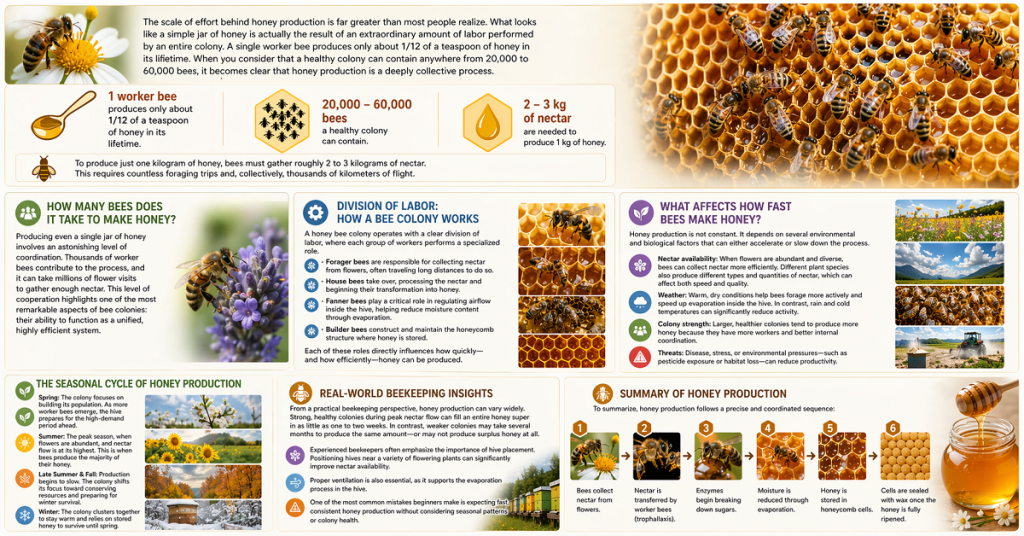
A single worker bee produces only about 1/12 of a teaspoon of honey during its entire lifetime. Because of this, honey production depends on the combined efforts of a large colony, which can contain anywhere from 20,000 to 60,000 bees during peak season.
To produce 1 kilogram (2.2 pounds) of honey, a colony typically needs to collect approximately 2 to 3 kilograms of nectar. Gathering that much nectar requires countless foraging trips and an enormous amount of flight time. Every drop of honey represents a significant investment of energy from the colony.
How Many Bees Does It Take to Make Honey?
There is no exact number of bees responsible for a single jar of honey because production is a collective effort. Thousands of worker bees contribute at different stages, from collecting nectar to processing, storing, and protecting the finished product.
Research and beekeeping observations suggest that producing a substantial amount of honey may require millions of flower visits. While individual bees perform specific tasks, no single bee makes honey alone. The colony functions as a highly organized team, with each bee contributing to a larger goal.
This level of cooperation is one of the most fascinating aspects of honey bee society and a major reason why honey production is so efficient.
How a Bee Colony Works
A honey bee colony succeeds because every worker bee has a specialized role. Instead of performing the same tasks, bees divide responsibilities to maximize efficiency.
Forager Bees
Forager bees leave the hive to collect nectar, pollen, water, and plant resins. They may travel several kilometers in search of productive flowering plants and are responsible for bringing the raw materials needed for honey production back to the colony.
House Bees
Once nectar arrives at the hive, house bees take over. They receive the nectar from foragers, add enzymes, and begin the process of converting it into honey.
Fanner Bees
Fanner bees help regulate airflow within the hive by beating their wings rapidly. This circulation removes excess moisture from nectar and supports the evaporation process that turns watery nectar into thick honey.
Builder Bees
Builder bees produce wax and construct the honeycomb structure used to store honey, pollen, and developing brood. They also repair damaged combs and expand storage space when nectar supplies are abundant.
Together, these specialized workers create an efficient system that allows the colony to produce and store honey while maintaining the health of the hive.
What Affects How Fast Bees Make Honey?
Honey production speed can vary significantly depending on conditions inside and outside the hive.
Nectar Availability
The most important factor is the availability of nectar-producing flowers. When a wide variety of plants are blooming, bees can collect nectar more quickly and produce honey at a faster rate.
Weather Conditions
Weather directly affects both nectar collection and honey processing. Warm, dry conditions generally support higher productivity because bees can forage more frequently and evaporation occurs more efficiently inside the hive. Rain, strong winds, and cold temperatures can limit flight activity and slow honey production.
Colony Strength
Large, healthy colonies typically produce more honey than smaller colonies. More worker bees mean more foragers gathering nectar and more house bees available to process it.
Environmental Stress
Challenges such as disease, parasites, pesticide exposure, poor nutrition, and habitat loss can reduce colony productivity. Stressed colonies often spend more energy on survival and less on honey storage.
The Seasonal Cycle of Honey Production
Honey production follows a natural cycle that changes throughout the year.
Spring
During spring, the colony focuses on increasing its population. The queen lays large numbers of eggs, and worker bees raise new generations that will support honey production in the months ahead.
Summer
Summer is usually the busiest season for honey bees. Flowers are abundant, nectar flow is strong, and colonies are at their largest size. Most honey stores are built during this period.
Late Summer and Fall
As flowering plants become less abundant, honey production gradually slows. Instead of expanding their stores, bees begin conserving resources and preparing for winter. The honey collected during the productive months serves as the colony’s primary food supply until flowers bloom again.
Frequently Asked Questions (FAQ)
How long does it take bees to make honey?
Typically, a few days to several weeks, depending on conditions.
How fast do bees make honey in summer?
Much faster due to strong nectar flow—sometimes within days.
How long does it take to fill a hive with honey?
Several weeks to months, depending on colony strength.
How much nectar is needed to make honey?
About 2–3 kg of nectar for 1 kg of honey.
How many bees are needed to make honey?
Thousands of bees contribute to production.
What is trophallaxis?
It’s the process of nectar transfer between bees.
Why is moisture reduction important?
It prevents fermentation and preserves honey.
Can bees make honey year-round?
No, mainly during warm seasons with active flowers.
What affects honey production speed?
Weather, nectar availability, colony strength, and hive conditions.
How do bees know honey is ready?
They seal it with wax once the moisture is low enough.
Conclusion
So, how long do bees take to make honey? The answer depends on a complex interplay of biology, environment, and colony dynamics—but typically ranges from a few days to several weeks. What makes this process remarkable is not just the timeline, but the precision behind it. From enzyme-driven chemical transformation to controlled evaporation and hive thermoregulation, bees operate with extraordinary efficiency. Their ability to convert nectar into a stable, nutrient-rich food source reflects one of nature’s most advanced cooperative systems. Understanding this process not only answers the question but also deepens appreciation for the incredible work behind every drop of honey.