Bumble bees are essential pollinators that support flowering plants, gardens, and overall ecosystem health. They are generally non-aggressive insects, and their presence is beneficial. However, when bumble bees nest near your home, yard, or garden, they can become a concern for families, pets, or individuals allergic to stings. Knowing how to get rid of bumble bees safely allows you to manage the situation responsibly while preserving these vital insects.
In this guide, we’ll cover bumble bee removal methods, natural deterrents, humane relocation techniques, and preventive measures. You’ll gain professional insights on how to eliminate bumble bees safely, prevent future infestations, and maintain a healthy garden ecosystem.
Understanding Bumble Bees: Behavior, Lifecycle, and Ecology
To manage bumble bees effectively, it’s essential to understand their nesting behavior, seasonal activity, and colony lifecycle.
Non-Aggressive Pollinators
Bumble bees are typically calm, only stinging if provoked. They are critical pollinators, supporting flowering plants, gardens, and crops. Their ecological role contributes to ecosystem balance.
Nesting Behavior
Bumble bees prefer sheltered locations for their nests:
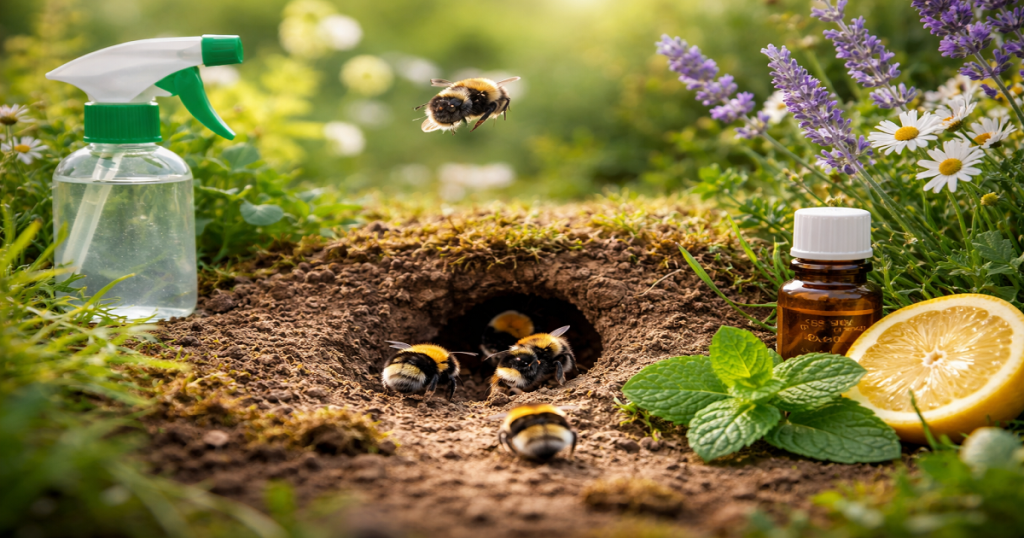
- Ground nests in abandoned rodent burrows or grassy areas.
- Wall cavities, attics, sheds, and garden structures.
- Dense vegetation or compost piles in yards.
Understanding where bees are likely to nest helps with preventing infestations and guiding humane removal.
Colony Lifecycle
A typical bumblebee colony follows these stages:
- The queen emerges in spring to find a nesting site.
- Worker production during late spring to early summer expands the colony.
- Drone and new queen production in late summer.
- The colony declines in the fall, as most workers die and new queens hibernate.
Knowing this lifecycle is crucial when planning bumblebee control, as timing affects the success of relocation and exclusion techniques.
Signs You Need Bumble Bee Control
Before taking action, watch for these indicators:
- Buzzing sounds inside walls, sheds, or attics.
- Visible bumblebee nests or wax deposits.
- Holes in the ground indicate ground nests.
- Frequent bee activity around yards, gardens, or flowering plants.
- Aggressive swarming near your home or outdoor spaces.
Early detection allows safer and more effective bumblebee removal.
Safe Ways to Remove Bumble Bees
Humane, eco-friendly pest solutions should always be the first choice to eliminate bumble bees safely.
Relocate Bumble Bees
Professional relocation protects both humans and the bees. Steps for safe relocation:
- Contact local beekeepers or wildlife removal services.
- Wait until dusk or evening when most bees are inside the nest.
- Transfer the nest carefully to a secure container.
- Relocate the colony to a natural habitat far from homes.
Professional colony management ensures bees continue to thrive in the garden ecosystem.
Bumble Bee Nest Removal from the Ground
For ground nests:
- Locate the entrance and observe activity.
- Avoid disturbing the nest during the day.
- Use professional relocation techniques rather than insecticides.
This method ensures bee control without killing, preserving pollinators, and supporting ecosystem balance.
Hive Relocation in Walls or Structures
When bees occupy walls, attics, or sheds:
- Call a pest control professional with humane removal expertise.
- Techniques may include smoke, vacuum-assisted removal, or nest extraction.
- Seal entry points after removal to prevent bee infestation near the house.
These steps minimize disruption and keep pollinators safe.
Natural Ways to Get Rid of Bumble Bees
Using natural repellents and eco-friendly strategies can discourage bees from nesting near your home.
1. Natural Repellents
Effective natural repellents include:
- Peppermint oil: Spray around entry points and garden perimeters.
- Citrus oil: Bees dislike citrus scents; effective near sheds and flowerbeds.
- Vinegar solutions: Can encourage bees to relocate without harming them.
These methods offer safe ways to remove bees from the backyard while protecting the environment.
2. Exclusion Techniques
Prevent bees from nesting using:
- Sealing cracks, gaps, and holes in walls or foundations.
- Installing mesh over vents and chimneys.
- Keeping doors and windows closed during peak seasonal activity.
How to Keep Bumble Bees Away: Prevention Strategies
Preventive steps reduce the chance of bumblebee infestation:
- Remove old rodent burrows from yards.
- Avoid leaving sugary foods outdoors.
- Plant bee-friendly flowers away from your house to redirect activity.
- Apply natural repellents around perimeters.
- Maintain gardens and lawns to limit nesting opportunities.
Integrated Pest Management (IPM) Approach
The IPM approach balances prevention, humane removal, and minimal ecological impact:
| IPM Strategy | Description | Benefits |
| Monitoring | Track bee activity regularly | Early detection of nests |
| Exclusion | Seal entry points and gaps | Prevents new colonies |
| Cultural Methods | Garden layout and plant selection | Reduces attraction |
| Mechanical Removal | Relocate colonies safely | Bee control without killing |
| Eco-friendly Repellents | Peppermint, citrus, vinegar | Minimal environmental impact |
Using Integrated Pest Management ensures long-term solutions while maintaining pollinator health.
Expert Tips & Professional Insights
- Timing matters: Relocate bees in spring or early summer for the best results.
- Avoid pesticides: They can harm non-aggressive insects and local wildlife.
- Observe first: Not all bumblebee activity requires removal; many bees are just passing through.
- Hire professionals when needed: Beekeepers and wildlife removal experts are trained in hive relocation and colony management.
Common mistakes: Disturbing nests directly, using toxic chemicals, or ignoring early signs of infestation.
Step-by-Step: How to Get Rid of Bumble Bees Without Killing Them
Identify the nest location (ground, wall, or garden).
Limit disturbances near the nest.
Apply natural repellents around the area.
Contact a beekeeper or wildlife specialist for humane relocation.
Seal potential entry points to prevent return.
Monitor activity to ensure bees do not recolonize.
When to Call Professionals
Situations requiring professional help include:
- Bees inside walls, attics, or sheds.
- Large or aggressive colonies.
- Family members with allergies.
- Inaccessible nests.
Professional pest control and beekeepers can safely handle bumblebee removal, relocation, and colony management.
Frequently Asked Questions (FAQ)
How can you get rid of bumble bees naturally?
Use peppermint oil, citrus, or vinegar repellents and contact a beekeeper for relocation.
What should I do if bumble bees are in my wall?
Call a wildlife removal professional for humane extraction and seal gaps afterward.
Can I remove a bumblebee nest from the ground myself?
It’s possible, but safer with professional relocation to avoid harming the colony.
How to stop bumble bees from nesting near the house?
Seal cracks, use natural deterrents, and remove potential ground nest sites.
Are bumble bees dangerous?
Mostly non-aggressive; they sting only if provoked. They are essential pollinators.
How to prevent bumble bees from your garden?
Plant flowers away from homes, use eco-friendly repellents, and monitor nesting activity.
Is it legal to kill bumble bees?
Many species are protected. Always prioritize humane removal.
What are the best natural repellents for bumble bees?
Peppermint oil, citrus oil, and vinegar are safe and effective.
How to eliminate bumble bees safely in outdoor spaces?
Combine relocation, repellents, and IPM strategies for long-term results.
Can I hire someone to relocate bumble bees?
Yes, beekeepers and wildlife specialists offer safe and humane hive relocation services.
Conclusion
Learning how to get rid of bumble bees safely and effectively allows you to protect your home while supporting these vital pollinators. By understanding nesting behavior, seasonal activity, and colony lifecycle, applying humane removal methods, and using natural deterrents, you can manage bees responsibly. Preventive strategies and Integrated Pest Management (IPM) approaches ensure long-term safety and a thriving garden ecosystem.
Respecting bumble bees while addressing infestations not only ensures personal safety but also sustains ecosystem balance and promotes a healthy outdoor environment.