If you’re looking for how to start a beehive without buying bees, you’re thinking of a natural approach to beekeeping. It helps to better choose between purchasing commercial bee packages or nucleus colonies (nucs). This method focuses on attracting wild honeybee swarms that are already adapted to your local climate and environment. For many beekeepers, this can lead to a more sustainable, lower-cost, and resilient colony over time.
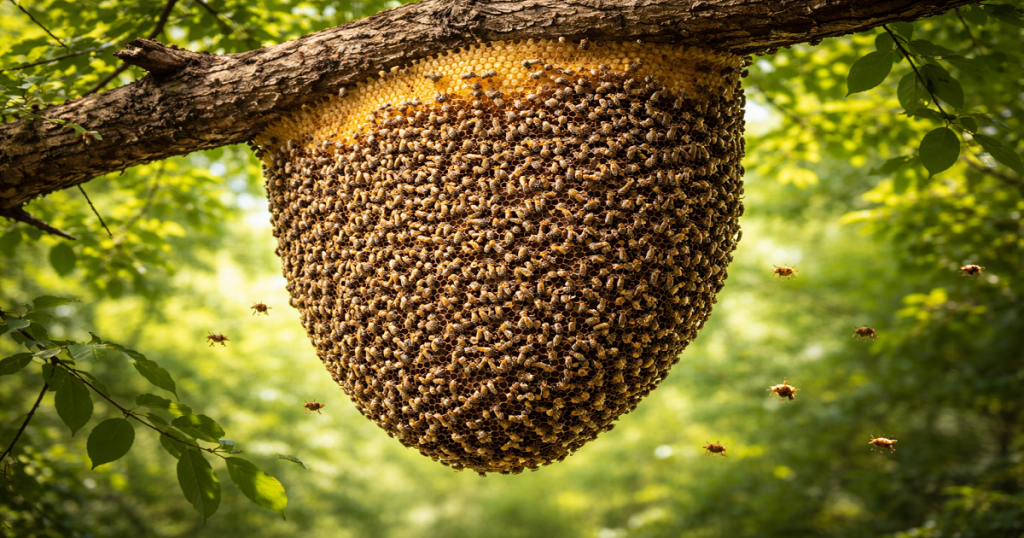
Honey bees naturally reproduce through a process called swarming. When a colony becomes large and healthy, part of the hive leaves with a queen bee to search for a new place to live. It is the right time to attract bees to your hive. If you create the right conditions, your backyard can become an attractive new home for these bees. This natural process is the foundation of starting a beehive without buying bees.
In this guide, you’ll learn how to start a backyard beehive step by step. You’ll discover how to attract wild bee swarms, choose the best location for your hive, set up an effective swarm trap, and handle common challenges beginners may face. The information is based on practical beekeeping methods used by experienced beekeepers, making it easy to understand and apply even if you are completely new to beekeeping.
Start a Beehive Naturally
Starting a beehive naturally is more than simply avoiding the purchase of bees. It involves understanding how honey bees behave during the swarming process and creating a safe, attractive place for them to settle. When a healthy bee colony becomes overcrowded, part of the colony leaves with the queen bee to search for a new home. Scout bees travel around the area looking for suitable nesting sites, sometimes several kilometers away from the original hive.
These scout bees carefully inspect possible locations before making a final decision. They look for spaces that are the right size, protected from wind and rain, safe from predators, and close to reliable nectar and water sources. Bees are also strongly attracted to places that smell like an active hive, which is why experienced beekeepers often use beeswax or propolis inside swarm traps or empty hives.
To successfully attract a swarm, your goal is to make your hive setup more appealing than other natural spaces nearby. Small details can greatly improve your chances of success. A properly sized hive box, correct placement height, good ventilation, and the natural scent of beeswax can all encourage bees to move in.
Natural beekeeping requires much patience, from package bees or a nucleus colony. You may need to wait weeks or even months before a swarm arrives. However, many beekeepers believe the benefits are worth the wait. Wild swarms are often better adapted to local weather conditions, flowering seasons, and environmental challenges. In many cases, they may also show stronger resistance to pests and diseases because they have already survived naturally in your area.
Starting a Beehive Without Buying Bees
Natural beekeeping has become increasingly popular because it allows beekeepers to work with local bee populations instead of relying on commercially raised bees. Local bees are already familiar with the climate, seasonal changes, and food sources in your region. This natural adaptation can help colonies survive and grow more successfully over time.
Another major advantage is affordability. Starting a beehive without buying bees can significantly reduce your initial costs. Instead of spending money on packaged bees, you can focus on essential beekeeping equipment such as a hive box, protective gear, and a simple swarm trap. This makes natural beekeeping an excellent option for beginners who want to learn without making a large financial investment.
Natural beekeeping also gives you a deeper understanding of how honeybees live and behave. Watching a wild swarm build a colony from the beginning allows you to observe important behaviors such as comb building, foraging, communication, and colony development. Many experienced beekeepers find this hands-on experience both educational and rewarding.
While attracting wild bees is not guaranteed, creating the right environment greatly improves your chances. With patience, proper hive placement, and a basic understanding of swarm behavior, you can successfully start a healthy backyard beehive naturally.
Choosing the Right Hive
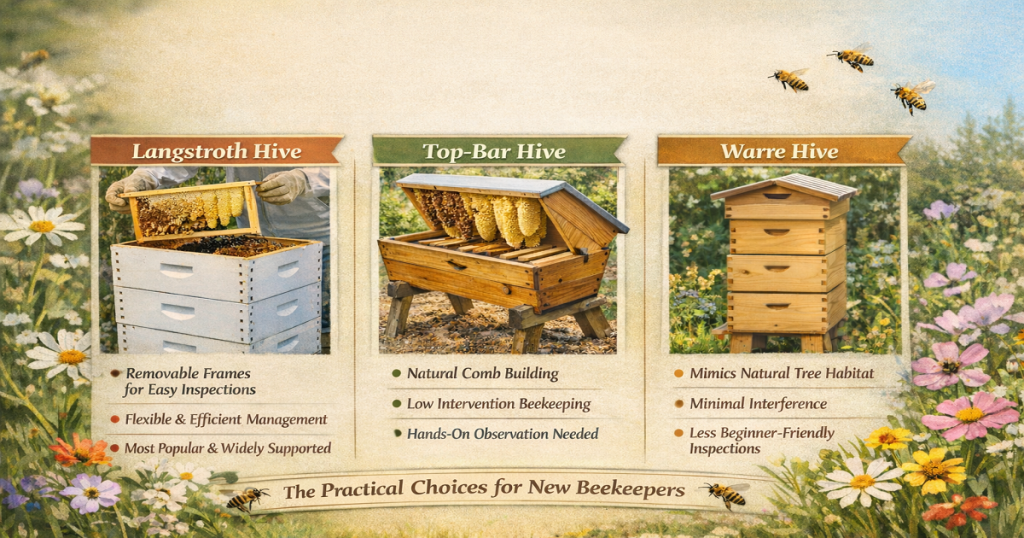
When learning how to set up a beehive for beginners, your hive choice should match your goals and management style. While many guides simply list options, real-world experience shows that simplicity and practicality matter most.
A Langstroth hive is the most reliable option if you want flexibility. Its removable frames make hive inspection easier and allow you to manage issues like overcrowding or pests more effectively. It’s widely used, which means there’s more support and resources available.
A top-bar hive is better suited for those focused on natural beekeeping for beginners. Bees build comb freely, which reduces intervention, but it requires a bit more observation and care when handling comb.
If your goal is minimal interference, a Warre-style hive works well. It mimics natural tree cavities and supports a more hands-off approach, but it’s slightly less beginner-friendly when it comes to inspections.
Make Sure Bee-Friendly Environment
Before bees choose your hive, they evaluate the surrounding environment. This is one of the most overlooked parts of how to attract bees to a new hive. Even a perfect hive box won’t succeed if the surrounding area lacks food or safety.
Start by building a strong pollinator garden. Focus on diverse flowering plants that bloom at different times of the year. This ensures a continuous supply of nectar and pollen, which supports both initial attraction and long-term colony growth.
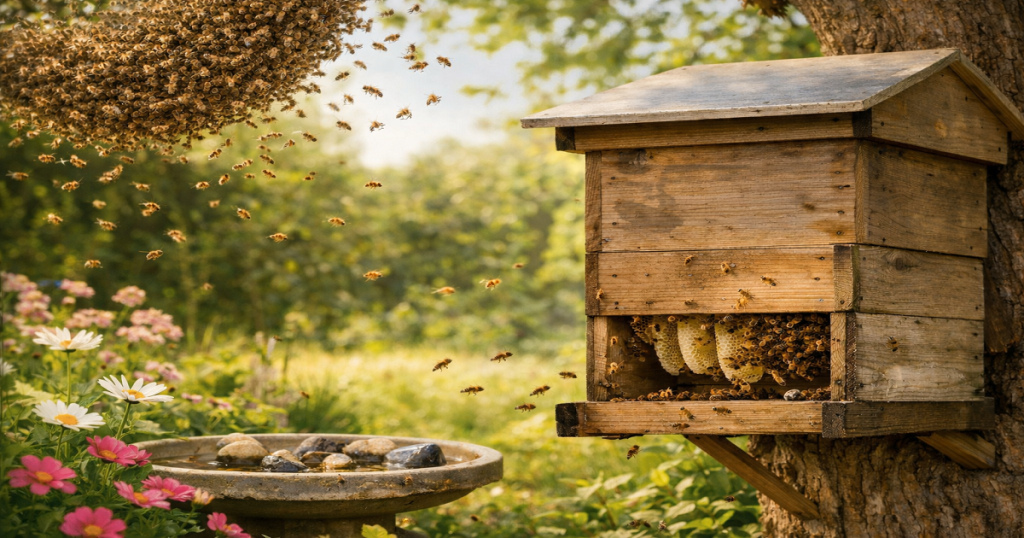
Water is equally important. Bees use water to regulate hive temperature and feed developing larvae. A shallow water source with stones or floating debris provides bees with a safe place to land.
Avoid chemical pesticides at all costs. Even small amounts can harm bees or discourage them from settling. A clean, natural environment is essential for creating a sustainable bee habitat.
Step-by-Step Guide to Starting a Beehive
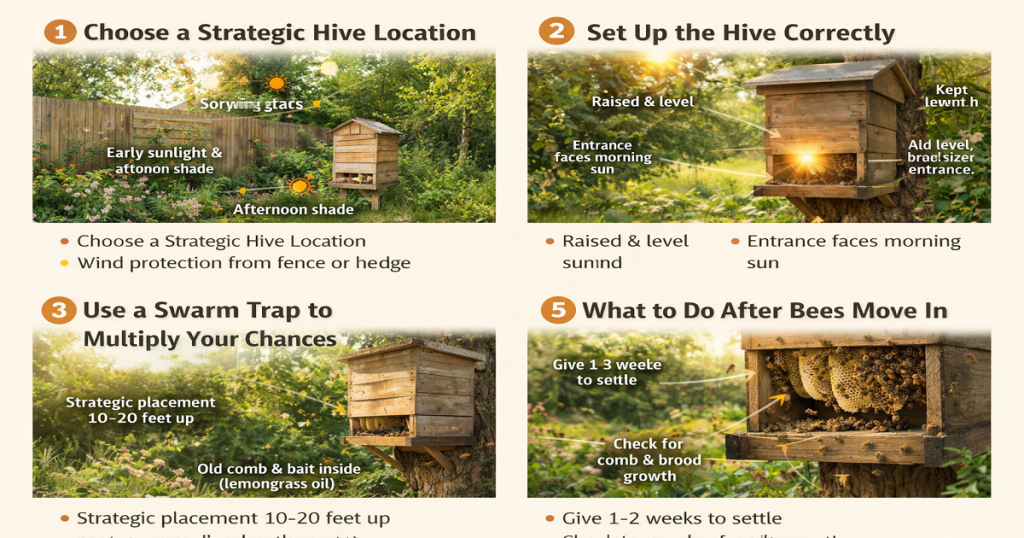
Choose a strategic hive location.
The best hive locations are not random—they are chosen based on bee behavior. Bees prefer locations with early sunlight, which helps them start foraging sooner. At the same time, some afternoon shade prevents overheating, especially in warmer climates.
Wind protection is another key factor. Strong winds can disrupt flight paths and stress the colony. Placing your hive near a fence, hedge, or natural barrier helps create a stable environment. Ideally, your hive should also be positioned away from high-traffic areas to reduce disturbances.
Set Up the Hive Correctly
Setting up your hive properly increases your chances of attracting a swarm. The hive should be raised slightly off the ground to prevent moisture buildup and pest intrusion. Keeping it level is critical, as bees build honeycomb based on gravity, and uneven surfaces can lead to irregular comb structures.
The entrance should face a direction that gets morning sunlight. This encourages early activity and helps bees orient themselves. A smaller entrance is often more attractive to swarms because it’s easier to defend from predators.
Use a swarm trap to multiply your chances.
A swarm trap is one of the most effective tools for starting a beehive without buying bees. In fact, experienced beekeepers rarely rely on a single hive—they use multiple traps placed strategically.
The ideal trap size is around 35–45 liters, which matches the volume bees naturally prefer. Placement matters just as much as size. The most successful traps are usually placed 10–20 feet high, along tree lines or near areas where bees are already active.
Adding old comb or beeswax significantly increases your success rate. Scout bees are drawn to the smell of previously inhabited spaces. A few drops of lemongrass oil can mimic queen bee pheromones, further increasing attraction.
Understand How Bees Decide to Move In
Bees don’t choose a new home randomly. Scout bees evaluate multiple locations and communicate through a “waggle dance” to vote on the best option. This process can take several days.
If your hive meets their criteria—correct size, safe location, good smell, and nearby nectar sources—the swarm will move in. Once the queen bee enters, the rest of the colony follows. This marks the beginning of your hive’s establishment.
What to Do After Bees Move In
Once bees occupy your hive, it’s important not to disturb them too quickly. Give them at least one to two weeks to settle and start building a honeycomb. During this time, worker bees organize the colony, and the queen begins laying eggs.
Your first hive inspection should be gentle and brief. Look for signs of activity such as comb construction, brood presence, and regular foraging patterns. This confirms that the colony is stable and growing.
Common Reasons Bees Don’t Choose Your Hive
Poor placement is one of the most common reasons bees reject a hive. Traps placed in deep shade, strong wind, heavy disturbance, or damp low areas are less attractive. Honey bees often prefer stable, slightly elevated spaces that resemble natural tree cavities. Nearby forage also matters. If flowers, nectar, and pollen sources are limited, scout bees may search elsewhere even if the hive itself looks suitable.
Hive scent plays a major role in acceptance. Brand-new wooden boxes often lack the familiar smell of beeswax, propolis, and old comb that tells scout bees the cavity is safe. In practice, adding wax or a small piece of a used comb can dramatically improve interest because it creates the scent profile of an established colony.
Common Beginner Mistakes
Many beginners struggle because of small but important mistakes. Checking the hive too often can disturb bees; using scentless new equipment lowers attraction, and relying on only one trap reduces your chances. Ignoring local bee populations and seasonal swarm timing can also delay success.
Frequently Asked Questions (FAQ)
How long does it take to catch a swarm?
It can take anywhere from a few days to an entire season depending on local swarm activity, trap placement, and environmental conditions.
Can you start beekeeping with wild bees?
Yes. Many successful beekeepers start with wild swarms, rescued colonies, or natural hive splits from local bees.
Are free bees safe?
Most swarms are relatively gentle, but temperament varies. Always wear protective gear and inspect colonies for pests and disease.
What attracts honeybees to a hive?
Honey bees are attracted by suitable cavity size, old brood comb scent, propolis odor, and strategic hive placement.
Do I need a queen bee?
Yes. A healthy colony requires a queen to lay eggs and maintain colony growth. Most swarms already contain a queen.
Can I keep bees in my backyard?
Many people keep backyard bees legally, but regulations vary by city, county, and homeowners association.
What is the cheapest way to start beekeeping?
Using free swarm traps, catching swarms, and obtaining local hive splits are among the cheapest ways to start beekeeping.
What should I do if my swarm leaves the hive?
A newly captured swarm may abscond if the hive is unsuitable. Adding drawn comb and minimizing disturbance can improve retention.
Do bait hives work every year?
Bait hives can work consistently, but success depends on timing, location, local bee populations, and environmental conditions.
Conclusion
Learning how to start a beehive without buying bees is about understanding nature and working with it, not against it. By focusing on swarm behavior, proper hive setup, and a strong bee-friendly environment, you can successfully establish a thriving colony without purchasing bees.
The key is patience, observation, and small strategic improvements. When done correctly, this method not only saves money but also creates healthier, more resilient colonies that support pollination, backyard gardening, and the broader ecosystem.