If you want to learn how to start a honey bee colony, you need more than basic instructions—you need a complete understanding of how a bee colony actually works in real conditions.
Many beginner guides explain how to set up a beehive or install bees in a hive, but they skip what truly matters: colony survival, growth, and productivity over time. In real beekeeping, success depends on your ability to read the hive, respond to seasonal changes, and support natural processes like nectar flow, brood development, and honey production.
I’ve seen beginners lose entire colonies within weeks due to small mistakes—like poor queen introduction, lack of feeding, or ignoring early pest signs. On the other hand, a properly managed hive can grow rapidly, produce surplus honey, and remain strong year after year.
In this guide, you’ll learn:
- How to start a honey bee colony step by step for beginners
- What you really need to build a strong hive
- How to manage bees in different seasons
- How bees make honey step by step (deep explanation)
- Advanced strategies to increase honey production
This is not just theory—it’s how experienced beekeepers actually manage successful colonies.
Understanding the Honey Bee Colony (Real Working System)
A colony of Apis mellifera behaves like a single living organism. Every bee has a role that changes over time.
Roles Inside the Hive
Queen Bee
- Lays eggs continuously
- Controls colony stability through pheromones
- Poor queen = weak colony (this is one of the most common beginner failures)
Worker Bees
- Clean cells
- Feed larvae
- Produce wax
- Guard the hive
- Become foraging bees collecting nectar
Drone Bees
- Exist only for mating
- Do not contribute to hive work
Worker Bee Roles (Age-Based System)
Understanding this gives you a major advantage:
| Age | Role |
| Day 1–3 | Cleaning cells |
| Day 4–10 | Feeding brood |
| Day 11–18 | Wax building & hive work |
| Day 19+ | Foraging (nectar gathering process) |
If this cycle breaks, colony productivity drops.
What Do You Need to Start a Bee Colony?
Essential Beginner Beekeeping Setup
- Beehive (Langstroth recommended)
- Brood box (for eggs and larvae)
- Honey super (for honey storage)
- Frames + foundation
- Protective gear
- Smoker + hive tool
Choosing Hive Location (Advanced Insight)
This is where many beginners fail.
Ideal Conditions:
- Morning sunlight → activates bees early
- Wind protection → prevents stress
- Nearby water source
- Rich floral area (important for nectar flow)
Real Insight: I’ve seen identical colonies perform completely differently just because of location.
How to Start a Honey Bee Colony Step by Step for Beginners
Step 1: Set Up the Beehive
- Use a stand (avoid moisture + pests)
- Ensure airflow
- Align frames properly
Step 2: Choose Bees (Critical Decision)
Installing Package Bees
- Requires careful handling
- Higher beginner risk
Starting Colony with Nucleus Hive (Best Option)
- Already includes brood
- Faster colony growth
Professional recommendation: Start with a nuc.
Step 3: Installing Bees in Hive
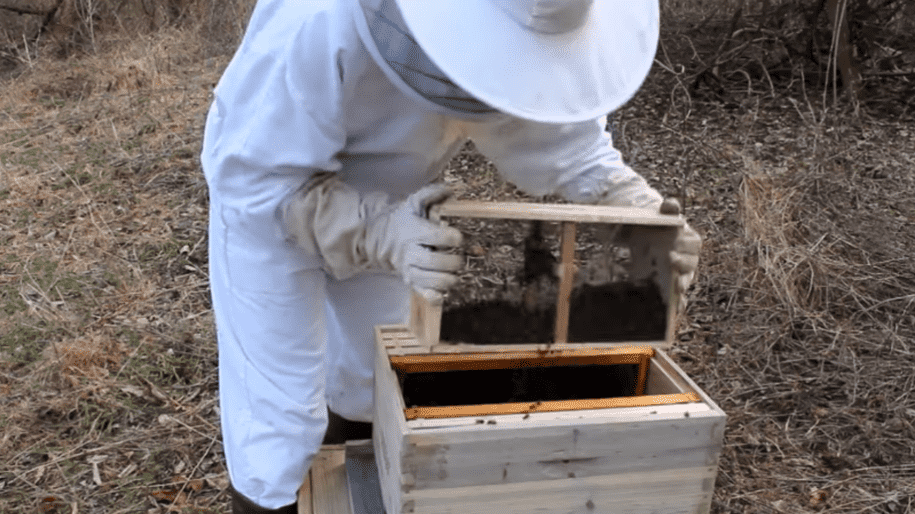
- Place the queen cage carefully
- Shake bees into the hive
- Close and leave undisturbed
If bees reject the queen → colony fails quickly.
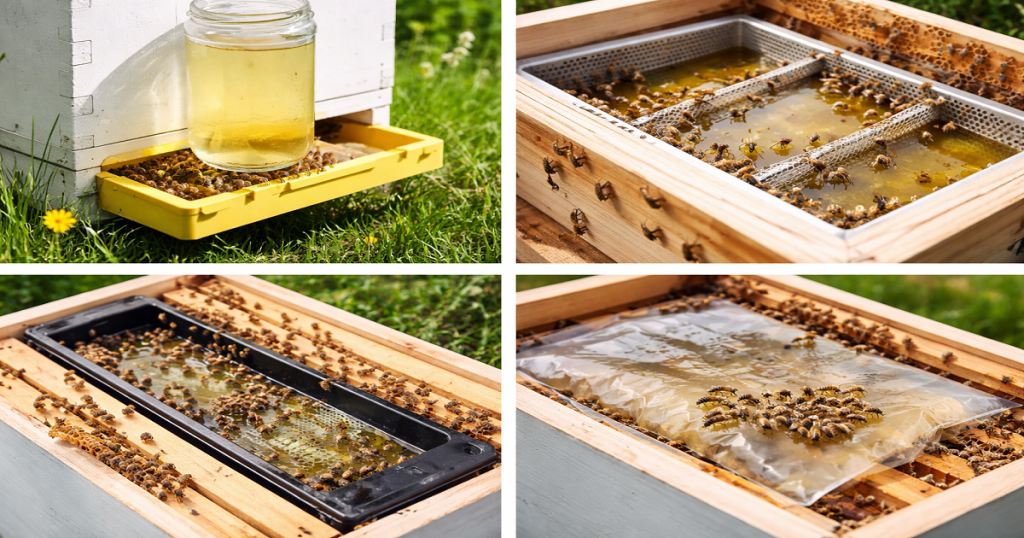
Step 4: Feeding Bees
New colonies need support.
- Sugar syrup feeding (1:1)
- Boosts wax production and brood growth
Without feeding, early colony development slows significantly.
Step 5: Monitor Brood Development
Healthy brood stages:
- Egg → Larva → Pupa
Expert Tip:
A solid brood pattern = strong colony
Patchy brood = disease or queen issue
How Bees Make Honey Step by Step (Deep Scientific + Practical Explanation)
Understanding this helps you increase production.
1. How Bees Collect Nectar from Flowers
Forager bees gather flower nectar using their proboscis.
This begins the nectar-gathering process.
2. Enzyme Activity (Inside the Bee)
Inside the honey stomach:
- Invertase enzyme → sucrose breakdown
- Converts to glucose and fructose
- Called invertase breakdown
Also:
- Glucose oxidase → produces gluconic acid
- Creates acidic pH and antibacterial effect
This is why honey has natural preservation power.
3. Regurgitation Process & Trophallaxis
- Bees pass nectar mouth-to-mouth
- Called trophallaxis (bee-to-bee transfer)
- Improves enzyme distribution
4. Evaporation Process (Moisture Reduction)
Fresh nectar:
- ~70% water
Final honey:
- ~18% water
Bees:
- Fan wings (hive ventilation process)
- Reduce moisture
This step defines how bees dry nectar into honey
5. Honeycomb Storage & Wax Capping
- Stored in honeycomb cells
- Sealed (wax capping process)
Final honey has:
- High osmotic pressure
- Antimicrobial properties
Hive Inspection Routine (Expert-Level)
What Professionals Look For:
- Eggs (proof of queen)
- Brood pattern quality
- Honey stores
- Pest signs
Real Scenario:
- No eggs for 7 days → queen likely dead
- Multiple eggs per cell → laying worker problem
This is where experience matters most.
Queen Problems & Requeening
Signs of Queen Failure:
- No eggs
- Aggressive bees
- Weak population
Requeening Process:
- Remove the old queen
- Introduce a new queen in the cage
- Allow gradual release
Timing matters — a wrong introduction leads to rejection.
Hive Splitting (Advanced Growth Strategy)
Why Split a Hive?
- Prevent swarming
- Create new colonies
- Increase productivity
Basic Method:
- Move frames with brood + bees
- Add a new queen
This is how professionals scale apiaries.
Seasonal Hive Management (Real Strategy)
Spring
- Rapid growth
- Add space early
- Prevent swarming
Summer
- Peak honey production
- Manage nectar flow
Autumn
- Prepare for winter
- Reduce hive size
Winter
- Insulate hive
- Provide food
Pest and Disease Control (Deep Level)
Varroa Mites
- Most dangerous pest
- Weakens bees + spreads viruses
Treatment Threshold:
- Above 3% infestation → action required
Ignoring mites = colony collapse.
How to Increase Honey Production
Key Factors:
- Strong queen
- Large worker population
- Good nectar flow
- Proper hive expansion
Strong colonies produce 3–5× more honey
Cost to Start a Bee Colony (NEW SECTION)
| Item | Cost Range |
| Hive setup | $100–$300 |
| Bees (nuc/package) | $50–$150 |
| Gear | $50–$200 |
Total beginner cost: $200–$600
Apiary Layout (Multiple Hive Setup)
- Keep hives spaced 1–2 meters apart
- Face entrances in the same direction
- Ensure airflow
Prevents drifting and disease spread.
Floral Calendar & Nectar Sources (CRITICAL SEO GAP FIXED)
Why It Matters:
Honey production depends on available flowers.
Example:
- Spring: mustard, clover
- Summer: wildflowers
- Autumn: late blooms
Understanding this improves nectar flow management.
Common Beginner Mistakes (Real Experience)
- Opening the hive too often
- Ignoring pests
- Poor feeding
- Wrong hive location
These cause most colony failures.
FAQ Section
How to start a honey bee colony step by step for beginners?
Set up the hive, install bees, feed, and monitor regularly.
How long does it take bees to make honey?
2–4 weeks during strong nectar flow.
How to maintain a healthy bee colony year-round?
Seasonal care, inspections, and feeding.
How to prevent bees from swarming?
Add space and split colonies.
Why do bees make honey?
To survive winter.
Conclusion
Starting a colony is only the beginning. Real success comes from understanding how to manage a honey bee colony, respond to changes, and support natural systems like honey production and pollination.
When you combine:
- Proper setup
- Strong management
- Deep biological understanding
You build a productive, resilient, and profitable bee colony