
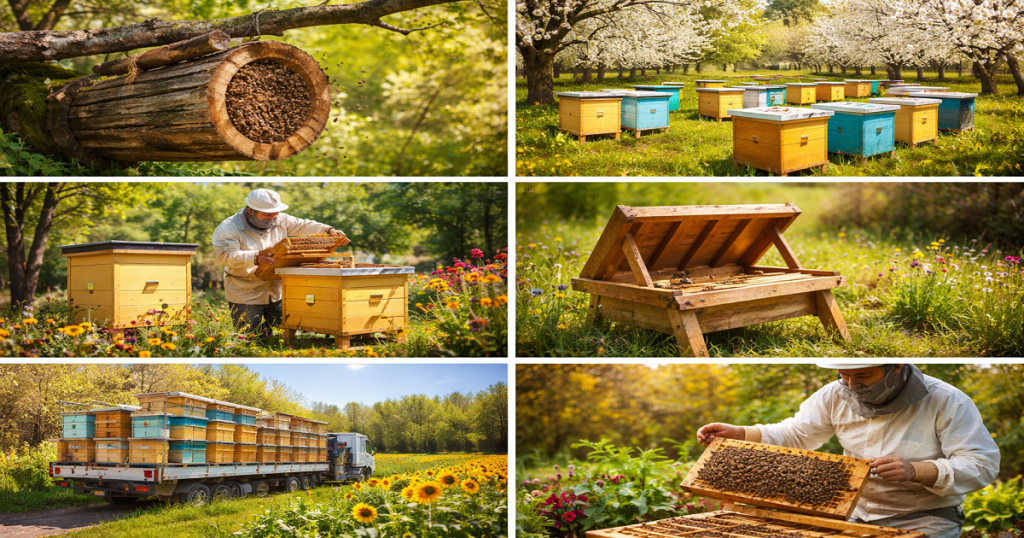
Beekeeping is more than a hobby—it’s a delicate balance of science, art, and ecological responsibility. Whether you are a beginner curious about different types of beekeeping, a gardener looking to improve pollination, or an entrepreneur interested in commercial honey production, choosing the right beekeeping method is essential for success.
The diversity of beekeeping styles reflects the various goals and philosophies of beekeepers. Some focus on natural bee behavior and sustainability, while others aim to maximize honey production using modern bee management systems. Knowing the differences can save time, money, and effort while ensuring colony health and long-term productivity.
In this comprehensive guide, you’ll discover:
- The 7 main types of beekeeping and their practical applications
- Advantages, disadvantages, and suitability for beginners
- How hive management, seasonal strategies, and pest control influence honey yield
- Step-by-step explanations of how bees make honey and how each system affects production
By the end, you’ll have the knowledge to choose the right beekeeping approach and maintain healthy, productive hives.
Understanding the Different Types of Beekeeping
Beekeeping can be classified based on hive systems, scale, or philosophy. The seven most important beekeeping methods are:
- Traditional Beekeeping
- Modern Beekeeping
- Natural Beekeeping
- Backyard Beekeeping
- Commercial Beekeeping
- Migratory Beekeeping
- Organic / Sustainable Beekeeping
Each method has unique practices, advantages, and challenges. Let’s explore them in depth.
Traditional Beekeeping Methods
Traditional beekeeping is one of the oldest methods. It uses simple hives made of natural materials like wood, clay, or logs. Bees are left to build their own honeycomb, making it a low-intervention approach.
Typical Hive Types:
- Log hives
- Clay hives
- Fixed comb hives
How It Works:
Bees naturally construct a honeycomb inside the hive. Harvesting honey involves cutting out sections of the comb, which may disturb the colony.
Advantages:
- Minimal equipment required
- Low startup costs
- Supports natural bee behavior
Disadvantages:
- Lower honey yields than modern systems
- Difficult hive inspections
- Limited control over swarming
Expert Tips:
Best for rural beginners or hobbyists seeking a natural approach. Monitor hives for pests like wax moths or small hive beetles. Use smoke carefully to minimize colony stress.
Modern Beekeeping Systems
Modern beekeeping uses movable-frame hives, such as the Langstroth system, enabling hive inspections and structured apiary management.
Key Features:
- Frames for easy removal and inspection
- Separate brood box and honey super
- Facilitates swarm control and high honey yields
Advantages:
- Maximizes honey production
- Easier pest and disease management
- Scalable from backyard to commercial operations
Disadvantages:
- Requires investment in equipment
- Needs training for effective hive management
Practical Insight:
Modern systems make it easier to manage nectar flow, colony health, and seasonal tasks. Ideal for beginners who want to learn hive management while producing consistent honey yields.
Natural Beekeeping
Natural beekeeping, also called chemical-free or treatment-free, minimizes human interference and promotes sustainable ecosystems.
Principles:
- No synthetic chemicals
- Bees follow natural behavior
- Hives designed to support minimal stress
Hive Types:
- Top-bar hives
- Warre hives
Advantages:
- Eco-friendly and sustainable
- Encourages healthy colonies
- Honey is chemical-free
Disadvantages:
- Lower yields compared to intensive systems
- Higher risk from pests like Varroa mites
- Requires patience and observation
Expert Tips:
- Excellent for hobbyists prioritizing sustainable beekeeping techniques
- Monitor colonies closely during nectar flows and winter
- Understand bee behavior, including the queen bee’s role and worker bee activity
Backyard Beekeeping (Small-Scale)
Backyard beekeeping is ideal for beginners and urban environments, combining small-scale honey production with ecological benefits.
Features:
- 1–5 hives in gardens or small plots
- Focus on honey production, pollination, and observation
- Uses modern or natural hives
Advantages:
- Easy to manage
- Low-cost entry
- Supports local pollination and the ecosystem
Disadvantages:
- Limited income potential
- Requires regular hive inspections and seasonal care
Beginner Tips:
- Start with a Langstroth or Top-Bar hive
- Learn the roles of queen bees, worker bees, and drones
- Track nectar flow and honey harvest timing
Commercial Beekeeping
Commercial beekeeping focuses on maximizing honey production, selling beeswax, and providing pollination services.
Scale:
- Hundreds to thousands of hives
- Managed professionally for maximum output
Advantages:
- High profit potential
- Large-scale honey and beeswax production
- Access to pollination contracts for farms
Disadvantages:
- High initial investment
- Labor-intensive
- Requires advanced colony health management
Expert Insight:
Commercial operations often rely on migratory practices to follow nectar flow across regions, improving honey yield.
Migratory Beekeeping
A subset of commercial operations, migratory beekeeping, involves moving hives seasonally to optimize honey production and pollination.
Practices:
- Transport hives to orchards or crop fields based on bloom
- Manage colonies during relocation to minimize stress
Benefits:
- Maximizes honey and crop pollination
- Keeps bees in continuous access to nectar
- Increases commercial revenue
Challenges:
- Transportation stress on bees
- Higher operational costs
- Complex logistics
Organic / Sustainable Beekeeping
This method prioritizes chemical-free honey production and environmental stewardship.
Principles:
- No synthetic treatments
- Focus on colony health and biodiversity
- Hive design supports natural bee activity
Advantages:
- Produces premium organic honey
- Supports long-term sustainability
- Minimal environmental impact
Disadvantages:
- Lower yields compared to commercial intensive systems
- Requires careful hive observation and seasonal management
Hive Type Comparison
| Hive Type | Structure | Honey Yield | Management | Best For |
| Langstroth | Movable frames, super & brood box | High | Easy inspection | Modern backyard & commercial |
| Top-Bar | Horizontal bars, natural comb | Medium | Moderate | Natural/sustainable beekeeping |
| Warre | Vertical top-bar hive | Medium | Low intervention | Natural/ecological methods |
| Log / Clay | Fixed comb | Low | Difficult | Traditional hobbyists |
Honey Production Process in Bees
No matter the beekeeping type, honey is created naturally through the transformation of nectar into honey.
Step-by-Step Process:
- Nectar Collection – Forager bees collect nectar from flowers.
- Regurgitation & Trophallaxis – Nectar is passed among worker bees.
- Enzyme Activity – Invertase breaks sucrose into glucose and fructose; glucose oxidase creates hydrogen peroxide.
- Moisture Reduction – Bees ventilate the hive to reduce water content from ~70% → 18%.
- Honey Storage – Nectar is placed in honeycomb cells.
- Wax Capping – Cells are sealed to preserve honey.
Key Terms:
- Osmotic Pressure & Acidic pH – Prevents microbial growth
- Antimicrobial Properties – Ensures long-term storage
- Nectar Flow & Hive Ventilation – Essential for optimal honey quality
Seasonal Hive Management
Spring:
- Inspect for brood health
- Add supers for nectar flow
- Control early swarming
Summer:
- Maintain colony balance
- Harvest honey without stressing bees
- Monitor for pests
Autumn:
- Reduce hive stress
- Feed supplemental sugar if needed
- Prepare colonies for winter
Winter:
- Ensure cluster stability
- Protect against cold and moisture
- Minimal interference to preserve energy
Pest & Disease Management
- Varroa mites – Monitor with sugar shake or sticky boards
- Wax moths – Prevent with proper comb storage
- Small hive beetle – Trap or relocate infested frames
Choosing the Right Beekeeping Method
Consider:
- Purpose: Hobby, commercial, sustainable
- Time & labor availability
- Budget
- Experience level
Decision Tips:
- Beginners → Backyard, modern Langstroth
- Eco-conscious → Natural or organic
- Profit-driven → Commercial or migratory
Practical Tips & Common Mistakes
- Start small, expand gradually
- Learn bee behavior, including queens, workers, and drones
- Inspect hives regularly
- Avoid overharvesting honey
- Record nectar flow, honey yields, and colony health
FAQ Section
What are the different types of beekeeping?
Traditional, modern, natural, backyard, commercial, migratory, and organic.
How do bees make honey step by step?
Nectar collection → regurgitation → enzyme activity → evaporation → honey storage → wax capping.
Which type of beekeeping is best for beginners?
Backyard or small-scale Langstroth systems.
How long does it take bees to make honey?
It depends on nectar flow and colony size, typically several days to weeks.
How much honey does a bee produce in its lifetime?
A single worker produces ~1/12 teaspoon, but a hive produces tens of kilograms annually.
How do bees dry nectar into honey?
By evaporating moisture through wing fanning and hive ventilation.
What happens inside a beehive when making honey?
Bees pass nectar, digest sugars with enzymes, store it in honeycomb, and seal it with wax.
What is a brood box?
The section where the queen lays eggs and larvae develops.
How do bees share nectar?
Via trophallaxis, passing nectar mouth-to-mouth between bees.
What is nectar flow?
The period when flowers produce abundant nectar for bees to collect.
Conclusion
Choosing the right type of beekeeping depends on your goals, resources, and philosophy. Each system—traditional, modern, natural, backyard, commercial, migratory, or organic—has unique benefits and challenges. Understanding bee behavior, hive management, seasonal strategies, pest control, and honey production ensures healthy colonies and optimal yields. For beginners, backyard Langstroth hives are ideal, while advanced or commercial operations may benefit from migratory or organic methods. Prioritize sustainable practices and colony health to maintain a thriving apiary that produces high-quality honey for years to come.