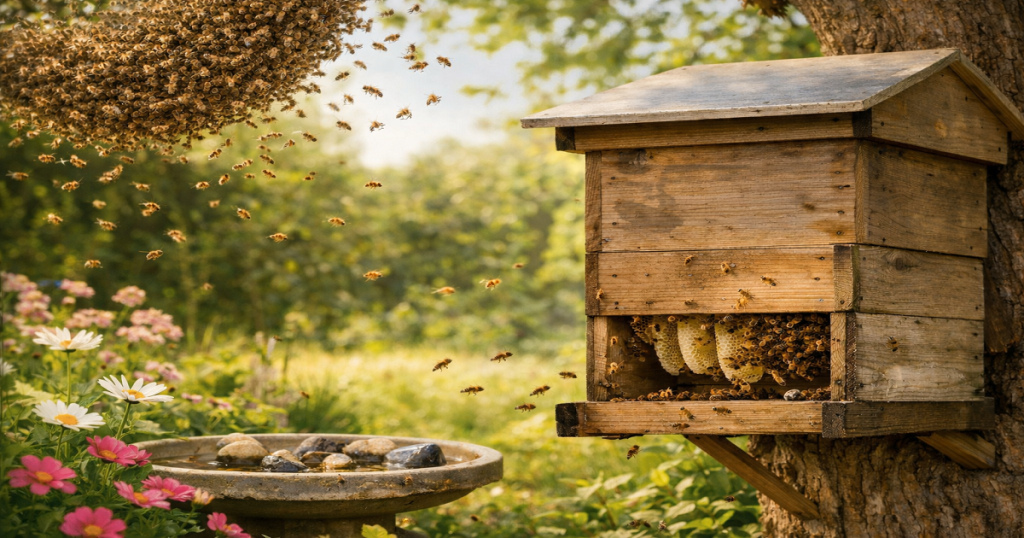
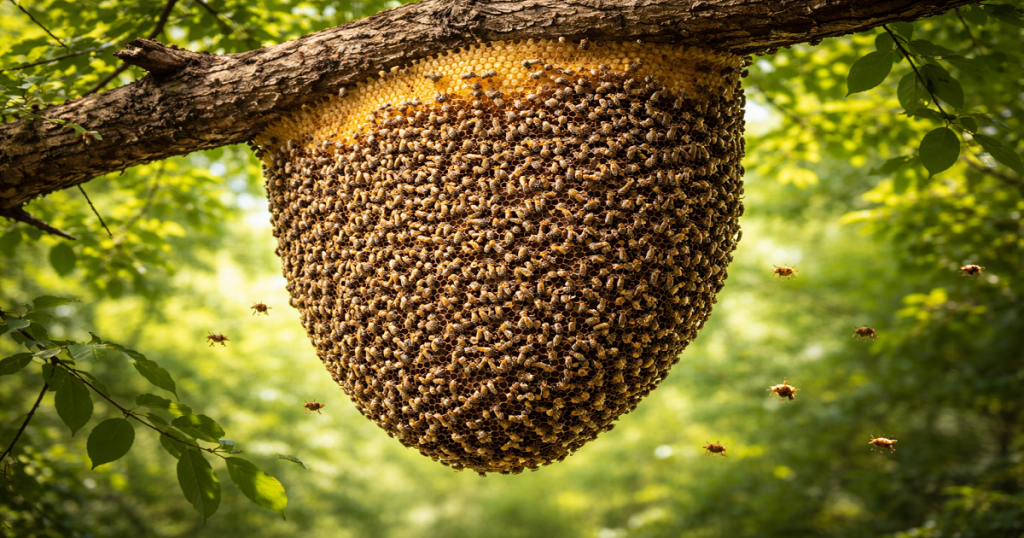
Natural honey bee hives are one of nature’s most remarkable creations. Without any human help, bees are able to build highly organized and self-sustaining homes that support their entire colony. Whether it’s a hollow tree filled with buzzing activity or a hive hanging naturally from a tree branch, these structures show how efficiently nature can design systems for survival.
If you’ve ever come across a wild beehive, you’ve likely witnessed a small but powerful ecosystem in action. Every bee has a role, and together they maintain a perfectly balanced community that works around the clock to survive and grow.
In this guide, we’ll take a clear and easy-to-understand look at natural honey bee hives—how bees build them, how the colony functions inside, the types of bees involved, and why these hives play such a vital role in keeping ecosystems and agriculture healthy. The goal is to make the topic simple and practical, so whether you’re just curious or looking to learn more deeply, you’ll find it easy to follow.
What Are Natural Honey Bee Hives?
A natural honey bee hive is a colony that bees build on their own in the wild, without any human setup or management. Unlike managed beehives used in beekeeping, these hives form purely through instinct and the bees’ ability to adapt to their surroundings.
Depending on the species and available environment, bees look for safe and sheltered places to build their home. Common locations include hollow trees, gaps in rocks, or sometimes exposed branches where they can stay protected from weather and predators. Once they settle, they begin constructing wax structures known as honeycombs.
These honeycombs are highly efficient and multifunctional. They are used for storing honey and pollen, raising young bees, and providing a structured living space for the entire colony—all within a carefully organized system.
From an environmental perspective, natural honey bee hives play an important role in maintaining ecological balance. They support pollination, which helps plants reproduce, and contribute directly to biodiversity and healthy food systems. Because of this, they are widely studied in fields like entomology, environmental science, and sustainable agriculture.
Structure of a Natural Bee Hive
One of the most fascinating features of a natural honey bee hive is its design. Even without tools or guidance, bees are able to build highly organized structures that are both strong and efficient.
The hive is primarily made from beeswax, a natural material produced by worker bees from special glands in their bodies. They shape this wax into honeycomb structures made up of hexagonal cells. This six-sided pattern isn’t random—it’s one of the most efficient shapes in nature because it provides maximum strength while using very little wax.
Inside a natural hive, different areas serve specific purposes:
- Brood cells—These are used for raising the next generation, including eggs, larvae, and pupae as they develop.
- Honey storage cells – These cells hold processed nectar, which becomes the colony’s food supply.
- Pollen storage areas – Often called “bee bread,” this stored pollen provides essential proteins and nutrients.
- Ventilation zones – Bees regulate airflow and temperature by fanning their wings, helping keep the hive stable in changing conditions.
What makes this structure truly remarkable is that it isn’t planned in a human sense. It comes from millions of years of evolution and instinctive behavior, allowing the colony to function as a highly efficient and self-regulating system.
Types of Natural Bee Hives
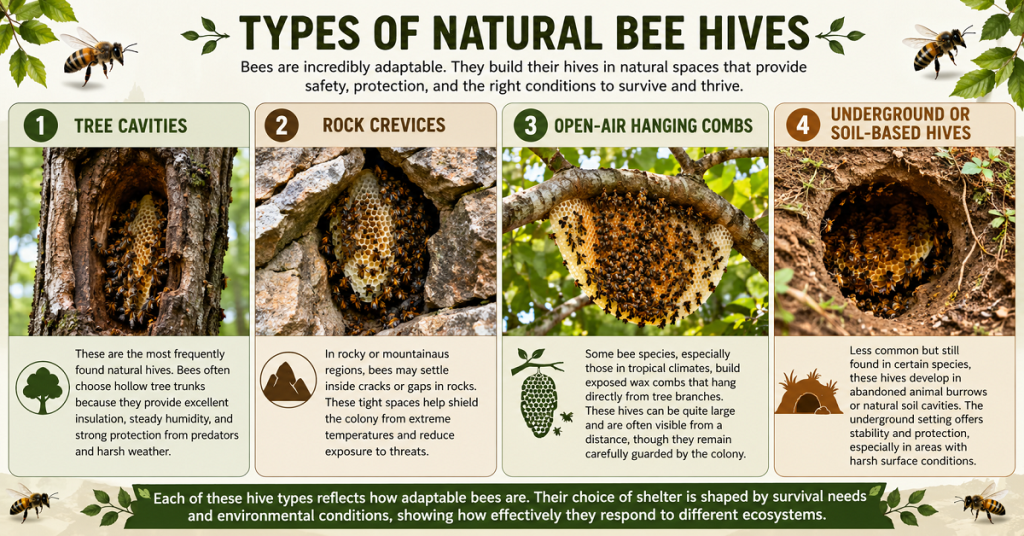
Natural bee hives are not all the same. Their form depends on the environment, climate, and the species of bees building them. Over time, bees have adapted to use whatever safe space is available, which leads to a few common types of natural hives.
Tree Cavities
These are the most frequently found natural hives. Bees often choose hollow tree trunks because they provide excellent insulation, steady humidity, and strong protection from predators and harsh weather.
Rock Crevices
In rocky or mountainous regions, bees may settle inside cracks or gaps in rocks. These tight spaces help shield the colony from extreme temperatures and reduce exposure to threats.
Open-Air Hanging Combs
Some bee species, especially those in tropical climates, build exposed wax combs that hang directly from tree branches. These hives can be quite large and are often visible from a distance, though they remain carefully guarded by the colony.
Underground or Soil-Based Hives
Less common but still found in certain species, these hives develop in abandoned animal burrows or natural soil cavities. The underground setting offers stability and protection, especially in areas with harsh surface conditions.
Each of these hive types reflects how adaptable bees are. Their choice of shelter is shaped by survival needs and environmental conditions, showing how effectively they respond to different ecosystems
Bee Species That Build Natural Hives
Different bee species don’t all build hives in the same way. Their nesting style, structure, and behavior vary based on biology and the environments they live in. This diversity is what makes natural beehives so interesting.
Western Honey Bee
The Western honey bee is the most widely recognized honey bee species in the world. These bees usually build well-organized wax combs inside enclosed spaces like hollow trees. Their colonies are highly structured, with clear roles and efficient hive management.
Asian Honey Bee
The Asian honey bee is commonly found across South and Southeast Asia. This species forms smaller, compact colonies and is well adapted to warm, tropical climates. It often shares similar nesting habits with other cavity-nesting bees but on a smaller scale.
Giant Honey Bee
The giant honey bee is known for building large, open-air combs that hang from tall trees or cliffs. These colonies are highly visible and tend to be very defensive when threatened.
Stingless Bees
Stingless bees, belonging to the Meliponini tribe, are unique pollinators found mostly in tropical regions. Instead of structured combs like honey bees, they store honey in small resin-based clusters and build hives using wax mixed with plant resins.
Each of these species contributes differently to pollination and ecosystem balance. Together, they help maintain plant diversity and support healthy natural environments.
How Natural Bee Hives Are Formed
Natural bee hives usually begin through a process called swarming, which is one of the most important survival strategies in honey bee colonies. It happens when a colony grows too large for its current space, and part of it splits off to start a new home.
Here’s how the process typically unfolds:
- Swarm separation – The old queen leaves the original hive, accompanied by a group of worker bees.
- Scout bees search for a site—A small group of bees explores the surroundings to find a safe and suitable location, such as a tree cavity or a sheltered branch.
- Site selection – The scouts communicate their findings, and through group decision-making, the colony agrees on the best location.
- Wax construction begins – Once settled, worker bees start producing wax and building the first honeycomb structures.
- Colony establishment – The queen begins laying eggs, and the new colony gradually grows and stabilizes.
What makes this process especially remarkable is the way decisions are made collectively, without any leader directing every step. This form of coordination—often described as collective intelligence—is widely studied in biology and even inspires research in fields like robotics and computer science.
Functions of a Natural Hive
A natural hive is much more than a place where bees live. It serves as the center of the colony’s daily activities, helping thousands of bees work together, raise young, store food, and survive changing seasons.
Brood Development
One of the hive’s most important roles is supporting the next generation of bees. The queen lays her eggs in specially prepared brood cells, where they develop into larvae and eventually mature into adult bees. This continuous cycle keeps the colony healthy and growing.
Honey Storage
Bees collect nectar from flowers and transform it into honey, which is stored inside wax cells. Honey acts as the colony’s main energy source and provides food during winter, bad weather, or times when flowers are scarce.
Pollen Storage
Along with honey, bees store pollen inside the hive. Pollen is rich in protein, vitamins, and minerals, making it an essential food source for developing larvae and young worker bees.
Temperature Regulation
Bees carefully control the temperature inside the hive to protect the brood and maintain colony health. During hot weather, worker bees fan their wings to improve airflow and cool the hive. In colder conditions, they cluster together to generate and conserve heat.
Communication Center
The hive also functions as a communication hub. Bees share important information using pheromones and behaviors such as the waggle dance, which helps other workers locate food, water, and other valuable resources. Together, these functions make a natural hive a highly organized and efficient living system, allowing the colony to thrive in the wild.
How Honey Is Produced in Natural Hives
Honey production is a remarkable process that combines the efforts of thousands of worker bees. From collecting nectar to storing finished honey, each step helps create a natural food source that supports the colony throughout the year.
Collecting Nectar
Worker bees visit flowering plants and gather nectar, a sweet liquid produced by flowers. They store the nectar in a special honey stomach before returning to the hive.
Breaking Down the Sugars
While transporting the nectar, bees mix it with natural enzymes. These enzymes begin converting complex sugars into simpler forms that are easier to digest and preserve.
Depositing Nectar into Honeycomb Cells
Once back at the hive, the bees transfer the processed nectar into hexagonal wax cells within the honeycomb. At this stage, the nectar still contains a high amount of water.
Removing Excess Moisture
Worker bees fan their wings to create airflow throughout the hive. This helps evaporate excess water from the nectar, gradually thickening it and reducing the risk of spoilage.
Storing Finished Honey
When the moisture content reaches the proper level, the nectar becomes honey. Bees store it in honeycomb cells and seal the cells with a thin layer of wax to keep the honey fresh until it is needed.
Why Natural Hive Honey Is Special
Honey produced in natural hives is often prized for its minimal processing and wide variety of floral sources. Depending on the environment where the bees forage, it may be known as raw honey, wild forest honey, or unprocessed organic honey. These natural variations can influence the honey’s color, flavor, aroma, and nutritional profile.
The entire process demonstrates the close relationship between bees and flowering plants, making honey production one of nature’s most efficient examples of plant-pollinator cooperation.
Ecological Importance of Natural Bee Hives
Natural bee hives are essential to the health of ecosystems around the world. Beyond producing honey and supporting bee colonies, they help sustain plant life, wildlife, and many of the natural processes that keep environments thriving.
Supporting Pollination
As bees travel between flowers collecting nectar and pollen, they transfer pollen from one plant to another. This process, known as pollination, enables many plants to produce seeds, fruits, and new generations of growth. Countless wild plants and crops depend on bee pollination for successful reproduction.
Maintaining Biodiversity
Natural bee hives help support a wide variety of plant species. When plants thrive, they provide food and shelter for insects, birds, mammals, and other wildlife. This interconnected relationship helps maintain biodiversity and strengthens ecosystem resilience.
Contributing to Food Production
Many fruits, vegetables, nuts, and other crops benefit from bee pollination. By supporting healthy pollination networks, natural bee hives contribute to agricultural productivity and help sustain global food supplies.
Assisting Forest Regeneration
Bees also play an important role in forest ecosystems. By pollinating flowering trees, shrubs, and understory plants, they help forests regenerate naturally and support the growth of diverse plant communities.
Threats Facing Natural Bee Hives
Although natural bee hives are essential for healthy ecosystems, they face a growing number of challenges. These threats can weaken colonies, reduce bee populations, and affect the important pollination services that bees provide.
Habitat Loss
One of the biggest threats to wild bee colonies is habitat loss. When forests are cleared or natural landscapes are developed, bees lose important nesting sites such as hollow trees, rock crevices, and other protected spaces. Fewer nesting locations make it harder for colonies to establish and survive.
Climate Change
Changes in temperature, rainfall patterns, and seasonal weather can disrupt the natural relationship between bees and flowering plants. In some cases, flowers may bloom earlier or later than usual, making it difficult for bees to find reliable food sources when they need them most.
Pesticide Exposure
Certain pesticides can harm bees directly or affect their ability to navigate, forage, and communicate. Even low levels of chemical exposure may weaken a colony over time, making it more vulnerable to other environmental stresses.
Diseases and Parasites
Wild bee colonies can be affected by diseases, fungi, bacteria, and parasites. Among the most serious threats are parasitic mites, which feed on bees and can spread harmful pathogens throughout a colony. Once established, these problems can quickly reduce colony health.
Human Interference
Human activities can also put natural hives at risk. Destroying hives, disturbing nesting sites, or harvesting excessive amounts of honey can weaken colonies and reduce their chances of long-term survival. Responsible conservation practices help minimize these impacts.
Frequently Asked Questions (FAQs)
What are the benefits of natural honey bee hives?
They improve colony health, produce chemical-free honey, and support biodiversity and ecosystem balance.
Why are natural bee hives better than artificial hives?
They allow natural behavior, reduce stress, and enhance disease resistance.
Do natural hives produce less honey?
Yes, but the honey is typically higher in quality and nutritional value.
Can natural beekeeping prevent colony collapse disorder?
It reduces key risk factors like stress and chemical exposure, improving colony survival.
How do natural hives survive winter?
Through better insulation, natural clustering, and efficient honey storage.
What is the role of propolis in natural hives?
It acts as an antimicrobial barrier, protecting the colony from pathogens.
Is natural beekeeping profitable?
It can be on a small scale, especially for premium organic honey markets.
How do natural hives control pests like Varroa mites?
Through natural selection, grooming behavior, and optimized hive conditions.
What is sustainable honey harvesting?
Harvesting honey without harming the colony or removing essential food reserves.
How can I support wild bee populations?
Plant native flowers, avoid pesticides, and protect natural habitats.
Conclusion
Natural honey bee hives are far more than simple insect nests. They are highly organized living systems where thousands of bees work together to raise young, store food, regulate their environment, and support the survival of the colony.
From the remarkable architecture of the honeycomb to the complex behaviors that guide daily hive life, every part of a natural hive serves an important purpose. These colonies also provide benefits far beyond the hive itself by supporting pollination, maintaining biodiversity, and contributing to healthy ecosystems and agricultural production.
By understanding how natural bee hives function and the challenges they face, we gain a greater appreciation for the vital role bees play in our world. Protecting natural hives is not only about conserving bees—it is about safeguarding the ecosystems and food systems that support life on Earth.