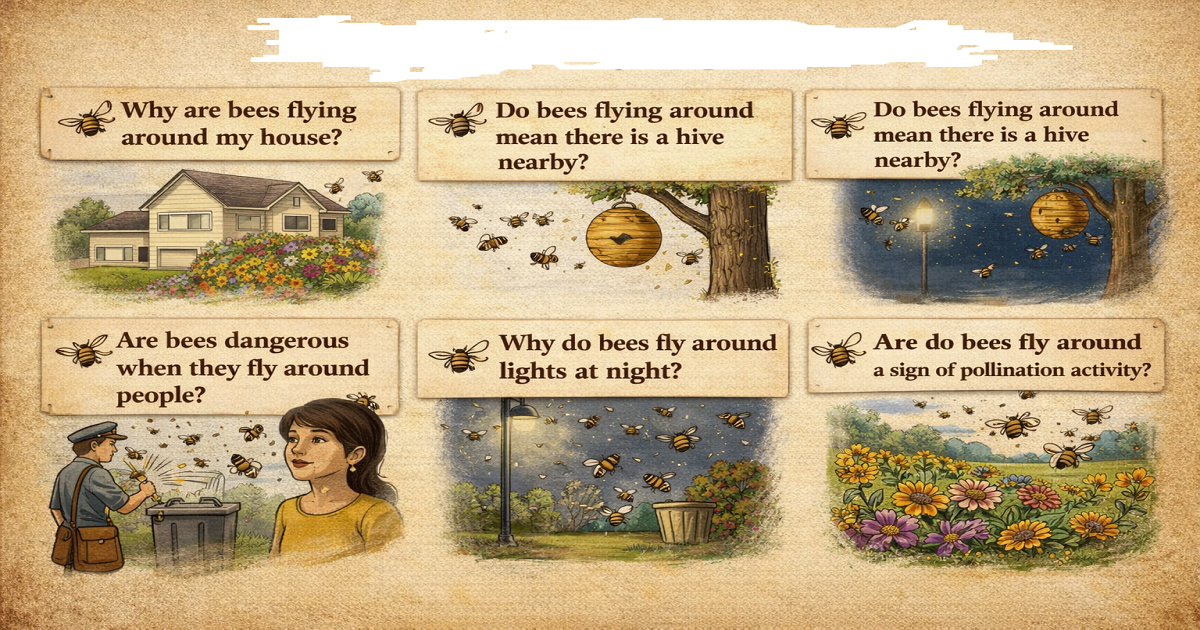
Few outdoor experiences are as unexpected as having a bee hover near your face or circle around you. It’s a situation that often causes concern and raises a common question: Why are bees flying around me?
The good news is that, in most cases, a bee flying nearby is not trying to sting you. Bees spend much of their time searching for food and water to support their hive. During this process, they use their senses to detect colors, scents, and other environmental cues that help them locate flowers rich in nectar and pollen.
Sometimes, people unintentionally attract a bee’s attention. Sweet-smelling perfumes, scented lotions, sweat, brightly colored clothing, or even sugary foods and drinks can resemble the signals bees associate with flowering plants. As a result, a bee may briefly investigate by hovering nearby, circling your head, or landing on your skin.
This behavior is usually driven by curiosity and normal foraging activity rather than aggression. Most bees will move on once they realize you are not a food source.
In this guide, you’ll learn the science behind why bees are attracted to certain people, why they sometimes fly around your head, when they may become defensive, and what you can do to reduce bee encounters while spending time outdoors.
Why Do Bees Fly Around People?
In most cases, bees fly around people because they are investigating something that catches their attention—not because they are preparing to sting. Worker bees spend much of their time searching for nectar, pollen, and water to bring back to their hive. To find these resources, they rely on visual and scent-based clues in their environment.
A bee may be attracted to:
- Sweet or sugary smells
- Floral fragrances from perfumes, lotions, or sunscreen
- Brightly colored clothing
- Moisture from sweat or water sources
- Sugary foods and drinks
People often produce these signals without realizing it. For example, exercising outdoors can leave traces of sweat on your skin, while a scented body spray or a fruit-flavored drink can create scents that bees associate with flowering plants.
When a bee approaches, it is usually just checking whether a potential food source is nearby. If it doesn’t find nectar, pollen, or water, it will typically lose interest and continue its search elsewhere within a few seconds.
Why Bees Are Attracted to Humans
If a bee seems interested in you, it’s usually responding to the same signals it uses to find flowers. Bees have evolved highly effective sensory systems that help them locate nectar, pollen, and water. In many cases, people accidentally give off cues that resemble those natural resources.
Here are the three main reasons bees may be attracted to humans.
Bees Have a Remarkable Sense of Smell
A bee’s antennae are covered with thousands of sensory receptors that detect scents in the air. These receptors help bees find flowers by following the chemical compounds released by blooming plants.
Certain everyday products can produce similar scents, including:
- Perfume and cologne
- Scented lotions and sunscreen
- Shampoo and hair products
- Floral-scented laundry detergents
- Fruity body sprays
When these fragrances resemble the scent of flowers, a bee may fly closer to investigate. Scientists refer to the trail of airborne scent molecules as a scent plume, which bees can follow to locate a potential food source.
Bees Are Sometimes Attracted to Sweat and Moisture
It can be surprising when a bee lands on your skin, especially on a hot day. However, this behavior is often linked to moisture rather than aggression.
Human sweat contains the following:
- Sodium
- Potassium
- Trace minerals
- Water
Bees occasionally seek out moisture and mineral-rich water sources, particularly during warm weather or dry conditions. A bee that briefly lands on sweaty skin may simply be collecting water or dissolved minerals before flying away.
Bright Colors Can Catch a Bee’s Attention
Bees use vision as well as scent to locate flowers. Their eyes are especially sensitive to colors commonly found in nectar-producing plants, including blue, violet, yellow, and ultraviolet patterns.
Because of this, brightly colored clothing can sometimes attract a bee from a distance. Floral prints and flower-like patterns may also encourage a closer look. In most cases, the bee is only investigating and will move on once it determines that you are not a flower.
Why Do Bees Circle Your Head?
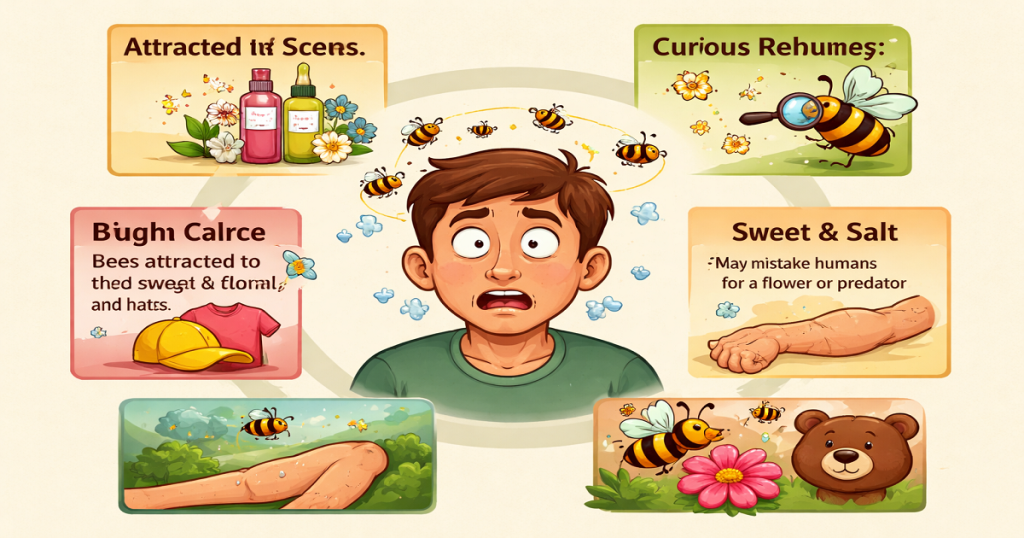
Many people notice bees flying around their head or face and assume the insect is acting aggressively. In reality, this behavior is usually harmless. Bees are often responding to scents, moisture, warmth, or movement that happen to be strongest around your head.
Scented Hair Products Can Attract Bees
Your hair may carry fragrances that smell appealing to a bee. Many shampoos, conditioners, hair oils, and styling products contain floral, fruity, or sweet scents that resemble the natural aromas of flowering plants.
Because bees rely heavily on their sense of smell to find nectar, they may investigate these fragrances just as they would a flower. The scent molecules released from your hair spread through the air, creating a scent trail that bees can detect from a distance. Products with floral, citrus, or sweet fragrances are especially likely to attract a curious foraging bee.
Sweat and Moisture Around the Scalp
The scalp produces sweat, particularly during hot weather or physical activity. Sweat contains water along with small amounts of minerals such as sodium and potassium.
Bees sometimes collect moisture and minerals from natural sources like puddles, damp soil, and wet leaves. In some situations, sweat can provide similar cues. This is why a bee may briefly land on your hairline, forehead, or scalp. A bee investigating sweat is usually looking for moisture—not preparing to sting.
Warm Air Makes Scents Easier to Detect
Your head naturally gives off heat, and warm air rises from your face and scalp. As this air moves upward, it carries scent molecules from your skin, sweat, and hair products.
This rising stream of warm, scented air can make the area around your head easier for bees to detect than other parts of your body. A bee following these scent cues may appear to circle your head as it tries to identify the source.
Movement Can Draw a Bee’s Attention
Bees are highly sensitive to movement. When you walk, talk, turn your head, or wave your hands, those motions can catch a bee’s attention.
In nature, movement often signals flowers swaying in the wind or other insects visiting plants. A bee may briefly follow or circle a moving object out of curiosity.
If a bee is nearby, staying calm and avoiding sudden movements is usually the best approach. Once the bee realizes there is no food source, it will typically move on.
Does a Bee Circling Your Head Mean It’s Going to Sting?
In most cases, no. A bee circling your head is usually investigating scents, moisture, warmth, or movement. Honey bees and many other bee species prefer to avoid conflict because stinging is a last-resort defense mechanism. Unless the bee feels trapped, threatened, or is defending its nest, it is far more likely to fly away than to sting.
How Bees Detect Nectar in Nature
To understand why bees sometimes fly around people, it helps to know how they find food in the first place. Bees are highly efficient pollinators with specialized senses that help them locate nectar-rich flowers. They use a combination of smell, vision, memory, and navigation skills to identify the best food sources.
Scent Is a Bee’s Primary Navigation Tool
A bee’s sense of smell plays a major role in finding nectar. Its antennae contain thousands of sensory receptors that detect chemical compounds released by flowers.
As flowers produce these scents, the molecules spread through the air and create invisible trails known as scent plumes. Bees can follow these scent trails to locate nectar, sometimes from several meters away.
This is one reason bees may occasionally investigate people. Products such as:
- Floral perfumes
- Fruity body sprays
- Scented lotions
- Sweet-smelling hair products
can release scents that resemble those produced by flowers. A bee may approach simply to check whether a potential food source is nearby.
Bees Use Color to Identify Flowers
While scent helps bees locate flowers from a distance, vision helps them identify targets as they get closer. Bees are especially attracted to colors commonly found in nectar-producing flowers, including:
- Blue
- Violet
- Yellow
Their vision differs from human vision because they can see ultraviolet (UV) light. This allows bees to detect patterns and markings on flowers that humans cannot see.
Bright clothing, floral prints, and certain reflective materials can sometimes attract a bee’s attention because they resemble the visual cues associated with real flowers.
Ultraviolet Patterns Guide Bees to Nectar
Many flowering plants contain ultraviolet markings known as nectar guides. These patterns act like natural signposts, directing bees toward the part of the flower that contains nectar and pollen.
Although these markings are invisible to people, they are easy for bees to detect. By following these visual guides, bees can gather food more quickly and efficiently.
In some cases, reflective surfaces or fabrics may produce signals that resemble these natural patterns, encouraging a bee to take a closer look.
Bees Have Excellent Memory and Navigation Skills
Bees do not search randomly for food. Research shows that they can remember productive flower locations and return to them repeatedly.
Worker bees are able to:
- Remember rewarding nectar sources
- Recognize familiar landmarks
- Travel long distances from the hive
- Find their way back with impressive accuracy
When a bee discovers a valuable food source, it can share that information with other bees through the famous waggle dance, a movement pattern that communicates direction and distance relative to the sun.
Because bees are efficient foragers, they quickly lose interest in anything that does not provide nectar, pollen, or water. This is why a bee that approaches a person will usually leave after a brief inspection.
Frequently Asked Questions
Why are bees flying around me but not stinging?
Most bees that approach humans are simply investigating scent or color cues. If they do not feel threatened, they rarely sting.
Why do bees buzz near your ears?
Hair products, sweat, and scent plumes near the head often attract bees temporarily.
Why do bees land on humans?
Bees may briefly land to examine moisture, minerals in sweat, or scent sources.
Why do bees chase some people?
Bees sometimes follow strong nectar-like scents such as sugary drinks, fruit residue, or perfume.
Are bees friendly to humans?
Most bees are not aggressive. They prefer to avoid humans unless they feel their hive is in danger.
What smell attracts bees the most?
Floral, fruity, and sugary scents are the strongest attractants.
Why do bees hover instead of stinging?
Hovering is part of their investigative behavior while searching for nectar.
Why are bees attracted to my clothes?
Bright colors and floral patterns can resemble flowers to bees.
Do bees remember people?
Bees do not remember individual humans, but they can remember the locations of food sources.
Conclusion
If bees are flying around you, they’re usually doing what comes naturally—searching for food, water, or other resources. Scents from personal care products, sweat, brightly colored clothing, and sugary foods can sometimes resemble the cues bees use to find flowers, prompting them to take a closer look.
Fortunately, a bee’s curiosity is rarely a sign of aggression. Most bees are focused on foraging and will move on once they realize you are not a source of nectar or water.
Understanding why bees behave this way can make outdoor encounters feel much less stressful. By limiting strong fragrances, covering sweet drinks and foods, and staying calm when a bee approaches, you can reduce unwanted interactions while avoiding unnecessary alarm.
Bees are among nature’s most important pollinators, helping countless plants grow, reproduce, and produce the fruits, vegetables, and seeds that support ecosystems and agriculture. The next time a bee hovers nearby, it’s often not a threat—just a hardworking pollinator briefly investigating its surroundings.