Finding a bee hive in your yard tree can trigger mixed emotions—curiosity, concern, and sometimes fear. If you’re searching for how to remove bee hive from tree, you’re likely dealing with a real situation that needs a safe and practical solution.
Here’s the truth: removing a hive isn’t just about getting rid of bees. It’s about handling a living ecosystem responsibly. Species like the Honey bee are essential for pollination, food production, and global biodiversity. That’s why organizations such as the Food and Agriculture Organization strongly advocate for bee protection and eco-friendly bee hive removal.
In my experience working with outdoor pest situations and beekeeper-guided removals, most problems don’t come from bees being dangerous—but from people approaching them the wrong way.
In this guide, you’ll learn:
- Exactly how to remove bee hive from tree without killing bees
- When it’s safe to do it yourself (and when it’s not)
- Proven tree bee removal methods used by professionals
- Costs, legal considerations, and real-world safety tips
By the end, you’ll have a clear, expert-level understanding of how to handle bees in trees safely and responsibly.
Understanding Bees in Trees (Before You Touch Anything)
Why Bees Choose Trees
Bees don’t randomly pick your tree—they choose it for survival. Trees provide:
- Natural cavities (perfect for hive structure)
- Protection from weather and predators
- Stable temperature for brood development
A honeybee colony typically includes:
- Queen bee – the reproductive center
- Worker bees – foraging, defense, hive building
- Drones – mating role
In many cases, what you see is either:
- A bee swarm (temporary resting cluster)
- Or a fully established colony inside the trunk
This distinction is critical. Removing a swarm is much easier than dealing with a deep tree cavity bee infestation.
Are Bees in Trees Dangerous?
Short answer: Usually no, but sometimes yes. Bees become dangerous when:
- The hive is disturbed
- The colony is large and established
- They feel their queen is threatened
High-risk situations:
- Hive near doors, windows, or children’s play areas
- Known allergies in the household
- Aggressive or unusually defensive bees
Why You Should Avoid Killing Bees
Killing bees should be your last resort.
Why?
- They are essential for agriculture (pollination)
- Declines are linked to colony collapse disorder
- They support entire ecosystems
Experts in Entomology strongly recommend bee relocation over extermination.
Identify the Problem First (Critical Step Most People Skip)
Before attempting to remove a beehive from a tree, confirm what you’re dealing with:
Bee vs Wasp vs Hornet
| Feature | Bees | Wasps | Hornets |
| Body | Fuzzy | Smooth | Smooth |
| Behavior | Less aggressive | Aggressive | Highly aggressive |
| Hive | Wax comb | Paper-like | Large nests |
Many people try removing bees from tree branches when they’re actually dealing with wasps—this can be dangerous.
Swarm vs Established Hive
| Type | Description | Action Needed |
| Swarm | Hanging cluster | Usually temporary |
| Established hive | Inside trunk/branch | Requires removal |
When Should You Remove a Bee Hive?
You don’t always need removal.
✅ Remove if:
- Hive is close to human activity
- Bees show aggressive behavior
- Someone has allergies
- Hive is expanding rapidly
❌ Leave it if:
- It’s high in the tree and undisturbed
- It’s a temporary swarm
- No safety risk exists
Often, contacting a Local Beekeeping Association is the smartest first step.
Tools for Safe Bee Removal
Professional tree bee removal methods rely on proper tools:
Essential Equipment:
- Full protective gear (bee suit, gloves, veil)
- Smoker tool (calms bees)
- Hive cutter or pruning saw
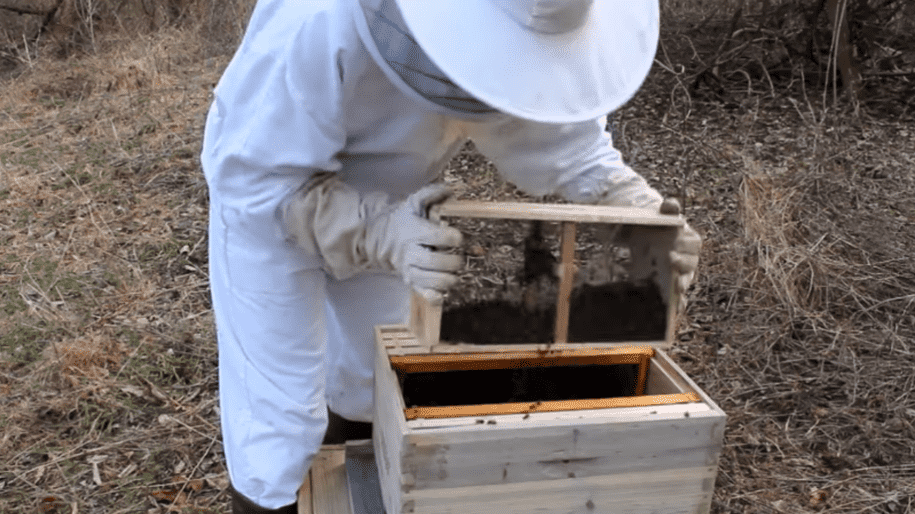
- Bee box/hive box (for relocation)
- Ladder or lift
Never attempt to handle bees in trees safely without protection.
Step-by-Step: How to Remove Bee Hive from Tree?
This is the safe, humane process professionals use.
Step 1: Inspect the Hive
- Observe activity
- Locate the hive entrance
- Estimate size
Step 2: Choose the Right Time
- Early morning or dusk
- Bees are less active
Step 3: Wear Protective Gear
No shortcuts here.
Step 4: Use Smoke Carefully
- Lightly apply smoke
- It calms the colony
- Used in swarm capture
Step 5: Remove or Relocate the Hive
For small exposed hives:
- Cut the branch carefully
- Place the hive into the bee box
For tree trunk hives:
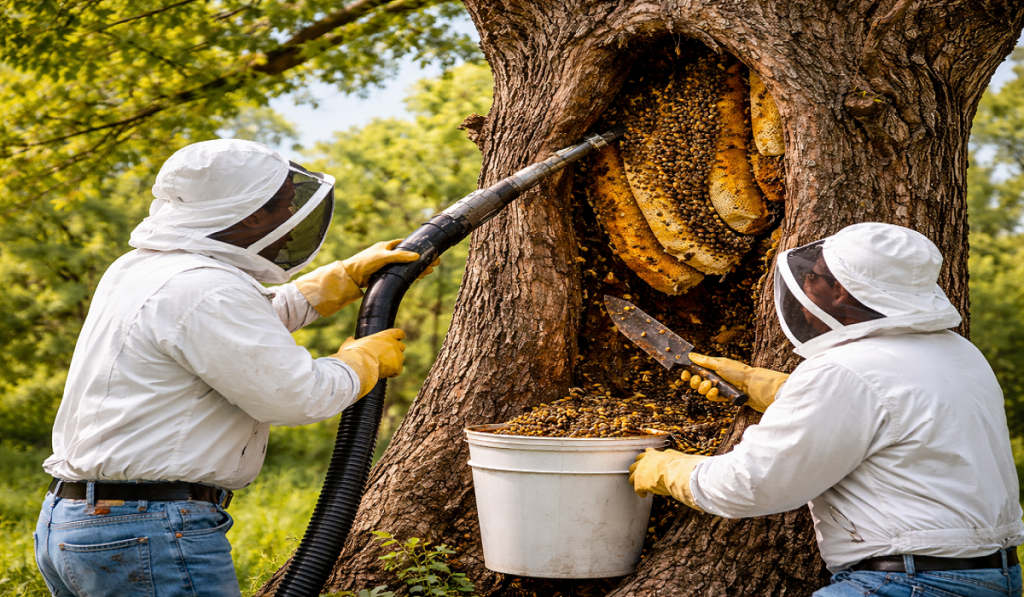
- Open the cavity carefully
- Extract the comb and bees
- Ensure the queen bee is relocated
Missing the queen = failed hive relocation
Step 6: Clean the Area
- Remove honeycomb residue
- Prevent attracting new colonies
Step 7: Prevent Reinfestation
- Seal cavities
- Use integrated pest management (IPM)
Natural & Eco-Friendly Bee Removal Methods
If you’re looking for the best way to remove bees from a tree naturally, here are proven options:
Natural Techniques:
- Smoke (non-toxic calming method)
- Bee-friendly relocation
- Plant deterrents (mint, citronella)
Professional Beekeeper Removal
A trained beekeeper can:
- Perform safe bee relocation
- Preserve the colony
- Transport it to an apiary
This is the safest and most recommended method.
DIY vs Professional Bee Removal
| Option | Best For | Risk Level |
| DIY removal | Small, visible hives | Medium–High |
| Beekeeper | Safe relocation | Low |
| Pest control | Urgent situations | Medium |
If you’re unsure who to call for bee hive removal in tree, always try a beekeeper first.
Cost of Removing Bee Hive from Tree
Typical Costs:
- Small hive: $50–$150
- Medium: $150–$300
- Large: $300–$700+
Factors affecting bee hive removal cost:
- Height of the tree
- Accessibility
- Colony size
Some local bee removal experts may offer free removal.
Legal & Environmental Considerations
In many areas:
- Bees are protected
- Killing them may be restricted
Organizations like the Environmental Protection Agency promote safe, sustainable removal practices.
Real-World Expert Insights (What Actually Happens)
From practical field experience:
Insight 1:
Most DIY attempts fail because people:
- Don’t locate the queen
- Panic during the bee movement
Insight 2:
Tree trunk hives are the hardest:
- Bees hide deep inside
- Require partial wood removal
Insight 3:
Biggest mistake:
Spraying chemicals first
This kills bees but leaves honey behind → attracts pests.
Insight 4:
Timing matters:
- Spring = swarms (easy removal)
- Late summer = large aggressive colonies
12. Common Mistakes to Avoid
❌ Removing hive without gear
❌ Using fire or water
❌ Blocking the hive entrance
❌ Ignoring returning bees
❌ Killing bees instead of relocating
13. What to Do If Bees Build a Hive Near Your House
If you’re asking what to do if bees build a hive in a tree near the house:
- Stay calm
- Keep distance
- Avoid disturbance
- Contact the beekeeper or the service
FAQ Section
How to remove a beehive from a tree without killing bees?
Relocate the hive using a bee box and ensure the queen is transferred.
How to get rid of bees in a tree safely?
Use smoke, protective gear, and relocate instead of exterminating.
What is the safest bee removal technique?
Professional beekeeper relocation.
Can bees return after removal?
Yes, if the area isn’t cleaned properly.
Are bees dangerous in trees?
Only if disturbed or threatened.
How long does removal take?
1–3 hours depending on complexity.
What attracts bees to trees?
Cavities, shelter, and nearby flowers.
Should I call pest control or a beekeeper?
Always try a beekeeper first.
Conclusion
Learning how to remove bee hive from tree is not just about solving a problem—it’s about doing it the right way.
The safest and most effective approach is always:
- Assess first
- Use proper tools
- Prioritize eco-friendly bee hive removal
- Choose bee relocation over destruction
Bees are not your enemy—they’re essential partners in our ecosystem. Handle them wisely, and you’ll protect both your home and the environment.