Few outdoor moments are as surprising as noticing a bee suddenly hovering near your face or circling your body. For many people, the first reaction is concern—Is the bee about to sting me? This common experience leads to the question many people search online: Why are bees flying around me?
In most cases, bees buzzing nearby are not behaving aggressively at all. Instead, they are performing normal foraging behavior, the process worker bees use to locate nectar sources and pollen for their hive. Bees rely heavily on scent, color detection, and chemical signals to identify flowers, and sometimes humans accidentally produce similar cues. Sweat, perfume, sugary drinks, and brightly colored clothing can all mimic the signals bees associate with nectar-rich plants.
Because of this, a bee might briefly hover around you, circle your head, or even land on your skin while it investigates whether you might be a source of food or moisture. This curiosity is part of natural pollinator activity and rarely leads to stinging.
This guide explains the real science behind bee behavior, scent attraction, pollination, and insect navigation. You’ll learn why bees sometimes seem attracted to certain people, why they circle your head, when they become defensive, and how to reduce the chances of attracting them outdoors.
Why Bees Fly Around People?
Most bees that approach humans are simply checking whether a person might be a flower-like food source. Worker bees spend the majority of their day searching for nectar, which they convert into honey inside the hive.
During this search, bees respond to several environmental cues:
- Sweet smells
- Floral scents
- Bright colors
- Moisture sources
- Sugary foods or drinks
When one or more of these signals is present, a bee may briefly approach to investigate. In many cases, people unknowingly create these cues through everyday things like scented sunscreen, fruit juices, or perspiration after exercise.
Once the bee realizes there is no nectar present, it normally flies away within seconds and continues searching elsewhere.
The Science Behind Why Bees Are Attracted to Humans
To understand why bees sometimes hover around people, it helps to look at how bees detect flowers in nature. Bees possess highly specialized sensory systems designed for locating nectar-rich plants.
Three biological abilities explain most human–bee encounters.
1. Bees Have an Extremely Powerful Sense of Smell
A bee’s antennae contain thousands of olfactory receptors that detect chemical compounds released by flowers. These scent molecules travel through the air and guide bees toward nectar. Humans sometimes produce similar scents through:
- perfume or cologne
- scented lotions or sunscreen
- shampoo and hair products
- floral laundry detergents
- fruity body sprays
When these fragrances mimic floral compounds, foraging bees may briefly approach to investigate. Even subtle scents can travel through the air, forming what entomologists call a scent plume that insects follow to its source.
2. Bees Are Attracted to Sweat and Minerals
On hot days, bees occasionally land on people who are sweating. This behavior surprises many people, but the explanation is simple.
Human sweat contains:
- sodium
- potassium
- trace minerals
- moisture
Some insects seek these minerals to supplement their diet. Bees sometimes collect moisture containing salts, especially during warm weather when water sources are limited. A bee landing briefly on skin is usually gathering moisture rather than preparing to sting.
3. Bees Respond Strongly to Bright Colors
Bees locate flowers partly through color recognition. Their vision is tuned to detect shades such as:
- blue
- violet
- yellow
- ultraviolet patterns
These colors commonly appear in nectar-producing flowers. Clothing in similar shades may attract a bee’s attention from a distance. Patterns resembling flowers can also trigger investigation.
Why Bees Circle Your Head?
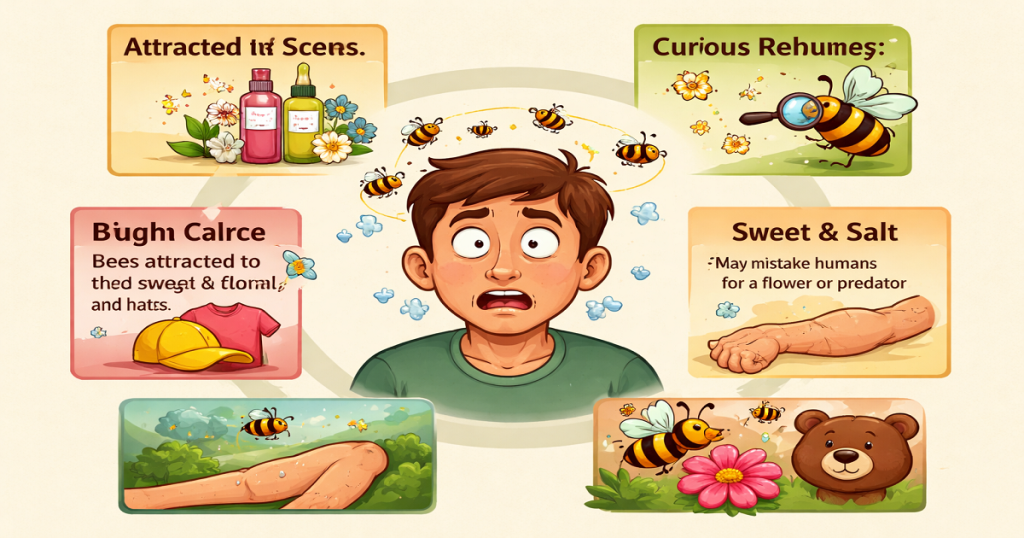
People often notice bees flying in circles around their head or face. Although this behavior feels intimidating, it is usually harmless. Several factors make the head area particularly interesting to bees.
Hair Products
Shampoo, conditioner, and hair sprays often contain sweet fragrances that resemble floral scents.
Sweat Near the Scalp
The scalp produces sweat that may contain minerals bees investigate.
Body Heat and Breath
Warm air rising from the face can carry scent molecules upward, making them easier for bees to detect.
Movement
Bees are sensitive to motion. A moving head can draw their attention as they search for flowers. In most situations, the bee will hover briefly and then leave once it determines there is no nectar available.
Why Do Bees Follow Some People?
Sometimes it feels like a bee is deliberately following someone across a yard or park. This usually happens because the person is carrying a scent the bee wants to investigate.
Common triggers include:
- spilled soda or fruit juice
- sugary desserts
- strong perfume or cologne
- sweet-smelling sunscreen
- sweaty skin during exercise
From the bee’s perspective, it is tracking a possible nectar source. Once the insect realizes the scent does not lead to flowers, it normally flies away.
When Bees Are Most Active During the Day?
Bee activity changes throughout the day depending on temperature and flower availability.
| Time of Day | Bee Activity | Reason |
| Early morning | Moderate | Bees begin foraging |
| Midday | High | Peak nectar production in flowers |
| Afternoon | High | Continued pollen collection |
| Evening | Low | Bees return to the hive |
Warm, sunny weather typically produces the highest pollinator activity.
Differences Between Bees That Approach Humans
Not all bees behave the same way around people. Such as,
Honey Bees
Honey bees are among the most common pollinators. They frequently investigate scents because they are actively searching for nectar.
Bumblebees
Bumblebees are larger and appear fuzzy. Despite their size, they are usually gentle and slow-moving.
Carpenter Bees
Carpenter bees often hover near people. Male carpenter bees sometimes fly close to humans as a territorial display, but they cannot sting.
How Bees Detect Nectar in Nature?
Bees locate flowers using several sophisticated navigation systems.
Scent Detection
Chemical compounds released by flowers guide bees toward nectar sources.
Color Recognition
Bright colors signal potential food sources.
Ultraviolet Patterns
Many flowers display UV patterns invisible to humans but clearly visible to bees.
Memory and Navigation
Bees remember the locations of productive flowers and return to them repeatedly. Inside the hive, worker bees communicate these locations through the famous waggle dance, which tells other bees where to find food.
Practical Insights From Beekeeping Experience
Beekeepers observe bee behavior closely while managing hives. Their experience provides useful insight into how bees interact with humans.
Bees Rarely Target People
Worker bees are focused almost entirely on food collection and hive maintenance. Humans are rarely the focus of their attention.
Calm Behavior Prevents Stings
Sudden movements make bees feel threatened. Remaining still allows the insect to complete its investigation and leave.
Scent Is the Strongest Attraction
Field experience shows that strong scents attract bees more consistently than clothing color alone. For this reason, many beekeepers recommend using unscented soaps, shampoos, and lotions when working outdoors.
What To Do If Bees Keep Flying Around You?
When bees begin buzzing nearby, staying calm is the safest response.
Step-by-Step Guidance
- Stay calm and avoid swatting
Swatting increases the chance of a defensive sting. - Move away slowly
Walking calmly away from the area often solves the problem. - Check for food or sweet smells
Sugary drinks and fruit attract bees. - Cover outdoor food and drinks
Picnics and barbecues frequently attract pollinators. - Remove strong fragrances
Perfume and scented products can draw bees.
These simple actions usually resolve bee encounters quickly.
When Bees Become Defensive?
Bees are generally peaceful, but they will sting if they feel their colony is threatened.
Common triggers include:
- disturbing a hive
- stepping on a bee
- trapping a bee against the skin
- swatting aggressively
- approaching a swarm
When a bee stings, it releases an alarm pheromone that alerts other worker bees to defend the hive. This is why beekeepers wear protective clothing during hive inspections.
How to Avoid Attracting Bees Outdoors?
Reducing bee encounters often requires only a few small adjustments.
Avoid These Bee Attractors
- strong perfumes or colognes
- floral scented lotions
- bright flower-pattern clothing
- uncovered sweet drinks
- sugary snacks outdoors
Helpful Prevention Tips
- Choose unscented sunscreen and lotions
- wear neutral colors
- Rinse sweat after exercise
- Keep food covered during outdoor meals
These habits significantly reduce the chances of bees investigating you.
Frequently Asked Questions
Why are bees flying around me but not stinging?
Most bees that approach humans are simply investigating scent or color cues. If they do not feel threatened, they rarely sting.
Why do bees buzz near your ears?
Hair products, sweat, and scent plumes near the head often attract bees temporarily.
Why do bees land on humans?
Bees may briefly land to examine moisture, minerals in sweat, or scent sources.
Why do bees chase some people?
Bees sometimes follow strong nectar-like scents such as sugary drinks, fruit residue, or perfume.
Are bees friendly to humans?
Most bees are not aggressive. They prefer to avoid humans unless they feel their hive is in danger.
What smell attracts bees the most?
Floral, fruity, and sugary scents are the strongest attractants.
Why do bees hover instead of stinging?
Hovering is part of their investigative behavior while searching for nectar.
Why are bees attracted to my clothes?
Bright colors and floral patterns can resemble flowers to bees.
Do bees remember people?
Bees do not remember individual humans, but they can remember the locations of food sources.
Conclusion
When bees fly around you, they are usually responding to signals that resemble flowers. Sweat, scent, bright colors, and sugary foods can all attract a curious pollinator searching for nectar.
Although a bee buzzing nearby may feel intimidating, most encounters are harmless. Bees play an essential role in pollination and ecosystem health, helping plants reproduce and supporting food production around the world.
By understanding how bees detect scent and color—and by avoiding strong fragrances or exposed sugary foods—you can greatly reduce the chances of attracting them. In most situations, remaining calm and moving slowly is all it takes for the bee to lose interest and continue its search for real flowers.