Carpenter bees may look harmless as they buzz around your yard, but they can become a serious nuisance when they start drilling into wooden structures. While these bees play an important role as pollinators, their nesting habits can cause damage to decks, fences, sheds, eaves, and other wooden surfaces around your property.
If you’ve noticed perfectly round holes in wood, piles of sawdust beneath outdoor structures, or large bees hovering near your home, you may be dealing with a carpenter bee infestation. The good news is that there are several effective ways to remove carpenter bees and prevent them from returning. This guide explains how to identify carpenter bees, eliminate active nests, and protect your home from future damage.
What Are Carpenter Bees?
Carpenter bees are large, solitary bees that resemble bumblebees. However, unlike bumblebees, carpenter bees have a shiny, hairless abdomen. They belong to the genus Xylocopa and are known for their ability to tunnel into wood to create nesting galleries.
Physical Characteristics
Adult carpenter bees typically measure between ½ and 1 inch long. Female carpenter bees are responsible for drilling holes into wood and building nests, while males often hover near nesting sites to protect their territory.
Although male carpenter bees can appear aggressive when they fly close to people, they do not have stingers. Females can sting, but they rarely do unless directly handled or threatened.
Carpenter Bee Behavior
Unlike honey bees that live in large colonies, carpenter bees are solitary nesters. Each female creates her own nest by boring into untreated or weathered wood. Common nesting locations include:
- Wooden decks
- Railings
- Fascia boards
- Fences
- Wooden siding
- Outdoor furniture
- Pergolas and gazebos
Carpenter bees are most active during spring and early summer when they emerge to mate and establish new nests.
Signs of a Carpenter Bee Infestation
Early detection is one of the best ways to minimize structural damage. Knowing what to look for can help you take action before the infestation grows.
Perfectly Round Entry Holes
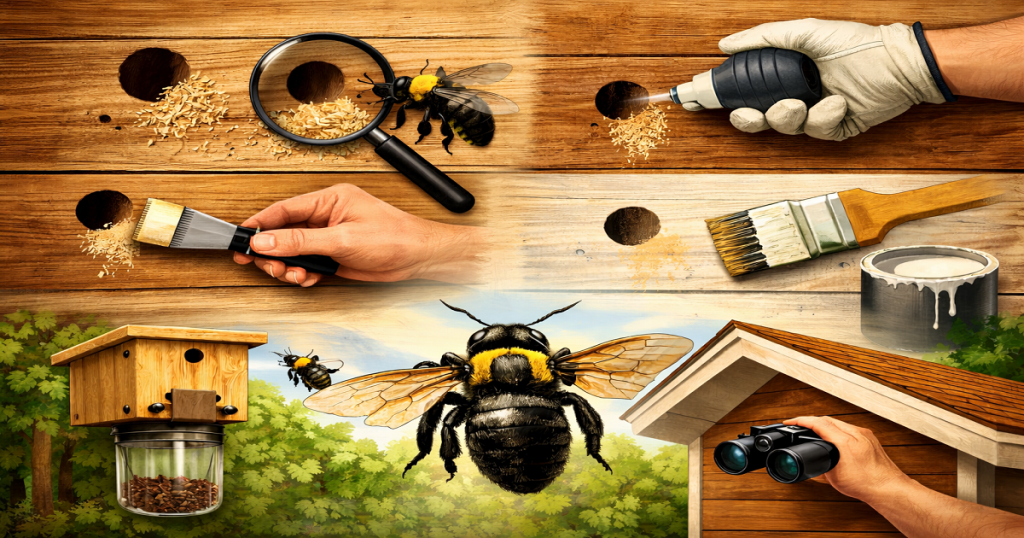
One of the most recognizable signs of carpenter bees is the appearance of smooth, circular holes in wood. These holes are usually about half an inch in diameter and often appear on the underside of wooden structures. Unlike termite damage, which can create irregular tunnels, carpenter bee holes are remarkably clean and precise.
Sawdust Beneath Wooden Surfaces
As carpenter bees excavate nesting galleries, they push wood shavings and sawdust out of the entrance hole. Small piles of coarse sawdust beneath decks, fences, or eaves are a strong indicator of activity.
Bee Activity Around Wood
If you frequently see large bees hovering around a particular area, they may be guarding an active nest. Males often patrol nesting sites and may fly toward people, although they cannot sting.
Staining Around Entry Holes
Over time, pollen, bee waste, and moisture can create yellow or brown stains around nesting holes. These marks often indicate that a nest has been occupied for an extended period.
Why Carpenter Bees Can Be a Problem
Although carpenter bees are beneficial pollinators, they can become problematic when they repeatedly nest in the same structures.
Structural Damage Over Time
A single carpenter bee tunnel may not cause significant damage. However, when multiple generations reuse and expand existing galleries, the internal network of tunnels can weaken wooden structures.
Over several years, this damage can affect:
- Deck supports
- Wooden trim
- Railings
- Roof overhangs
- Outdoor structures
Attraction of Woodpeckers
Woodpeckers often feed on carpenter bee larvae. In their search for food, they may peck into wooden structures, causing damage that is often more severe than the original bee infestation.
Recurring Infestations
Carpenter bees frequently return to the same nesting sites year after year. Existing tunnels make ideal locations for future generations, increasing the likelihood of repeated infestations if preventive measures are not taken.
Effective Methods to Get Rid of Carpenter Bees
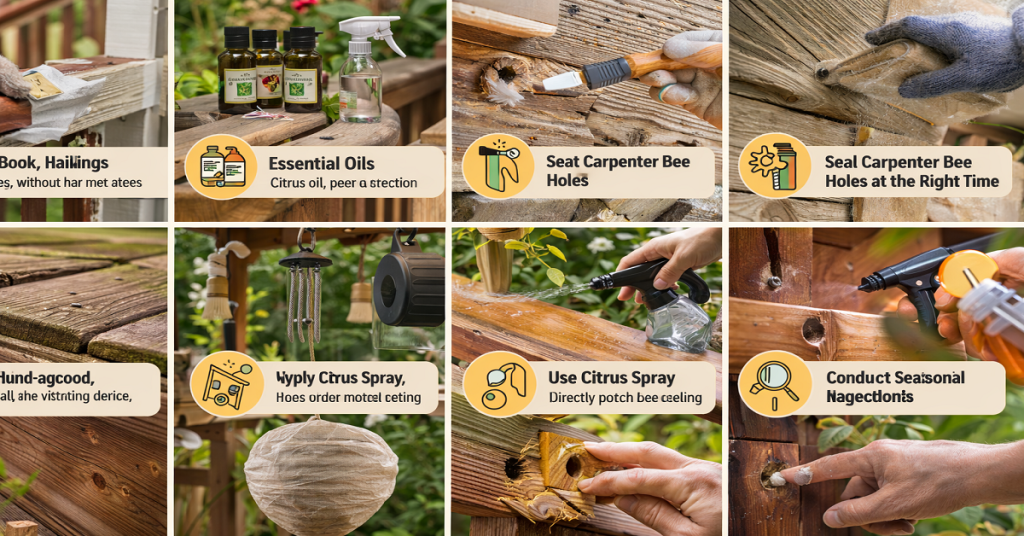
Successfully eliminating carpenter bees requires treating active nests and preventing future nesting activity.
Use Carpenter Bee Sprays or Insecticides
Specialized carpenter bee insecticides can be highly effective when applied directly into active nesting holes.
For best results:
- Apply treatments during the evening when bees have returned to their nests.
- Follow all manufacturer safety instructions.
- Wear protective gloves and eyewear.
- Avoid treating areas during peak pollinator activity.
Evening applications help maximize contact with nesting bees and improve treatment effectiveness.
Apply Dust Insecticides in Nesting Holes
Dust formulations are particularly effective because they penetrate deep into nesting galleries. When bees move through the tunnels, they come into contact with the insecticidal dust, helping eliminate both adults and developing larvae.
Dust treatments are often preferred for established infestations because they reach areas that liquid sprays may not penetrate effectively.
Install Carpenter Bee Traps
Carpenter bee traps provide a non-chemical approach to population control. These traps mimic natural nesting holes and encourage bees to enter a collection chamber from which they cannot escape.
For maximum effectiveness:
- Place traps near active nesting areas.
- Install them before peak nesting season.
- Monitor and maintain traps regularly.
Traps work best as part of an integrated pest management strategy rather than as a standalone solution.
Vacuum Removal for Small Infestations
In some situations, a vacuum can be used to remove carpenter bees from active nesting areas.
This method is most effective for:
- Small infestations
- Accessible nesting sites
- Homeowners seeking reduced pesticide use
However, vacuuming alone does not eliminate larvae hidden inside tunnels and should be combined with other treatment methods.
Seal Nesting Holes
After confirming that all bees have been eliminated, seal entry holes to prevent reinfestation.
Common sealing materials include:
- Exterior wood filler
- Wood putty
- Caulk
- Wooden dowels
Never seal active nests immediately after treatment. Waiting several days allows treatments to work fully and prevents surviving bees from creating new exit holes elsewhere.
Natural and Non-Toxic Carpenter Bee Control Methods
Many homeowners prefer environmentally friendly solutions before turning to chemical treatments.
Citrus Spray Solutions
Carpenter bees naturally dislike citrus scents. A homemade citrus spray can be made by boiling citrus peels in water and allowing the mixture to cool. Spraying this solution around nesting areas may help discourage bee activity, particularly in early-stage infestations.
Almond Oil and Essential Oil Repellents
Certain scents may act as natural bee deterrents. Almond oil and some essential oils can be applied around vulnerable wooden surfaces to make them less attractive for nesting.
While these solutions may provide short-term deterrence, they generally work best as preventive measures rather than elimination methods.
Loud Noise and Vibrations
Carpenter bees prefer quiet, stable nesting locations. Areas with frequent vibrations, movement, or loud noise may become less appealing. For example, regularly used outdoor spaces often experience fewer nesting issues than undisturbed structures.
Natural Predators
Several bird species naturally feed on carpenter bees. Encouraging a healthy backyard ecosystem can contribute to natural population control. However, relying solely on predators is unlikely to resolve an established infestation.
Preventing Carpenter Bees from Returning
Long-term prevention is the most effective strategy for protecting your property.
Paint or Seal Exposed Wood
Carpenter bees strongly prefer untreated, unfinished wood. Applying paint, stain, or a protective sealant creates a barrier that makes wood less attractive for nesting. Regular maintenance of exposed wood surfaces significantly reduces infestation risk.
Replace Damaged Wood
If wood has become heavily tunneled or structurally compromised, replacement may be necessary. Replacing damaged boards removes existing nesting galleries and provides an opportunity to install treated or sealed materials.
Regular Property Inspections
Routine inspections help identify activity before serious damage occurs.
Pay special attention to:
- Roof eaves
- Deck railings
- Wooden trim
- Porch ceilings
- Outdoor furniture
Early intervention can prevent minor issues from becoming major repairs.
Use Hardwood Materials
Carpenter bees typically prefer softer woods such as pine, cedar, redwood, and fir. When possible, choosing hardwood materials can reduce susceptibility to nesting activity.
Maintain Outdoor Structures
Regular maintenance keeps wooden structures in good condition and minimizes attractive nesting opportunities.
Maintenance tasks include the following:
- Repainting weathered surfaces
- Repairing cracks
- Replacing damaged boards
- Sealing exposed wood
Consistent upkeep is one of the most effective forms of carpenter bee prevention.
Common Mistakes to Avoid
Many homeowners unintentionally make carpenter bee problems worse by following ineffective approaches.
Sealing Holes Before Treatment
Closing active nests without eliminating the bees first can trap insects inside and encourage them to create additional exit holes.
Ignoring Early Signs
A few holes may not seem concerning initially, but carpenter bee populations can expand rapidly when left untreated.
Using Ineffective Home Remedies
While some natural deterrents may help discourage nesting, severe infestations usually require more comprehensive treatment methods.
Failing to Address Recurring Nests
Treating current activity without sealing and protecting nesting sites often leads to repeat infestations the following season.
When to Call a Professional
While many carpenter bee infestations can be handled by homeowners, professional pest control services may be necessary in certain situations.
Large or Widespread Infestations
Multiple nesting sites across several structures often require professional assessment and treatment.
Difficult-to-Reach Nesting Areas
High rooflines, soffits, and inaccessible structural components can present safety risks during treatment.
Significant Structural Damage
If wood shows extensive tunneling or weakening, a professional can evaluate repair needs and recommend appropriate solutions.
Repeated Annual Infestations
Persistent infestations may indicate hidden nesting galleries or untreated entry points that require expert attention.
Frequently Asked Questions
Are carpenter bees dangerous?
Carpenter bees are generally not aggressive toward humans. Males cannot sting, and females rarely sting unless directly provoked.
Do carpenter bees sting?
Female carpenter bees can sting, but stings are uncommon because they tend to avoid confrontation.
How long do carpenter bees stay in a nest?
Adult carpenter bees may occupy nesting galleries throughout the active season, while developing offspring remain inside until they mature.
Can carpenter bees damage a house?
Yes. Repeated tunneling over multiple years can weaken wooden structures and contribute to costly repairs if left untreated.
What is the fastest way to eliminate carpenter bees?
Targeted insecticide or dust treatments applied directly into active nesting holes are typically the fastest and most effective removal methods.
Conclusion
Getting rid of carpenter bees requires more than simply treating visible holes. The most successful approach combines nest treatment, tunnel sealing, ongoing monitoring, and preventive maintenance. Whether you choose insecticidal treatments, carpenter bee traps, or natural deterrents, addressing the problem early can help protect your home from long-term damage.
By understanding carpenter bee behavior and taking proactive steps to protect exposed wood, homeowners can effectively control infestations while reducing the chances of future nesting activity. With the right strategy, you can preserve your decks, fences, siding, and outdoor structures while maintaining a safer and more attractive property.