Carpenter bees are often misunderstood. While they play a valuable role in pollination, their habit of drilling into wood can cause frustration for homeowners. If you’ve noticed perfectly round holes in your wooden fence, deck, or house siding, you’re likely dealing with carpenter bees in wood.
So, why do carpenter bees drill holes in wood, and more importantly, how can you stop them without damaging your property or harming beneficial insects?
In this comprehensive guide, we’ll break down the science behind wood-boring bee behavior, explain why your home is a target, and provide proven carpenter bee prevention methods. You’ll also learn practical strategies to protect wooden structures from bees, repair damage, and prevent future infestations using eco-friendly solutions.
What Are Carpenter Bees and Why Do They Attack Wood?
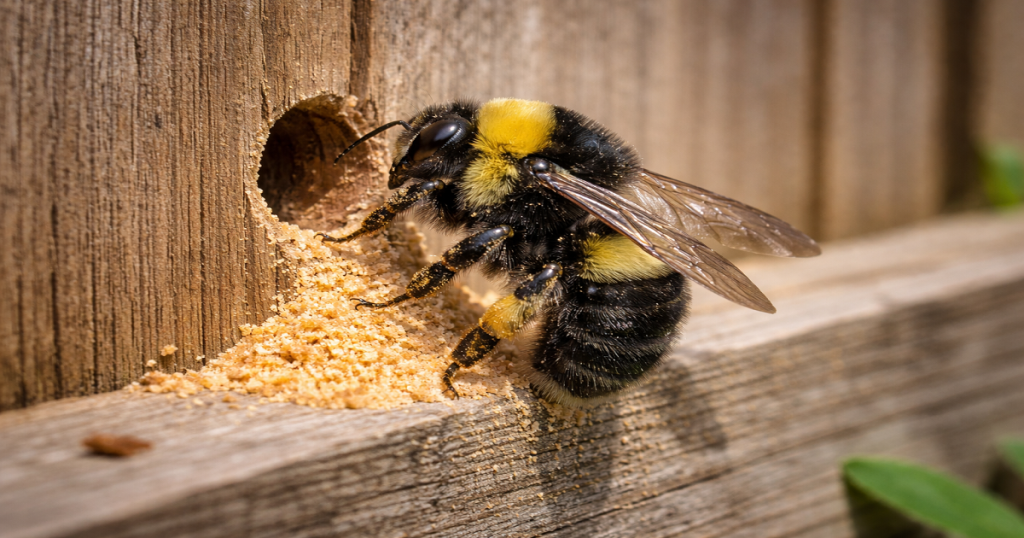
Carpenter bees are solitary insects known for their ability to bore into wood to create nesting tunnels. Unlike termites, they do not eat wood—they excavate it to build nests.
Key Characteristics:
- Prefer untreated wood and softwood surfaces
- Drill smooth, round holes (½ inch diameter)
- Create internal nesting tunnels for eggs
- Leave behind sawdust (frass) near entry points
Why Carpenter Bees Target Wood
Here’s the simple answer:
Carpenter bees attack wood because they need a safe, dry place to build nests and reproduce.
More specifically:
- Softwood is easier to drill
- Unpainted surfaces provide better grip and scent cues
- Exterior wood surfaces offer warmth and protection
- Previous tunnels attract new bees (reuse behavior)
This explains why you often see carpenter bees in fences and house structures year after year.
Why Do Carpenter Bees Drill Holes in Wood?
Understanding this helps you prevent the problem effectively.
1. Nesting Instinct (Primary Reason)
Female carpenter bees drill holes to:
- Lay eggs
- Store pollen (food source)
- Protect larvae
This behavior is known as carpenter bee nesting habits, and it’s essential for their survival.
2. Preference for Untreated Wood
Bees are highly selective:
- They prefer untreated wood
- Avoid painted or sealed surfaces
- Target areas like:
- House siding
- Deck and patio
- Wooden fence
- House siding
3. Seasonal Nesting Activity
- Spring: Nest creation begins
- Summer: Larvae develop
- Late summer: New bees emerge
This seasonal nesting activity explains why infestations seem sudden.
4. Territorial Behavior
Male carpenter bees exhibit territorial behavior, hovering near nests. While intimidating, they are harmless.
Common Areas Affected by Carpenter Bees
Carpenter bees don’t attack randomly—they target specific structures.
High-Risk Areas:
- Wooden fence
- House siding
- Deck and patio
- Roof eaves and soffits
- Outdoor furniture
These locations are exposed, dry, and often made from softwood surfaces, making them ideal nesting spots.
Carpenter Bee Damage to House: How Serious Is It?
At first glance, the damage may seem minor. But over time, it can escalate.
Types of Damage:
- Surface holes weaken the appearance
- Internal tunnels reduce structural strength
- Repeated nesting leads to structural damage
- Moisture infiltration increases the risk of rot
Long-Term Risks:
- Increased repair costs
- Compromised home maintenance integrity
- Secondary pests may enter through holes
A carpenter bee infestation in wood should never be ignored.
How to Stop Carpenter Bees from Damaging Wood
Now to the most important part: prevention and control.
1. Seal and Paint Wood Surfaces
One of the most effective methods:
- Apply wood sealants and paints
- Use exterior-grade finishes
- Focus on exposed areas
This creates a barrier that prevents carpenter bee hole formation.
2. Use Natural Repellents
If you prefer eco-friendly bee control, try:
- Citrus oil spray
- Almond oil application
- Vinegar solution
These natural repellents (citrus oil, almond oil) help deter carpenter bees naturally without harming them.
3. Install Physical Barriers
Use exclusion methods such as:
- Mesh screens
- Metal coverings
- Protective wraps for beams
These prevent bees from accessing nesting sites.
4. Fill Existing Holes
Once bees leave:
- Insert wood filler or dowels
- Sand smooth
- Apply sealant
This is essential for preventing carpenter bee damage long-term.
5. Apply Integrated Pest Management (IPM)
Professionals use Integrated Pest Management (IPM):
- Monitoring
- Prevention
- Minimal intervention
- Eco-friendly solutions
This is the gold standard in modern pest control.
Step-by-Step: How to Get Rid of Carpenter Bees in a Fence or House
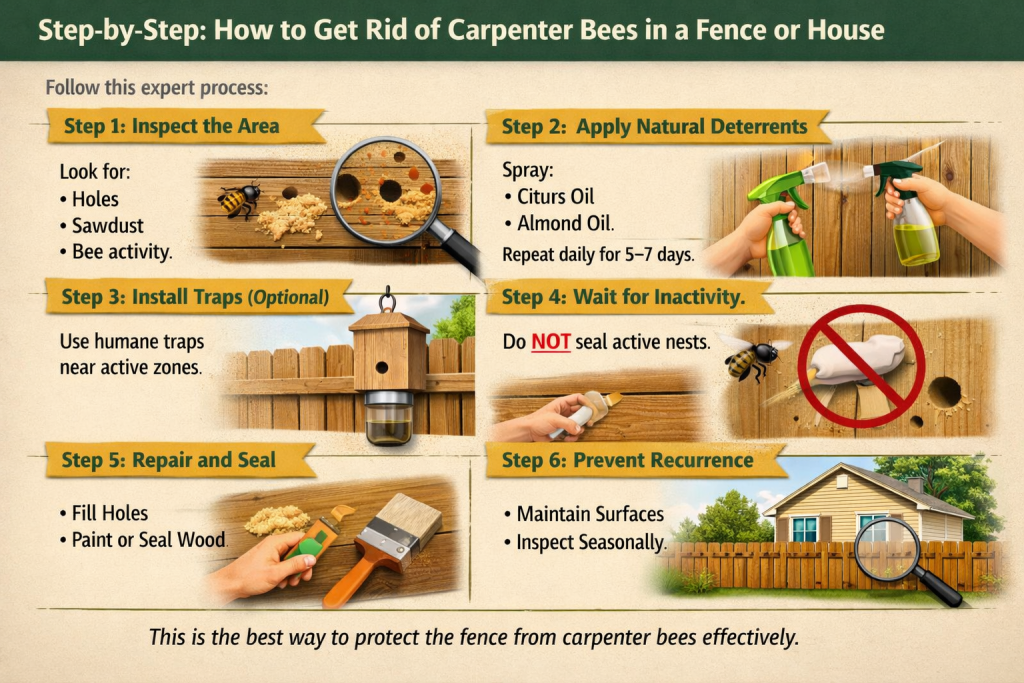
Follow this expert process:
Step 1: Inspect the Area
Look for:
- Holes
- Sawdust
- Bee activity
Step 2: Apply Natural Deterrents
Spray:
- Citrus oil
- Almond oil
Repeat daily for 5–7 days.
Step 3: Install Traps (Optional)
Use humane traps near active zones.
Step 4: Wait for Inactivity
Do NOT seal active nests.
Step 5: Repair and Seal
- Fill holes
- Paint or seal wood
Step 6: Prevent Recurrence
- Maintain surfaces
- Inspect seasonally
This is the best way to protect the fence from carpenter bees effectively.
Comparison Table: Prevention Methods
| Method | Effectiveness | Best Use Case | Pros | Cons |
| Paint & Sealants | High | Long-term protection | Durable | Requires effort |
| Natural Repellents | Medium | Small infestations | Eco-friendly | Needs reapplication |
| Traps | Medium | Active infestations | Non-lethal | Maintenance needed |
| Physical Barriers | High | High-risk areas | Prevents access | Installation cost |
| IPM Approach | Very High | Long-term control | Professional-level | May require expertise |
Practical Insights & Real-World Experience
From professional experience in structural pest prevention, here’s what actually works:
What Homeowners Often Do Wrong:
- Sealing holes too early
- Ignoring early signs
- Using harsh chemicals unnecessarily
What Professionals Do:
- Focus on wood preservation first
- Combine multiple insect deterrent solutions
- Prioritize prevention over removal
Real Example:
A homeowner with recurring carpenter bees in the fence and house solved the issue by:
- Sanding and repainting the fence
- Applying citrus oil during the spring
- Sealing all previous holes
Result: Zero reinfestation the next year.
How to Repair Carpenter Bee Holes in Wood
Repairing damage is critical.
Simple Repair Process:
- Clean the hole
- Insert wood filler or dowel
- Sand smooth
- Apply sealant or paint
This restores appearance and prevents reuse.
Natural Ways to Stop Carpenter Bees from Nesting
If you prefer chemical-free solutions:
- Use citrus sprays weekly
- Apply almond oil to entry points
- Keep the wood painted and sealed
- Reduce exposed raw wood
These are effective natural ways to stop carpenter bees from nesting.
Long-Term Carpenter Bee Prevention Methods
To protect wooden structures from bees, follow these:
- Inspect wood every spring
- Reapply sealants annually
- Replace heavily damaged wood
- Avoid leaving untreated lumber outdoors
Consistency is key for structural pest prevention.
Frequently Asked Questions (FAQs)
Why do carpenter bees attack wood fences and houses?
They seek safe nesting areas in soft, untreated wood for laying eggs.
How do I stop carpenter bees from drilling holes in wood?
Seal wood surfaces, apply repellents, and use exclusion methods.
Are carpenter bees dangerous?
They are mostly harmless and non-aggressive, but can cause structural damage.
What is the best way to protect the fence from carpenter bees?
Paint, seal, and regularly inspect the wood.
Can I prevent carpenter bees naturally?
Yes, using citrus oil, almond oil, and proper wood maintenance.
Do carpenter bees reuse old holes?
Yes, they often return to existing tunnels or expand them.
How serious is carpenter bee damage to a house?
Minor initially, but it can lead to structural issues if ignored.
When are carpenter bees most active?
Spring and early summer during nesting season.
Should I call pest control professionals?
For severe infestations, pest control professionals using wildlife-friendly removal methods can help.
How do I prevent carpenter bees in wooden house structures?
Use sealants, barriers, and regular maintenance.
Conclusion
Carpenter bees may be beneficial pollinators, but their nesting habits can lead to serious damage if left unmanaged. Understanding why carpenter bees drill holes in wood gives you the power to stop them effectively.
The key is prevention:
- Seal and protect wood surfaces
- Use eco-friendly bee control methods
- Repair damage promptly
- Follow Integrated Pest Management (IPM) strategies
By taking a proactive approach, you can prevent carpenter bee infestation in wood, protect your home, and coexist with these important insects—without sacrificing your property.