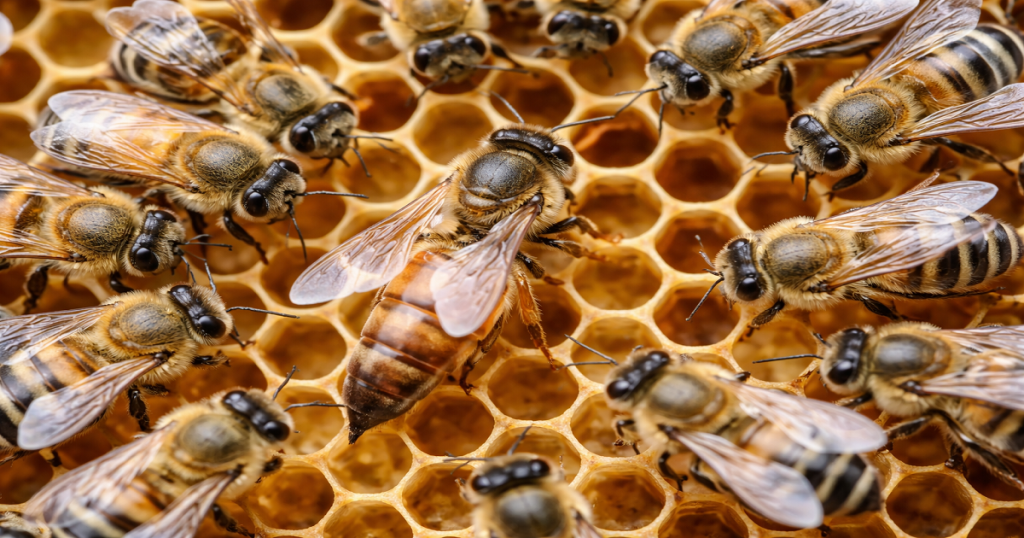
If you have ever watched bees around a hive, you probably know that worker bees can sting. But many people wonder something different: does a queen bee sting? Since the queen is the most important individual in a honey bee colony, it’s natural to ask whether she also has a stinger and whether she can sting humans.
The short answer is yes—queen bees do have a stinger, but it works very differently from the stinger of worker bees. The queen bee stinger evolved from a reproductive structure called the ovipositor, and its primary purpose is not hive defense. Instead, the queen uses it mainly during battles with rival queens inside the colony.
In fact, most beekeepers go their entire careers without ever being stung by a queen bee. The queen typically stays inside the hive, laying eggs while thousands of worker bees handle defense.
Understanding the queen honey bee stinger reveals fascinating insights about honey bee anatomy, colony hierarchy, swarm behavior, and queen rivalry. It also helps explain how a hive ensures that only one queen controls reproduction.
In this detailed guide, you will learn:
- Whether queen bees have stingers
- If a queen bee can sting humans
- How many times can a queen bee sting
- Why do queens sting other queens
- The difference between the queen and worker bee stingers
- What happens if you are stung by a queen bee
Do Queen Bees Have Stingers?
Yes, queen bees do have stingers.
However, the queen bee’s stinger is quite different from the stinger of worker bees. The queen’s stinger evolved from the ovipositor, a reproductive organ used by many insects to lay eggs. Because the queen is the only fertile female in a typical honey bee colony, her anatomy includes structures connected to reproduction.
Key features of the queen bee stinger
- Smooth structure
- No barbs
- Derived from the ovipositor
- Designed for fighting rival queens
- Can be used multiple times
This design allows the queen to sting repeatedly without dying, unlike worker bees. The species most people encounter in beekeeping, Apis mellifera, has queens that rarely use their stinger for defense against humans.
Instead, the stinger plays a role in maintaining the colony’s reproductive hierarchy.
Can a Queen Bee Sting Humans?
Technically, a queen bee can sting humans, but it happens extremely rarely. Queens normally remain deep inside the hive, surrounded by worker bees. Their main role is egg production, not colony defense. Worker bees act as the hive’s primary defense system.
Situations when a queen bee might sting
Although uncommon, a queen may sting if:
- She is handled by a beekeeper
- She is accidentally squeezed
- She is disturbed during hive inspection
- She is trapped or threatened
Even in these situations, queens are usually calm and non-aggressive. Most beekeepers report that queen bees rarely attempt to sting people.
What Does a Queen Bee Stinger Look Like?
The queen bee stinger is long, smooth, and slightly curved. Unlike worker bees, the queen’s stinger does not contain backward-facing barbs.
Anatomy of the queen bee stinger
The structure includes:
- a smooth needle-like shaft
- venom delivery glands
- muscles controlling insertion
- connection to reproductive anatomy
Because the stinger is smooth, it slides in and out easily, allowing the queen to sting multiple times.
Queen Bee vs Worker Bee Stinger: Key Differences
| Feature | Queen Bee | Worker Bee |
| Stinger shape | Smooth | Barbed |
| Purpose | Fight rival queens | Defend the hive |
| Can sting multiple times | Yes | No |
| Dies after stinging | No | Yes |
| Aggression toward humans | Very low | High when the hive is threatened |
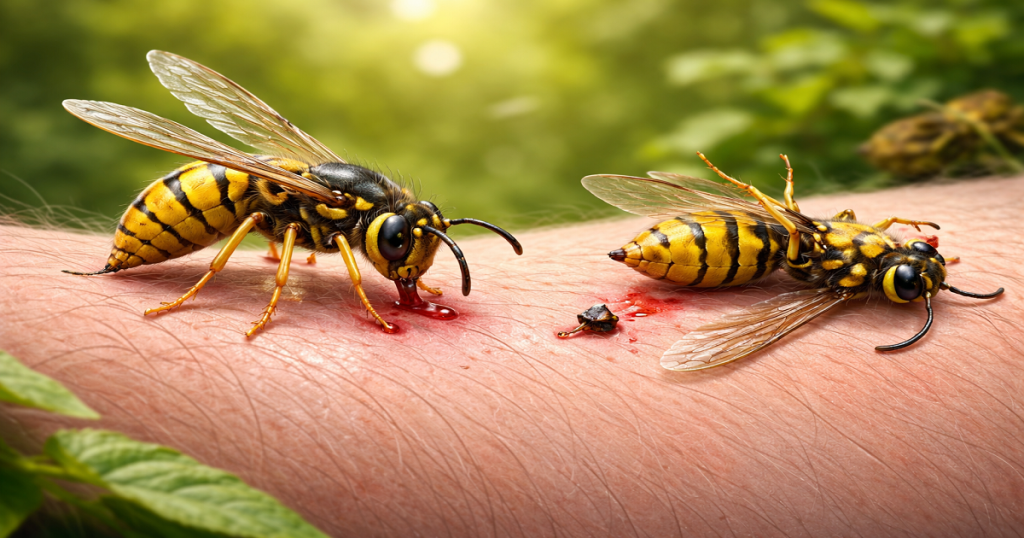
Worker bees evolved barbed stingers specifically for defense against mammals. When a worker bee stings human skin, the barbs become lodged, tearing the stinger from the bee’s abdomen when it flies away.
This causes the bee to die. The queen’s stinger lacks these barbs, allowing her to survive and sting repeatedly.
How Many Times Can a Queen Bee Sting?
A queen bee can sting multiple times. This ability is critical during queen rivalry.
When several new queens emerge in a hive, they may fight until only one remains. The queen’s smooth stinger allows her to attack rivals repeatedly during these battles. Unlike worker bees, queens do not sacrifice themselves when they sting.
Why Queen Bees Sting Other Queens
The primary function of the queen bee’s stinger is to eliminate rival queens. This usually happens during several natural colony processes.
Supersedes
Supersedure occurs when the colony decides to replace an aging or failing queen. Worker bees raise a new queen by feeding a young larva royal jelly inside a specialized structure called a queen cell.
When the new queen emerges, she often searches for the old queen and kills her with a sting. This ensures the colony maintains one fertile reproductive leader.
Swarming
Swarming is how honey bee colonies reproduce. When a hive becomes crowded:
- The old queen leaves with part of the colony
- new queens remain in the hive
The first virgin queen to emerge may seek out other developing queens and destroy them using her stinger.
Queen Rivalry
If two queens emerge at the same time, they may fight. These fights involve:
- chasing
- grappling
- repeated stinging
The losing queen typically dies from venom injection.
Virgin Queens and Queen Piping
Before fighting rivals, virgin queens sometimes produce a unique sound called queen piping. This behavior involves two types of signals:
- tooting – produced by an emerging queen
- quacking – produced by queens still inside queen cells
Scientists believe these sounds help coordinate emergence timing and signal rival queens. Queen piping is one of the most fascinating behaviors in honey bee colony dynamics.
What Happens When a Queen Bee Stings Another Queen?
When a queen stings a rival queen, the venom causes paralysis and death. The venom contains compounds similar to worker bee venom, including:
- melittin
- apamin
- phospholipase A2
These toxins disrupt nerve and muscle function. Worker bees sometimes assist by forming a cluster around a rival queen in a behavior called balling, which can suffocate or overheat the rival.
Do Queen Bees Die After Stinging?
No. Queen bees do not die after stinging. Because the queen bee stinger has no barbs, it does not get stuck in the skin.
This allows the queen to:
- sting repeatedly
- survive the attack
- continue ruling the colony
This adaptation is critical for colony survival, since the queen is responsible for laying thousands of eggs per day during peak season.
What Happens If a Queen Bee Stings You?
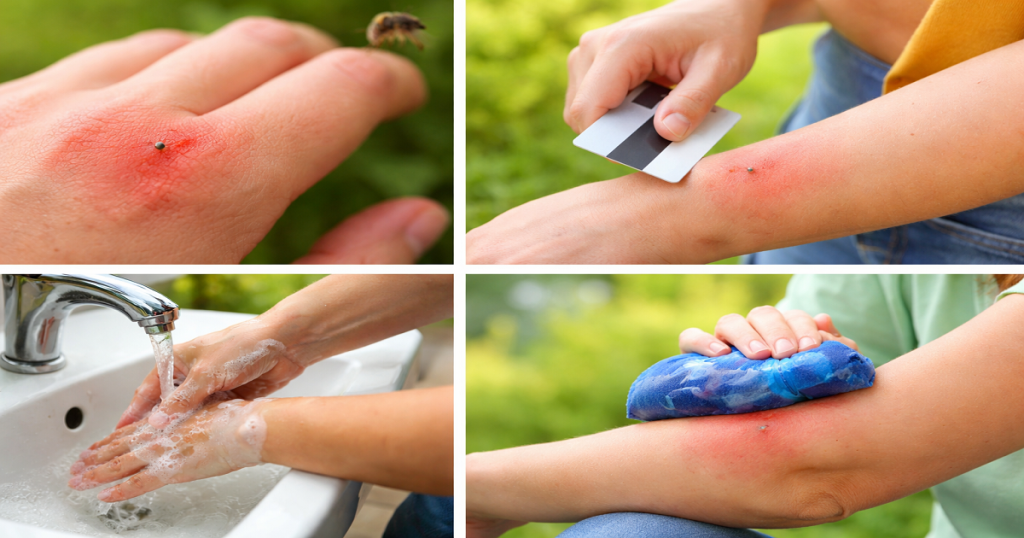
A queen bee sting feels similar to a worker bee sting. Possible symptoms include:
- sharp pain
- redness
- swelling
- itching
However, because the queen does not leave the stinger behind, the reaction may sometimes be slightly less severe. People allergic to bee venom may experience serious reactions.
Signs of allergic reaction
- difficulty breathing
- throat swelling
- dizziness
- rapid heartbeat
These symptoms require immediate medical attention.
Honey Bee Anatomy and the Evolution of the Stinger
The bee stinger evolved from the ovipositor, a reproductive structure used by many insects. In worker bees, the ovipositor evolved completely into a defensive stinger.
In the queen, it retains both roles:
- reproduction
- combat against rival queens
This is why the queen bee stinger is structurally different from the worker bee stinger. The evolution of this structure is closely tied to the complex social behavior of honey bees.
Practical Insights from Beekeeping Experience
Professional beekeepers rarely experience queen bee stings.
Why queens seldom sting humans
- Queens stay inside the hive.
- Worker bees protect the queen.
- Queens prioritize egg laying over defense.
Experienced beekeepers who work with Apis mellifera colonies often handle queens safely using specialized tools.
Beekeeping tips
- Use a queen cage or queen clip
- Handle the queen gently by the thorax
- Avoid squeezing the abdomen
- Limit handling time
Proper handling reduces stress on the colony and prevents accidental injury to the queen. Research organizations such as the United States Department of Agriculture and the Bee Informed Partnership continue studying honey bee health and colony dynamics.
Step-by-Step: How Beekeepers Safely Handle a Queen Bee
If you need to handle a queen bee during hive management, follow these steps.
Step 1: Locate the queen
Look for:
- longer abdomen
- slower movement
- worker bees forming a circle around her
Step 2: Use a queen catcher
Special tools include:
- queen clip
- marking cage
- queen catcher
These tools prevent injury to the queen.
Step 3: Handle gently
Hold the queen carefully by the thorax, avoiding pressure on the abdomen.
Step 4: Return the queen quickly
Minimize handling time to reduce colony stress.
Frequently Asked Questions (FAQ)
Do queen bees have stingers?
Yes. Queen bees have smooth stingers derived from the ovipositor, primarily used to kill rival queens.
Can a queen bee sting multiple times?
Yes. Because the queen bee stinger has no barbs, it can be used repeatedly.
Does a queen bee die after stinging?
No. Queen bees survive after stinging because their stinger does not detach.
Can a queen bee sting humans?
Yes, but it is extremely rare. Queens rarely leave the hive or attack humans.
Why do queen bees sting other queens?
They sting rivals to eliminate competition and maintain control of the colony.
Is a queen bee sting worse than a worker bee sting?
Not usually. The pain is similar, but the queen does not leave a stinger behind.
Do queen bees defend the hive?
No. Worker bees are responsible for defending the hive against predators and threats.
What happens when two queen bees fight?
They attempt to sting each other until one queen dies, leaving a single dominant queen.
Conclusion
The queen bee stinger is a fascinating adaptation that plays a critical role in honey bee society. Although queen bees technically can sting humans, they rarely do. Instead, their stinger is primarily used in battles against rival queens during supersedence, swarming, and colony competition.
Unlike worker bees, the queen’s stinger is smooth and reusable, allowing her to sting multiple times without dying. This evolutionary adaptation helps ensure that only one queen controls reproduction within the hive, maintaining colony stability and survival.
Understanding how the queen honey bee stinger works offers deeper insight into the complex social structure of honey bees, from queen rivalry and swarm behavior to colony hierarchy and reproductive biology.