Bees are among the most important creatures on Earth, but many bee populations are facing serious declines day by day. Scientists, farmers, environmental organizations, and governments around the world have been raising concerns about the loss of pollinators for years. While the issue may seem distant to some people, the reality is that declining bee populations can affect our food supply, ecosystems, and economy.
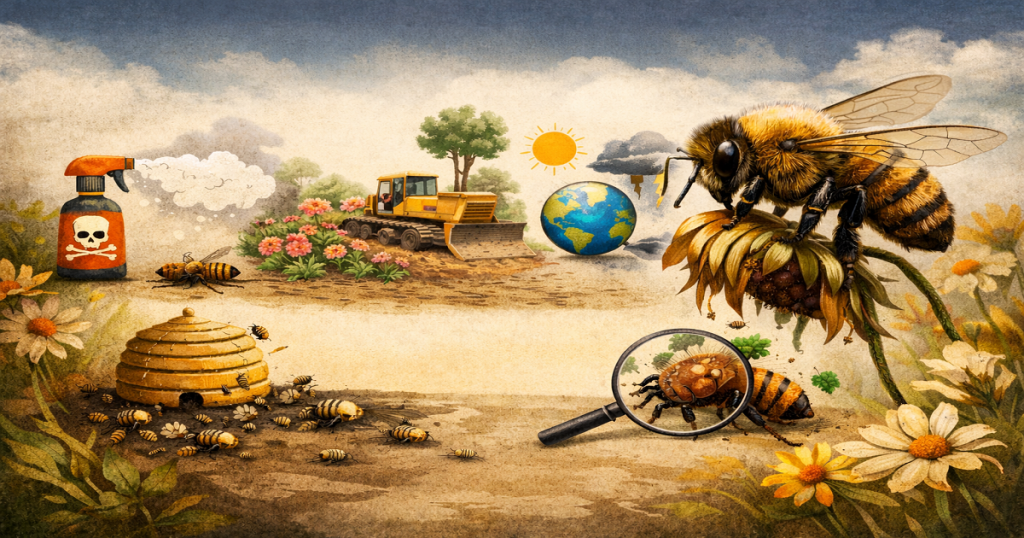
Understanding why bees are dying is the first step toward protecting them. From pesticide exposure and habitat loss to climate change and disease, several factors are contributing to what many experts describe as a global pollinator crisis.
Why Bees Are Important
Most people associate bees with honey, but their role in nature goes far beyond honey production. Bees are among the world’s most effective pollinators. As they move from flower to flower collecting nectar and pollen, they transfer pollen between plants, helping them reproduce.
The Role of Bees in Pollination
Pollination is essential for the growth of many flowering plants. Without pollinators such as bees, many crops and wild plants would struggle to produce fruits, seeds, and vegetables. Bees are particularly efficient because their bodies are covered in tiny hairs that easily collect and transfer pollen.
Supporting Food Production
A significant portion of global agriculture depends on pollination services. Crops such as apples, almonds, blueberries, cucumbers, pumpkins, and strawberries benefit from bee activity. Farmers rely on healthy bee populations to maintain crop yields and produce high-quality harvests.
Maintaining Healthy Ecosystems
Bees also support biodiversity by helping wild plants reproduce. These plants provide food and shelter for birds, insects, and other wildlife. In many ecosystems, bees act as a cornerstone species, helping maintain the balance of nature.
Are Bee Populations Really Declining?
The short answer is yes. Research conducted across multiple regions has shown concerning declines in both wild bee species and managed honeybee colonies.
However, it’s important to understand that not all bees are affected in exactly the same way. Some species are experiencing severe population losses, while others remain relatively stable. Scientists continue to monitor bee health and pollinator trends to better understand the long-term impacts.
Many beekeepers also report higher-than-normal colony losses, especially during winter months. These losses can make it difficult to maintain healthy hives and support agricultural pollination needs.
The Main Reasons Bees Are Dying
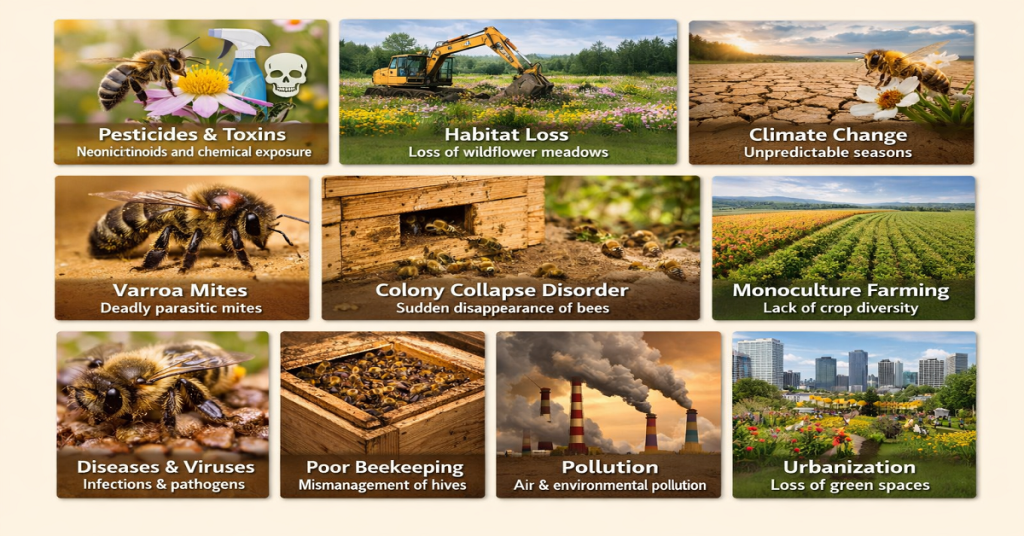
There is no single cause behind bee decline. Instead, researchers believe multiple environmental stressors are working together to weaken bee populations.
Pesticide Exposure
One of the most widely discussed threats to bees is pesticide exposure. Certain agricultural chemicals, particularly a group known as neonicotinoids, can affect bees even when they do not immediately kill them. Studies suggest these pesticides may interfere with a bee’s ability to navigate, find food, communicate, and return to its hive.
When bees become disoriented, entire colonies can suffer. Reduced foraging efficiency means less food for developing larvae and adult workers. Long-term pesticide exposure may also weaken immune systems, making bees more vulnerable to disease and parasites.
Habitat Loss
Another major factor contributing to bee population decline is habitat destruction. Urban expansion, infrastructure development, and intensive farming practices have reduced the number of natural spaces where bees can find food and shelter. Wildflower meadows, grasslands, and natural nesting areas are disappearing in many regions.
Monoculture Farming
Modern agriculture often relies on monoculture farming, where large areas are dedicated to a single crop. While these fields may provide food for bees during a short flowering period, they offer little nutritional diversity throughout the year. Just like humans benefit from a varied diet, bees need access to different sources of pollen and nectar to maintain good health.
Climate Change
Climate change is increasingly recognized as a significant threat to pollinators. Rising temperatures, prolonged droughts, severe storms, and shifting weather patterns can disrupt bee behavior and survival. Many bee species are adapted to specific environmental conditions, and rapid climate shifts can make it difficult for them to adjust.
Mismatched Blooming Seasons
One growing concern involves changes in flowering schedules. Plants may bloom earlier or later than usual due to changing temperatures. If flowers bloom before bees become active, pollinators may miss critical food sources. This mismatch between flowering plants and bee activity can reduce survival rates and reproductive success.
Parasites and Diseases
Bee colonies face numerous biological threats, but one of the most damaging is the Varroa mite. These tiny parasites attach themselves to honeybees and feed on them. In addition to weakening individual bees, Varroa mites can spread harmful viruses throughout entire colonies.
Bees are also affected by bacterial infections, fungal diseases, and other pathogens. When colonies are already stressed by environmental pressures, disease outbreaks can become even more devastating.
Poor Nutrition
Nutrition plays a vital role in bee health. Bees require a diverse range of pollen sources to obtain essential proteins, vitamins, and nutrients. When landscapes lack plant diversity, bees may struggle to find adequate nutrition.
Poor nutrition can weaken immune responses, reduce reproductive success, and lower a colony’s ability to survive challenging conditions.
Environmental Pollution
Pollution is another often-overlooked factor. Air pollution can interfere with the scent trails that bees use to locate flowers. Chemical contaminants in soil and water may also affect bee development and behavior.
Although pollution alone may not be responsible for widespread bee losses, it can add another layer of stress to already vulnerable populations.
Colony Collapse Disorder (CCD)
One term frequently mentioned in discussions about bee decline is Colony Collapse Disorder, often abbreviated as CCD. CCD refers to a phenomenon where worker bees suddenly disappear from a hive, leaving behind the queen and immature bees. Without enough workers to maintain the colony, the hive eventually collapses.
When CCD first gained widespread attention, scientists searched for a single cause. However, current research suggests that colony collapse disorder is likely the result of multiple interacting factors, including pesticide exposure, parasites, disease, nutritional stress, and environmental changes. While reports of CCD have decreased compared to earlier years, the broader issue of bee decline remains a serious concern.
What Happens If Bees Continue to Decline?
The consequences of declining bee populations extend far beyond the insects themselves.
Impact on Food Supply
Many crops depend partially or entirely on insect pollination. A continued reduction in pollinator populations could lead to lower crop yields and reduced agricultural productivity. Certain fruits, vegetables, nuts, and seeds may become more expensive or less available if pollination services decline significantly.
Economic Consequences
Pollination contributes billions of dollars to the global agricultural economy each year. Farmers, food producers, and agricultural businesses all benefit from healthy bee populations. A reduction in pollinator services could increase production costs and create challenges throughout the food supply chain.
Environmental Effects
Bees help maintain plant diversity across ecosystems. If pollinator populations continue to shrink, many plant species may struggle to reproduce effectively.
This can create ripple effects throughout entire ecosystems, affecting birds, mammals, insects, and other organisms that rely on those plants for food and habitat.
Potential Human Impact
Although humans would not disappear without bees, our diets would likely become less diverse and more expensive. Many nutritious foods could become harder to produce, potentially affecting food security in some regions. Protecting pollinators is therefore closely connected to long-term agricultural sustainability.
What Scientists and Governments Are Doing
Around the world, researchers and policymakers are working to better understand and address the causes of bee decline.
Research and Monitoring Programs
Scientists continue to study bee behavior, pollinator health, disease transmission, habitat requirements, and environmental stressors. Long-term monitoring programs help track population changes and identify emerging threats before they become widespread.
Pesticide Regulations
Several countries have introduced restrictions on certain pesticides linked to pollinator health concerns. Regulatory agencies continue evaluating scientific evidence to determine the safest approaches for agriculture and environmental protection.
Habitat Restoration Projects
Conservation organizations are restoring wildflower habitats, creating pollinator corridors, and promoting biodiversity-friendly land management practices. These efforts aim to provide bees with reliable food sources and nesting opportunities throughout the year.
What Individuals Can Do to Help Bees
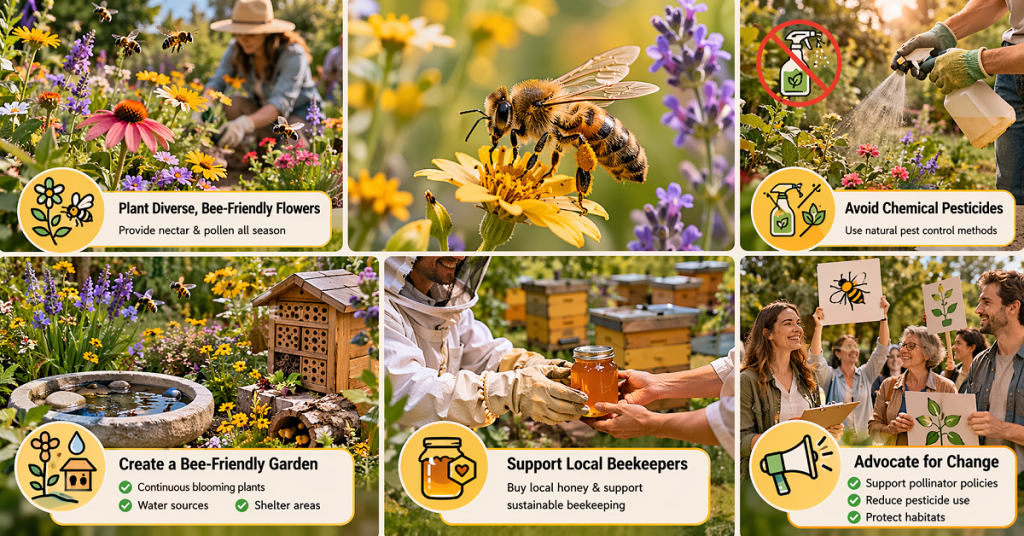
Protecting bees is not solely the responsibility of scientists and governments. Individuals can also make a meaningful difference.
Plant Bee-Friendly Flowers
Creating a pollinator-friendly garden is one of the simplest ways to support local bee populations. Native flowering plants often provide the best food sources because they evolved alongside local pollinators. Choosing plants that bloom at different times throughout the year can help ensure a continuous supply of nectar and pollen.
Reduce Pesticide Use
Limiting the use of chemical pesticides in home gardens can reduce risks to beneficial insects. When pest control is necessary, using targeted and environmentally responsible methods is often a better option.
Create Pollinator Habitats
Leaving small areas of natural vegetation, providing nesting sites, and installing bee hotels can support solitary bee species that do not live in large colonies.
Support Sustainable Farming
Consumers can encourage pollinator-friendly agriculture by supporting farmers and businesses that prioritize biodiversity and environmental stewardship.
Educate Others
Raising awareness about pollinator conservation helps build community support for bee-friendly practices. Citizen science projects can also contribute valuable data to ongoing research efforts.
Frequently Asked Questions
Why are bees dying so quickly?
Bee decline is usually caused by a combination of factors, including pesticide exposure, habitat loss, climate change, parasites, disease, and poor nutrition.
Which bee species are most at risk?
Risk levels vary by region and species. Some wild bee populations have experienced significant declines due to habitat fragmentation and environmental stress.
Are honeybees endangered?
Managed honeybees are not globally endangered, but they continue to face health challenges and colony losses in many areas.
How does climate change affect bees?
Climate change can alter flowering seasons, disrupt food availability, and create environmental conditions that make survival more difficult.
Can gardens really help bee populations?
Yes. Pollinator-friendly gardens can provide valuable food and habitat resources, especially in urban and suburban environments.
What foods would become scarce without bees?
Many fruits, vegetables, nuts, and seed-producing crops could see reduced yields if pollinator populations decline significantly.
Conclusion
The decline of bee populations is one of the most important environmental challenges of our time. While there is no single reason why bees are dying, scientists agree that pesticide exposure, habitat loss, climate change, disease, parasites, poor nutrition, and environmental pollution all play important roles.
The good news is that solutions exist. Through scientific research, conservation efforts, sustainable agriculture, and individual action, it is possible to support healthier pollinator populations. Protecting bees is about more than saving an insect—it is about safeguarding biodiversity, strengthening food security, and maintaining the ecosystems that support life on Earth.