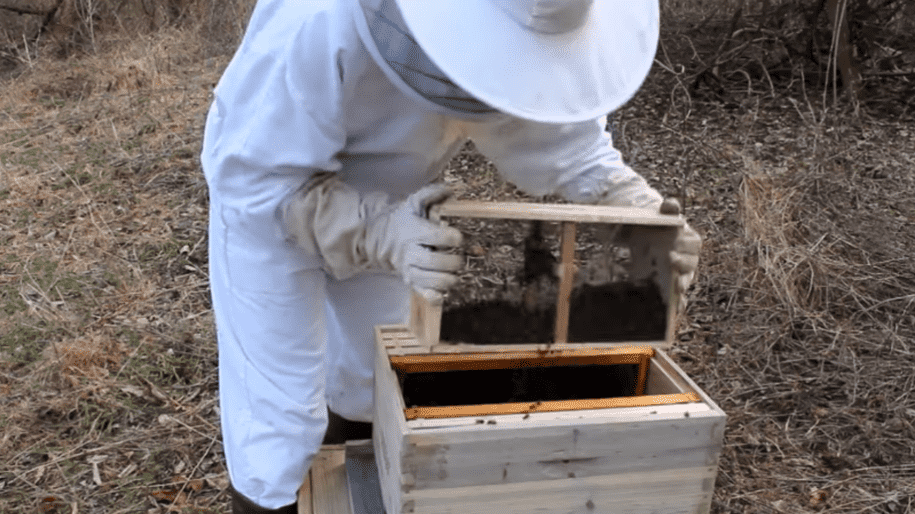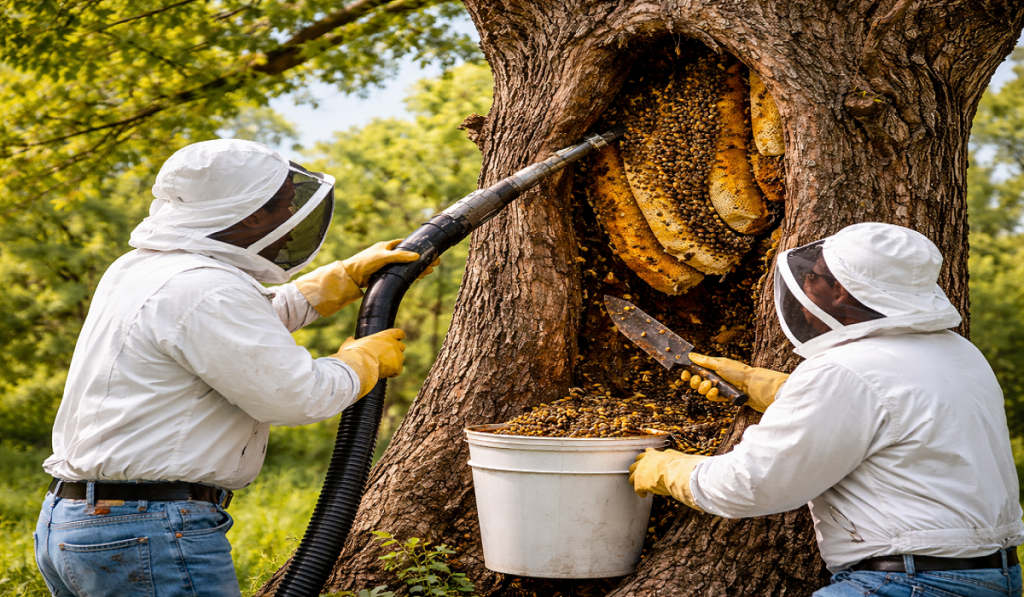
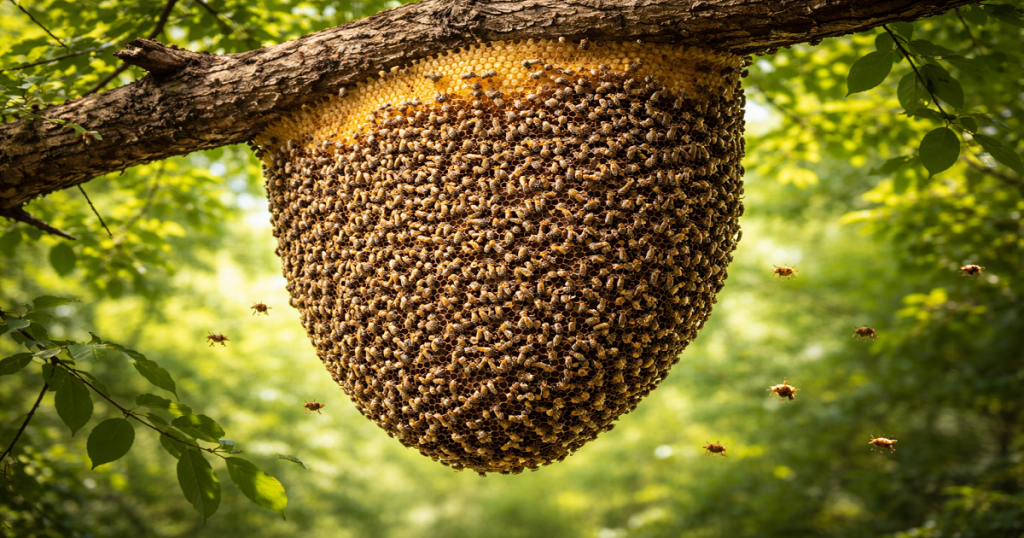
In recent years, there has been a growing shift toward sustainable agriculture and environmental conservation—and at the center of this movement is the rising interest in natural honey bee hives. Unlike conventional managed systems, natural hives allow bees to live, build, and behave as they would in the wild, creating healthier colonies and more resilient ecosystems.
But what truly sets natural hives apart? Are they actually better than artificial systems used in modern apiculture? And how do they impact honey quality, pollination, and biodiversity?
Drawing on real-world beekeeping practices, ecological research, and industry insights, this guide explores the true benefits of natural honey bee hives, along with their limitations, practical applications, and role in sustainable farming.
By the end, you’ll have a clear, expert-level understanding of:
- Why natural hives improve colony health
- How do they support organic honey production?
- Their impact on pollination and ecosystem balance
- Whether natural beekeeping is right for you
What Are Natural Honey Bee Hives?
Natural honey bee hives are structures created entirely by bees—most commonly by Apis mellifera—in environments like tree cavities, rock crevices, and forest ecosystems.
Unlike managed apiaries using Langstroth boxes, natural hives allow bees to:
- Construct their own wax comb without artificial frames
- Organize brood and honey storage based on instinct
- Regulate hive temperature (thermoregulation) naturally
- Develop adaptive colony behavior over time
Natural Hive Ecology in Action
Inside a natural hive:
- The brood chamber is centrally located for optimal heat retention
- Honey is stored above, acting as insulation
- Propolis (a resin collected from plants) is used as a natural antimicrobial barrier
This creates a self-sustaining micro-ecosystem—something artificial hives often struggle to replicate.
Why Natural Honey Bee Hives Are Better Than Artificial Hives
Stronger Colony Health and Disease Resistance
One of the most important natural beehive advantages is improved colony health.
From field observations and beekeeper experience:
- Natural colonies show higher resistance to Varroa destructor mites
- Bees develop stronger immune responses due to exposure to natural stressors
- The hive microbiome remains intact, supporting disease resistance
Unlike heavily managed hives, natural systems:
- Avoid chemical treatments
- Reduce stress from frequent inspections
- Maintain stable internal conditions
This is critical in addressing Colony Collapse Disorder (CCD), which is often linked to stress, pesticides, and poor nutrition.
Natural Hive Structure Improves Efficiency
The honeycomb structure in natural hives is not random—it’s mathematically optimized. Bees build hexagonal combs that:
- Maximize storage space
- Minimize wax usage (energy efficiency)
- Improve airflow and temperature control
Natural comb also supports:
- Better brood development
- Efficient nectar processing
- Stronger structural integrity
Artificial frames restrict this natural architecture, often reducing overall hive efficiency.
Reduced Stress and More Natural Behavior
In conventional beekeeping, constant hive inspections and manipulations disrupt:
- Queen pheromone distribution
- Foraging patterns
- Swarming behavior
In natural systems:
- Bees regulate their own population through swarming behavior
- The queen maintains stable communication with workers
- Colonies adapt naturally to environmental changes
Reduced stress = stronger, longer-lasting colonies.
Organic Honey Production and Quality Benefits
Benefits of Chemical-Free Honey Production
Natural hives produce chemical-free honey because:
- No synthetic pesticides or antibiotics are used
- Bees forage from natural nectar sources
- Wax comb remains uncontaminated
This leads to:
- Higher enzyme activity (e.g., invertase, diastase)
- More antioxidants
- Richer flavor complexity
Why Raw Honey from Natural Hives Is Superior
Compared to commercial honey, natural hive honey:
- Retains pollen and micronutrients
- Contains antimicrobial compounds
- Is minimally processed
This explains the growing demand for raw honey benefits and organic honey production methods.
Natural Pollination Systems and Environmental Impact
The Role of Bees in Natural Habitats
Bees are essential to natural pollination systems, supporting:
- Over 75% of flowering plants
- Crop pollination in agriculture
- Regeneration of forest ecosystems
Without bees:
- Food production would decline dramatically
- Biodiversity would collapse
- Ecosystem balance would be disrupted
Biodiversity and Ecosystem Balance
Natural hives contribute to:
- Biodiversity is supported by pollinating diverse plant species
- Stability in food chains
- Habitat preservation for other organisms
Wild bee colonies also maintain genetic diversity, which is critical for long-term survival.
Importance in Agriculture and Organic Farming
Natural hives are vital for:
- Organic agriculture
- Eco-friendly farming
- Sustainable farming practices
Farmers benefit from:
- Increased crop yield
- Improved fruit quality
- Reduced dependence on artificial pollination
Natural vs Artificial Hives: Key Differences
| Feature | Natural Honey Bee Hives | Artificial Hives |
| Hive Structure | Self-built | Pre-designed frames |
| Colony Health | Strong, adaptive | Often stress-prone |
| Disease Resistance | Higher (natural selection) | Lower (chemical reliance) |
| Honey Quality | Organic, raw | Often processed |
| Management | Minimal | Intensive |
| Environmental Impact | Eco-friendly | Can be harmful |
Challenges of Natural Honey Bee Hives (Balanced View)
To build trust and realism, it’s important to understand the limitations.
Common Challenges:
- Lower honey yield compared to commercial hives
- Difficult hive inspection and management
- Higher swarming rates (loss of bees)
- Less control over disease outbreaks
Natural beekeeping is ideal for sustainability—but not always for maximum production.
Practical Insights from Experienced Beekeepers
Real-World Observations
Beekeepers practicing low-intervention methods often report:
- Fewer colony losses over time
- Stronger overwinter survival rates
- Reduced need for chemical treatments
Common Mistakes to Avoid
- Over-harvesting honey
- Interfering with natural comb building
- Ignoring local forage availability
- Treating bees like production units instead of living ecosystems
Professional Best Practices
- Maintain diverse flowering plants year-round
- Allow natural swarming cycles
- Avoid synthetic chemicals
- Support local bee genetics
Step-by-Step: How to Start Natural Beekeeping
1. Choose a Suitable Location
- Quiet, pesticide-free environment
- Access to water and diverse plants
2. Provide Natural Hive Options
- Log hives
- Top-bar hives (semi-natural)
- Preserve tree cavities
3. Encourage Natural Foraging
- Plant native flowering plants
- Ensure seasonal nectar availability
4. Minimize Intervention
- Limit hive inspections
- Avoid artificial feeding unless necessary
5. Harvest Sustainably
- Take only surplus honey
- Leave enough for winter survival
Scientific Insights: Why Natural Hives Work
Research and field data suggest:
- Natural comb spacing reduces Varroa mite reproduction
- Propolis enhances antimicrobial defense
- Hive thermoregulation improves brood survival
Additionally:
- Bees in natural systems develop stronger genetic resilience
- Diverse foraging improves nutritional intake
Benefits of Wild Honey vs Farmed Honey
Wild Honey Advantages:
- Higher nutrient diversity
- No chemical exposure
- Complex flavor profiles
Farmed Honey Limitations:
- Often pasteurized
- May contain additives
- Reduced enzyme activity
Frequently Asked Questions (FAQs)
What are the benefits of natural honey bee hives?
They improve colony health, produce chemical-free honey, and support biodiversity and ecosystem balance.
Why are natural bee hives better than artificial hives?
They allow natural behavior, reduce stress, and enhance disease resistance.
Do natural hives produce less honey?
Yes, but the honey is typically higher in quality and nutritional value.
Can natural beekeeping prevent Colony Collapse Disorder?
It reduces key risk factors like stress and chemical exposure, improving colony survival.
How do natural hives survive winter?
Through better insulation, natural clustering, and efficient honey storage.
What is the role of propolis in natural hives?
It acts as an antimicrobial barrier, protecting the colony from pathogens.
Is natural beekeeping profitable?
It can be on a small scale, especially for premium organic honey markets.
How do natural hives control pests like Varroa mites?
Through natural selection, grooming behavior, and optimized hive conditions.
What is sustainable honey harvesting?
Harvesting honey without harming the colony or removing essential food reserves.
How can I support wild bee populations?
Plant native flowers, avoid pesticides, and protect natural habitats.
Conclusion
The benefits of natural honey bee hives go far beyond honey production. They represent a sustainable, eco-friendly approach to beekeeping that prioritizes colony health, environmental balance, and long-term resilience.
While natural systems may not maximize short-term yield, they offer something far more valuable: a stable, thriving ecosystem and healthier bee populations. As the world faces growing environmental challenges, adopting natural beekeeping practices is not just beneficial—it’s essential.