
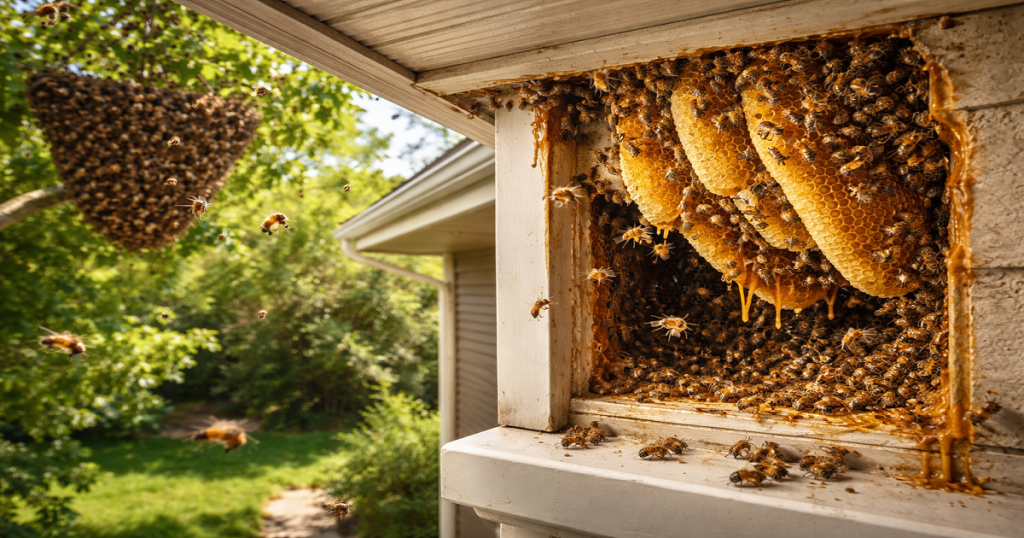
Finding bees around your home can be concerning, especially when you notice ongoing activity such as bees entering and leaving the same area, buzzing sounds inside walls, or increased bee traffic near your roof or attic. These signs often point to more than a few stray insects—they may indicate that a bee colony has established itself somewhere within your home’s structure.
Although bees play a vital role in pollination and are essential to healthy ecosystems, they can become a problem when they build nests inside walls, attics, chimneys, or other enclosed spaces. As a colony grows, it can produce large amounts of honeycomb and wax, which may lead to property damage, attract other pests, and create safety concerns for people living in the home.
In this guide, you’ll learn how to recognize the most common signs of a bee infestation, understand why bees are attracted to certain parts of a house, and discover the safest and most effective ways to address the problem. Whether you’ve spotted bees in your walls, attic, or roofline, this article provides practical, experience-based insights to help you make informed decisions and protect your home.
What are bee infestations?
A bee infestation occurs when bees move into a part of your home and establish a permanent colony. Unlike a temporary swarm that may rest for a few hours or days before moving on, an infestation involves a settled hive with a queen, worker bees, developing young (brood), and food stores.
In residential properties, honey bees are the species most often associated with infestations. They typically build their hives inside protected spaces such as wall voids, attics, chimneys, and roof cavities. Over time, these colonies can grow significantly, creating extensive wax comb structures used to store honey, pollen, and brood. What begins as a small colony can eventually occupy a large hidden space within a home’s structure.
Not all bees behave the same way. Carpenter bees, for example, tunnel into wood to create nesting sites but do not live in large colonies. Bumblebees may nest in insulation, sheds, or other sheltered areas, yet their colonies are generally much smaller and seasonal. As a result, they rarely cause the same level of concern as an established honey bee hive.
Identifying the type of bee and understanding how it nests is an important first step. This helps determine the potential risks, the extent of the problem, and the safest approach for removal.
Why Do Bees Nest in Homes?
Many homeowners are surprised to discover bees living inside their walls or attic. While it may seem like an unusual place for a hive, homes often provide the same conditions bees look for in natural nesting sites.
Shelter and Protection
Bees prefer enclosed spaces that keep their colony safe from predators, rain, wind, and extreme weather. In nature, honey bees commonly nest inside hollow trees. Wall voids, attics, chimneys, and roof cavities offer similar protection, making them attractive alternatives. These hidden spaces are quiet, sheltered, and rarely disturbed, allowing a colony to grow undisturbed.
Stable Temperatures
Maintaining a consistent temperature is essential for a healthy bee colony, especially when raising brood. The interior spaces of a home are often more temperature-stable than the outdoors. Walls and attics can help shield bees from extreme heat, cold, and sudden weather changes, creating a more favorable environment for long-term survival.
Small Entry Points
Bees don’t need a large opening to move into a structure. Tiny gaps around vents, siding, rooflines, utility openings, or window frames can provide access. Scout bees actively search for suitable nesting locations, and once they find a protected space, they can lead the rest of the colony to the site.
Nearby Food Sources
Location matters when bees choose a nesting site. Homes surrounded by gardens, flowering trees, landscaping, parks, or agricultural fields offer easy access to nectar and pollen. The closer these food sources are to the hive, the less energy worker bees need to spend on foraging, making the area even more appealing.
Why Colonies Stay Once They Move In
Once a colony has built comb and started raising brood, it is unlikely to leave on its own. As the hive expands, the bees become more established and continue using the space year after year unless the colony is professionally removed or relocates naturally through swarming.
Signs of Bee Infestations inside Home
Detecting a bee infestation early can help prevent property damage and make removal much easier. While a few bees around your yard are usually nothing to worry about, certain signs may indicate that a colony has already moved into your home’s structure.
Bees Regularly Entering and Leaving the Same Spot
One of the clearest signs of an active hive is seeing bees repeatedly fly in and out of a specific area. Look for activity around cracks in siding, gaps near vents, roof edges, or small openings in exterior walls. Bees typically follow consistent flight paths, so frequent traffic in one location often points to the colony’s main entrance.
Buzzing Sounds Inside Walls
A persistent buzzing or humming sound coming from walls, ceilings, or attic spaces can be a strong indication of a hidden hive. The noise is created by thousands of bees moving within the colony, fanning their wings, and carrying out daily tasks. Homeowners often notice the sound becoming more noticeable during warm daylight hours when bee activity is highest.
Increased Bee Activity Around the Roofline, Eaves, or Windows
Bees gathering around roof edges, soffits, eaves, chimneys, or windows may be accessing a nest hidden inside the structure. These areas commonly contain small gaps that provide entry into wall cavities and attic spaces. If you consistently see bees inspecting or entering these locations, it’s worth investigating further.
Bees Appearing Indoors
Finding live bees inside your home is another warning sign, especially if it happens repeatedly. Bees from an internal hive may accidentally enter living spaces through cracks, gaps around light fixtures, vents, or wall openings. They are often found near windows or indoor light sources as they search for a way outside.
Honey Stains or Sticky Residue
In established infestations, stored honey can sometimes seep through drywall, ceilings, or other surfaces. You may notice sticky patches, dark stains, or unusual odors. This usually indicates a mature colony with substantial honeycomb inside the structure. At this stage, professional assessment is strongly recommended to prevent further damage.
A Swarm Near Your Home
A swarm is a large cluster of bees gathered on a tree branch, fence, roof edge, or another outdoor surface. While swarms are typically temporary and less aggressive than established colonies, they are actively searching for a new nesting location. If suitable entry points are available, your home could become their next permanent hive site.
When Multiple Signs Appear Together
A single sign doesn’t always confirm an infestation. However, if you notice several of these indicators at the same time—such as regular bee traffic, buzzing inside walls, and bees appearing indoors—there is a strong possibility that a colony is already established within your home.
Hive Locations Inside Homes
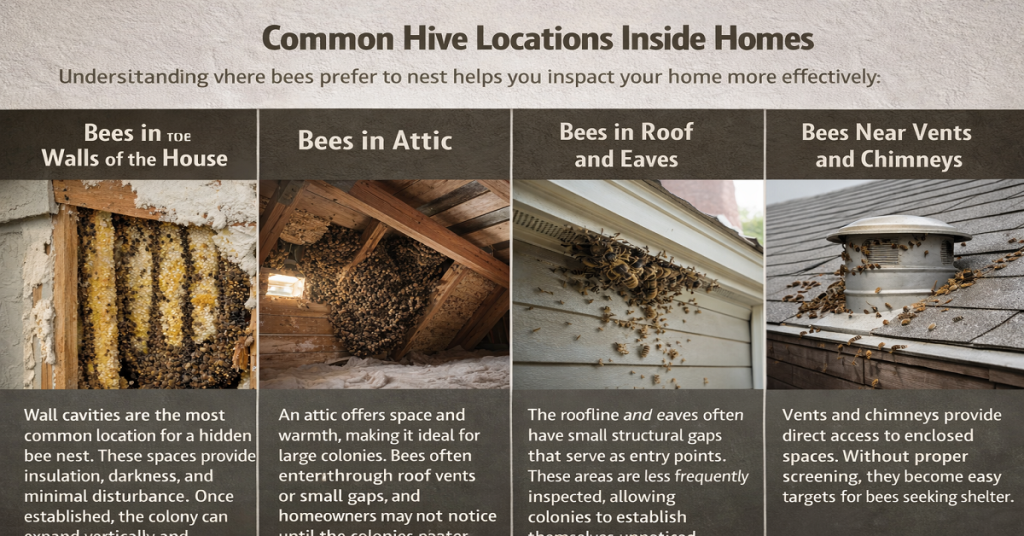
Knowing where bees are most likely to nest can help you spot potential problems early and focus your inspection on the areas they prefer. Bees are naturally attracted to protected spaces that offer shelter, stable temperatures, and minimal disturbance.
Bees Inside Wall Cavities
Wall voids are one of the most common locations for hidden bee colonies. These enclosed spaces closely resemble the hollow trees that honey bees use in nature. Once bees gain access through a small exterior opening, they can build comb inside the cavity and gradually expand the colony over time. Because the hive is concealed behind drywall or siding, infestations often go unnoticed until bee activity becomes more obvious.
Bees in the Attic
Attics provide a warm, sheltered environment that can support large colonies. Bees often enter through damaged roof vents, gaps around roofing materials, or small openings near the roofline. Since attics are not part of the home’s everyday living space, a colony may remain hidden for months before homeowners notice signs such as buzzing sounds, increased bee activity, or bees appearing indoors.
Bees in Roofs and Eaves
Roof edges, eaves, soffits, and overhangs frequently contain small gaps that allow bees to access protected interior spaces. These areas are often overlooked during routine home maintenance, making them attractive nesting locations. Colonies established here can remain hidden while expanding into nearby roof or wall cavities.
Bees Near Vents and Chimneys
Unscreened vents and chimneys can provide direct access to enclosed areas inside a home. Bees searching for a nesting site are quick to take advantage of these openings. Once inside, they may establish a hive in adjacent wall spaces, attic areas, or other protected cavities. Properly fitted screens and regular inspections can help reduce the risk of bees using these entry points.
Are Bees Dangerous Inside the House?
In most situations, bees are not aggressive and prefer to avoid people. However, when bees establish a nest inside a home, the risk of unwanted encounters increases. Everyday activities such as drilling, hammering, renovating, or even strong vibrations from household equipment can disturb the colony and trigger defensive behavior.
As a result, the chances of being stung become higher, especially if the bees perceive a threat near their nest. This can be a greater concern for households with children, older adults, and pets, who may accidentally get too close to the colony.
Bee stings are usually painful but not dangerous for most people. However, individuals with a bee venom allergy can experience severe reactions that require immediate medical attention.
A bee colony inside a structure can also create property-related problems. Over time, accumulated honey and wax may seep into walls or ceilings, causing stains, unpleasant odors, and moisture issues. These materials can also attract other pests, including ants, cockroaches, and rodents, making the problem more difficult to manage.
For these reasons, it is important to address a bee infestation inside the house as soon as it is discovered and have it assessed by a qualified bee removal professional when necessary.
What to Do If Bees Nest Inside Your Wall
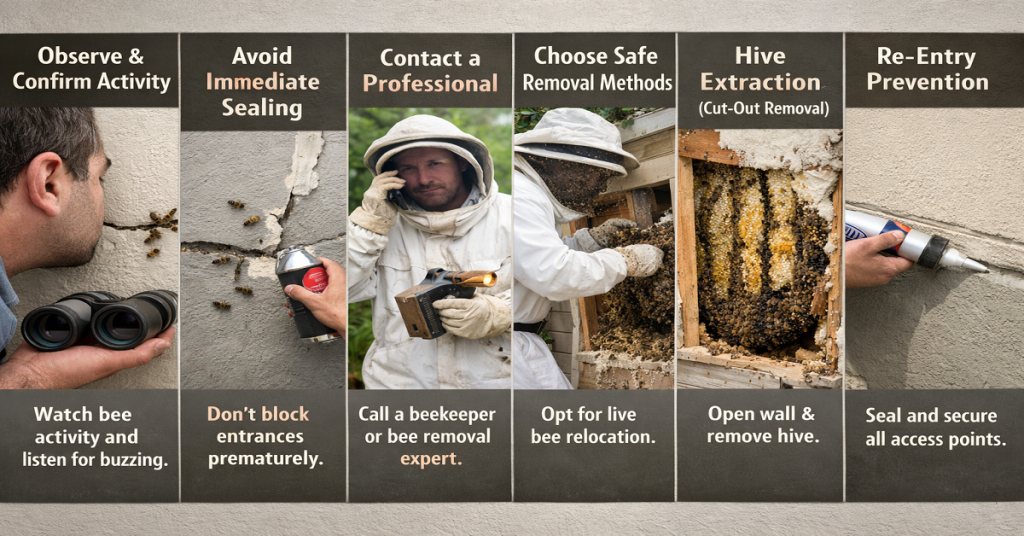
Finding bees inside a wall can be alarming, but handling the situation correctly is important for both your safety and the well-being of the colony. Avoid taking immediate action without first assessing the situation, as improper removal can make the problem worse.
Confirm That Bees Are Present
Watch the outside of your home for regular bee activity around small openings, cracks, vents, or gaps in the siding. You may also hear a faint buzzing sound coming from inside the wall. Observing these signs can help determine the approximate location of the nest.
Do Not Seal the Entry Point
It may seem logical to block the bees’ entrance, but doing so can create bigger problems. Trapped bees often search for new escape routes, which may lead them into living spaces inside the house. Sealing the entrance too early can also leave honey and wax trapped within the wall.
Contact a Qualified Professional
Once you suspect a colony is present, contact a local beekeeper, bee removal specialist, or pest control professional experienced in live bee removal. An expert can identify the species, assess the size of the colony, and recommend the safest solution.
Prioritize Live Removal When Possible
If the bees are honey bees, relocation is often the preferred option. Moving the colony to a suitable location helps protect important pollinators while resolving the problem safely.
Remove the Entire Hive
In many cases, professionals must open part of the wall to access the nest. This process, often called a cut-out removal, allows the complete colony—including the queen, brood comb, honeycomb, and stored honey—to be removed properly.
Clean Out Honey, Wax, and Residue
Removing the bees alone is not enough. Any remaining honey, wax, or comb can attract ants, rodents, cockroaches, or even a new bee colony. Thorough cleanup helps prevent future infestations and structural issues.
Prevent Future Bee Entry
After the hive has been removed, inspect the structure for gaps, cracks, and other potential entry points. Sealing these openings and repairing damaged areas can greatly reduce the risk of bees nesting in the same location again.
Taking a careful, professional approach is the safest and most effective way to deal with bees inside a wall while protecting both your home and the environment.
Frequently Asked Questions (FAQs)
How do I know if bees are nesting in my house?
Consistent bee activity, buzzing sounds in walls, and bees entering specific نقاط indicate nesting.
Why are bees entering my house every day?
They are likely accessing a hidden hive inside your structure.
Can bees damage your home structure?
Yes, honeycomb and moisture can weaken materials and attract pests.
Who should I call for a bee infestation in my home?
A local beekeeper or pest control expert specializing in bee-safe removal.
Are bees dangerous indoors?
They can sting if disturbed, especially near a large colony.
Do bees build nests inside walls?
Yes, especially honey bees that prefer enclosed cavities.
How do I stop bees from entering through vents?
Install mesh screens and seal gaps around vent edges.
What is the safest way to remove bees?
Live bee removal and colony relocation are the safest options.
Conclusion
Dealing with bee infestations in home environments requires awareness, patience, and informed decision-making. From recognizing early warning signs like buzzing in walls and bees entering cracks to understanding why bees choose your home, every step matters.
The key takeaway is simple: act early, avoid quick fixes, and prioritize safe, professional removal. By combining proper detection, expert intervention, and preventative measures, you can protect your home while supporting the vital role bees play in our ecosystem.