Carpenter bees are fascinating but sometimes troublesome insects. Unlike honeybees, they do not live in hives but bore into wood to create nesting tunnels. This behavior often affects decks, fences, siding, and outdoor furniture. While these bees are largely non-aggressive and play an important pollination role, their activity can cause structural damage over time. If you’re wondering how to get rid of carpenter bees without killing them, you’re not alone—many homeowners want to protect their property while preserving these beneficial pollinators.
In this guide, you’ll learn carpenter bee control methods that are humane, eco-friendly, and effective. We’ll cover practical steps for removing carpenter bees naturally, preventing future infestations, treating carpenter bee holes, and protecting your wood structures. By the end, you’ll have a complete, step-by-step strategy to eliminate carpenter bees safely, without harming them or your environment.
Understanding Carpenter Bees and Their Behavior
Before tackling a carpenter bee problem, it’s crucial to understand their habits:
- Nesting tunnels: Female carpenter bees bore into untreated softwood to lay eggs. Repeated nesting can weaken wood over time.
- Territorial males: Male bees hover near nesting sites but are stingerless and pose no threat. Female bees may sting if provoked, but are generally non-aggressive.
- Seasonal activity: Carpenter bees are most active in spring and early summer, when they search for new nesting sites.
- Pollination role: Despite being a nuisance, carpenter bees are valuable pollinators for fruits, vegetables, and flowers.
- Wood preference: They target untreated softwood such as pine, cedar, and redwood, avoiding painted or sealed surfaces.
Understanding these behaviors helps you implement natural carpenter bee deterrents and wood treatment solutions that protect your property while supporting ecological balance.
Signs of a Carpenter Bee Infestation
Early detection is key to preventing long-term damage. Look for:
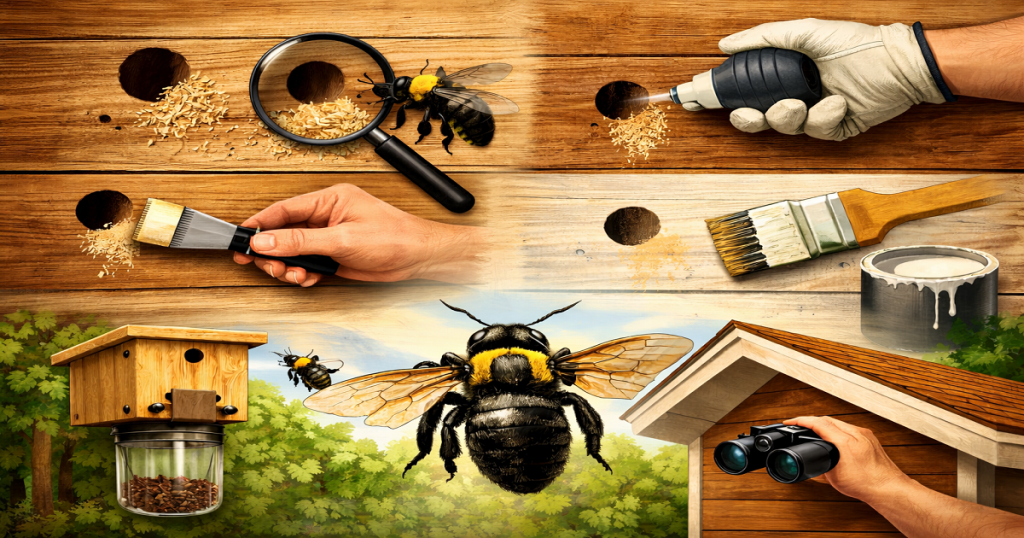
- Round holes about ½ inch in diameter on decks, fences, or siding
- Sawdust (frass) beneath holes
- Hovering male bees around wooden structures
- Multiple holes along untreated wood areas
Recognizing these signs allows you to stop carpenter bees from nesting before damage worsens.
Why You Should Avoid Killing Carpenter Bees
Using pesticides may seem quick, but it has major drawbacks:
- Environmental impact: Chemical sprays harm pollinators and beneficial insects.
- Incomplete solution: Killed bees may leave tunnels intact, allowing new bees to reuse them.
- Legal & ethical considerations: In many areas, bees are protected due to their ecological importance.
Instead, focus on eco-friendly bee removal methods and preventive treatments that maintain wood integrity and safeguard pollinators.
How to Get Rid of Carpenter Bees Without Killing Them
Here are proven strategies for humane carpenter bee control. It helps to easily understand, will know that how to get rid of a carpenter bee or bumblebee
1. Use Natural Repellents
Certain scents discourage carpenter bees from nesting:
- Citrus oil: Boil citrus peels in water, cool, and spray on affected wood.
- Almond oil: Apply a few drops near the hole entrances to encourage relocation.
- Vinegar: A 50:50 mixture with water sprayed around nesting sites repels bees.
- Essential oils (clove, eucalyptus): Mask the wood scent to deter bees naturally.
These methods deter carpenter bees naturally and are safe for the environment.
2. Install Humane Carpenter Bee Traps
Carpenter bee traps lure bees into a chamber where they can be relocated:
- Place traps near high-activity areas like decks or eaves.
- Ensure traps are non-toxic and safe for live bees.
- Regularly monitor and release bees in gardens away from wooden structures.
Traps are an effective, wildlife-friendly pest control solution for persistent infestations.
3. Seal Existing Holes
Once bees vacate, prevent re-entry:
- Confirm all bees have left (usually after summer).
- Fill tunnels with wooden dowels or putty.
- Sand smooth and apply paint or wood sealants and paints.
This step treats existing damage while protecting wood for the long term.
4. Treat Wood Surfaces Proactively
Carpenter bees avoid painted and sealed wood. Protect your structures using surface sealing techniques:
- Paint or varnish exterior wood
- Use pressure-treated wood for new projects
- Apply wood treatment solutions like preservatives or sealants
Proactive treatment is one of the most effective carpenter bee control methods.
5. Use Physical Barriers
Stop bees from accessing nesting areas:
- Cover eaves with fine mesh
- Wrap posts and beams with aluminum flashing
- Install screens over vents or gaps
Insect exclusion methods prevent new colonies without harming bees.
Step-by-Step Guide: Humane Carpenter Bee Removal
Follow these steps to remove carpenter bees naturally:
- Inspect wood surfaces for holes, frass, or hovering bees.
- Time your intervention: Early morning or late evening is best.
- Apply natural repellents to entrances daily for a week.
- Install traps to safely capture and relocate bees.
- Seal abandoned tunnels with putty or wooden dowels.
- Prevent future infestations by painting/sealing wood and installing barriers.
This structured method ensures eco-friendly bee removal and wood protection.
Professional Insights & Common Mistakes
Professional pest control experts recommend:
- Don’t plug active nests prematurely; trapped bees may die.
- Regular monitoring ensures tunnels aren’t reused.
- Use integrated pest management (IPM): combine prevention, physical barriers, and natural repellents.
- Avoid chemical sprays unless necessary; they disrupt ecosystems.
- Protect high-risk structures like decks and outdoor furniture with sealants or coverings.
Common mistakes include rushing removal or neglecting preventive measures, which can lead to repeated infestations.
Comparison of Natural Carpenter Bee Deterrents
| Deterrent | How It Works | Application Tips | Pros | Cons |
| Citrus Oil | Repels bees with scent | Spray around holes weekly | Eco-friendly, safe for pets | Needs repeated application |
| Almond Oil | Deters bees from nesting | Drop at hole entrances | Natural, non-toxic | Works best for small infestations |
| Vinegar | Masks would scent | Spray around wood surfaces | Readily available, cheap | May require frequent reapplication |
| Essential Oils | Clove/eucalyptus deters bees | Diffuser or spray | Pleasant scent, natural | Less effective on large infestations |
| Paint & Sealants | Prevents drilling | Apply at least two coats | Long-term protection | Labor-intensive, upfront cost |
This table helps homeowners choose the best natural carpenter bee deterrents for their situation.
Seasonal Maintenance Schedule for Preventive Care
Maintaining wood proactively keeps bees away:
| Season | Task |
| Early Spring | Inspect wood for holes; apply citrus or almond oil; install traps if needed |
| Late Spring | Seal previous year’s holes; repaint or seal wood surfaces |
| Summer | Monitor bee activity; apply repellents weekly during active periods |
| Fall | Check and repair wooden structures; remove debris and untreated lumber near the property |
| Winter | Apply protective sealants; schedule maintenance for the upcoming spring |
A clear schedule ensures the prevention of carpenter bee infestation year-round.
How to Stop Carpenter Bees from Drilling Holes in Wood
Key preventive strategies:
- Regular inspections and early detection
- Seal cracks and crevices before nesting season
- Use treated or painted wood for high-risk areas
- Maintain garden environments to divert bees from structures
- Apply surface sealing techniques consistently
These steps protect wooden structures like decks, fences, and siding from long-term damage.
Frequently Asked Questions (FAQs)
Can I get rid of carpenter bees without harming them?
Yes. Natural carpenter bee deterrents, traps, and sealing holes allow safe removal while preserving pollinators.
What smells repel carpenter bees?
Citrus, almond oil, clove, and eucalyptus are effective natural repellents.
How do I fill carpenter bee holes safely?
Use wooden dowels or putty after bees leave, sand smooth, then apply wood sealants and paints.
Do carpenter bees damage all types of wood?
They prefer untreated softwood like cedar, pine, and redwood. Painted or sealed wood is less attractive.
How can I protect my deck from carpenter bees?
Paint or seal exposed wood, install barriers, and regularly inspect for new holes.
Are carpenter bees aggressive?
No. Males are non-stinging, and females rarely sting unless provoked.
Can pest control professionals help without killing bees?
Yes. Many use wildlife-friendly pest control methods such as relocation and exclusion techniques.
When is the best time to apply repellents?
Early spring, before nesting begins, repeated as needed during peak activity.
Are traps effective for large infestations?
Best used alongside sealing and repellent treatments; alone, they reduce numbers but won’t eliminate all bees.
Can I protect outdoor furniture from carpenter bees?
Yes, painting or sealing and periodic inspections keep bees away.
Conclusion
Humane carpenter bee control is both possible and practical. By understanding bee behavior, using natural carpenter bee deterrents, and implementing preventive measures, you can get rid of carpenter bees without killing them while protecting your wooden structures.
Key takeaways:
- Preventive maintenance: Paint, seal, and inspect wood regularly
- Natural repellents: Citrus, almond oil, and vinegar discourage bees
- Seal tunnels: Fill abandoned holes to prevent reuse
- Integrated approach (IPM): Combine physical barriers, repellents, and maintenance
With these methods, you can maintain a healthy home structure, support pollination, and manage non-aggressive carpenter bees safely.