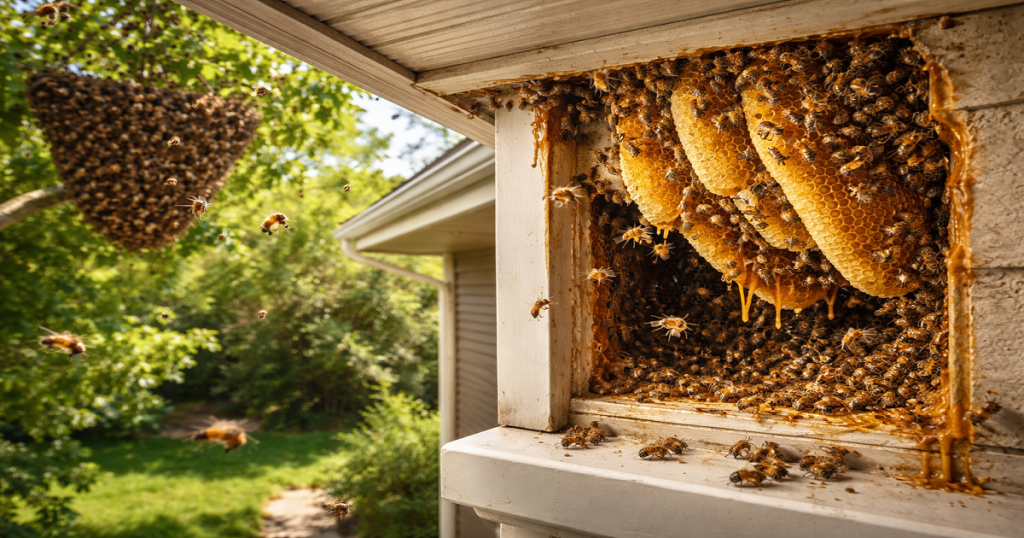
A bee infestation in home rarely starts as an obvious problem. In most cases, it begins quietly—just a faint buzzing behind a wall, a few bees near your attic vent, or occasional sightings around your roofline. By the time most homeowners realize what’s happening, a fully established honeybee colony may already be growing inside the structure.
From real-world experience, this is where things often go wrong: people underestimate early signs or misidentify the problem. Weeks later, they’re dealing with honey leakage, structural damage, and thousands of bees inside walls.
Species like the Honey bee are essential for pollination and global biodiversity, which is why safe handling matters. According to the Food and Agriculture Organization, protecting bees is critical for food systems—but that doesn’t mean you should ignore an infestation inside your home.
In this guide, you’ll learn:
- How to accurately identify signs of bee infestation in walls and attics
- The timeline of infestation growth most guides ignore
- Professional-level detection techniques
- Real risks (beyond just stings)
- What actually works—and what makes things worse
How Bee Infestation in Homes Actually Starts
If you want to know how a bee infestation starts then here are some stages you follow. It helps you to identify a bee infestation.
Stage 1: Scout Bees (Day 1–7)
Before infestation begins, a few worker bees explore your home looking for:
- Warm cavities
- Dry, protected spaces
- Small entry gaps
Common entry points:
- Roof vents
- Wall cracks
- Gaps in siding
At this stage:
- You’ll see occasional bees
- No noise yet
- No visible hive
Most people ignore this phase—and that’s the first mistake.
Stage 2: Swarm Settlement (Week 2–4)
A bee swarm may temporarily cluster on your property before moving inside.
Inside the structure:
- Initial hive structure begins
- The wax comb is formed
- The queen bee starts laying eggs
Now you may notice:
- Light buzzing
- Increased outdoor bee traffic
Stage 3: Colony Expansion (Month 1–3)
This is when a bee infestation in the house walls becomes serious:
- Hundreds to thousands of bees
- Rapid honeycomb growth
- Internal heat generation
Common symptoms:
- Buzzing becomes louder
- Bees appear indoors
- Entry point becomes active
Stage 4: Full Infestation (3+ Months)
At this stage:
- Honey begins accumulating
- Structural pressure increases
- Damage risks escalate
You may notice:
- Sticky walls
- Dark stains
- Strong odor
Clear Signs of Bee Infestation in Walls and Attics
1. Persistent Buzzing in Walls or Ceiling
What it sounds like:
- Low humming
- Vibrating sound
- Louder during the daytime
Pro insight: The sound often increases with temperature because bee activity rises.
2. Repeated Bee Traffic at One Spot
Watch for:
- Bees entering/exiting a small hole
- Activity near attic vents or roof edges
This indicates a confirmed entry point.
3. Honey or Wax Seeping Through Walls
This is a late-stage sign:
- Sticky residue
- Yellow or brown stains
- Soft drywall
This happens when honeycomb buildup exceeds structural capacity.
4. Warm or Bulging Walls
Large colonies generate heat:
- Walls feel warmer than others
- Paint may bubble
5. Bees Appearing Indoors
If bees suddenly appear inside:
- They may be entering through internal cracks
- Or the hive is expanding inward
6. Faint Sweet or Fermented Smell
This is often overlooked:
- Smell of honey or wax
- Can turn sour if the hive is damaged
Attic vs Wall Infestation (Critical Difference)
| Factor | Wall Infestation | Attic Infestation |
| Growth speed | Moderate | Fast (heat accelerates) |
| Detection | Harder | Easier |
| Damage risk | Hidden structural damage | Insulation damage |
| Noise level | Muffled | More noticeable |
From experience: Attic infestations grow faster and larger due to trapped heat.
Advanced Detection Methods (Used by Professionals)
Professionals don’t rely on guesswork.
Thermal Imaging
- Detects heat from bee clusters
- Identifies hive size
Acoustic Detection
- Amplifies buzzing inside walls
Visual Inspection
- Tracks entry/exit points
- Identifies colony behavior
Organizations like the National Pest Management Association recommend professional inspection for hidden infestations.
Risks of Ignoring a Bee Infestation
Structural Damage
- Honey weakens drywall
- Wood may rot
Secondary Infestations
Leftover honey attracts:
- Ants
- Cockroaches
- Rodents
Health Risks
- Bee stings
- Allergic reactions
- Aggressive colony behavior
Long-Term Issues
- Reinfestation
- Mold growth from moisture
What NOT to Do (Most Common Mistakes)
From real-world cases, these are the worst mistakes:
❌ Blocking entry holes
❌ Spraying insecticide blindly
❌ Ignoring early buzzing
❌ Attempting removal without gear
Critical mistake: Blocking entry = bees trapped inside → they may break into your living space.
Safe & Effective Solutions
Best Option: Bee Relocation
A trained beekeeper can:
- Perform swarm capture
- Relocate the colony to an apiary
- Preserve ecosystem balance
Contact a Local Beekeeping Association for help.
Professional Removal Process
- Locate hive
- Open the wall/attic carefully
- Remove bees + honeycomb
- Clean residue
- Seal entry points
This follows integrated pest management (IPM) principles.
Cost of Bee Infestation Removal
Typical Costs:
- Inspection: $50–$150
- Removal: $150–$500
- Repairs: $200–$1500+
Costs increase if:
- Hive is large
- Located deep in the structure
Prevention (After Removal)
Essential Steps:
- Seal all entry points
- Install vent covers
- Remove leftover honeycomb
- Schedule regular inspections
Natural Prevention:
- Use deterrent plants
- Reduce moisture
- Keep surroundings clean
Real-World Expert Insights
Insight 1:
Most infestations are ignored for 2–4 weeks before detection.
Insight 2:
Wall infestations often go unnoticed longer than attic ones.
Insight 3:
Incomplete removal leads to repeat infestations.
Insight 4:
The biggest hidden issue is:
Leftover honey attracts other pests
FAQ Section
How do I know if I have a bee infestation in my home?
Listen for buzzing, observe bee traffic, and check for stains or smells.
What does a bee infestation sound like?
A low humming or vibrating noise inside the walls.
Are bees dangerous in walls?
Yes, especially if disturbed.
Can bees damage your house?
Yes—through honey leakage and structural weakening.
How do professionals detect hidden hives?
Using thermal imaging and sound detection tools.
Should I remove the bees myself?
Only small, visible hives. Hidden infestations require professionals.
Can bees return after removal?
Yes, if the area isn’t sealed properly.
What attracts bees to homes?
Warm cavities, shelter, and nearby flowers.
Conclusion
A bee infestation in the home is not just a nuisance—it’s a hidden structural and safety issue that grows over time. The key is early detection and proper handling. The smartest approach is:
- Identify signs early
- Avoid common mistakes
- Use professional or eco-friendly removal methods
- Prevent future infestations
Handled correctly, you can protect your home without harming the environment or these essential pollinators.